The Generous Heart of a Biker

I’m writing this having just come from a very well executed biker charity event, but what I want to talk to you about is not this event per se, but about that which drives events like this and makes them special—the generous nature of the motorcycling community at large. So while I show you pictures and talk a bit about what I observed today, I intend to go way beyond that.

So yeah, my wife Karen and I wen to Gippers II in Coal City, Illinois, where a benefit was being held for a friend of the family, of whom we are both quite fond. Apparently lots of other people share that sentiment, becaus this event seemed to be quite well attended. But I have come to realize that’s not so unique in the biker community. On the whole, we are not rich people. We just have big hearts.

For what it’s worth, Gipper’s II is a cool venue. I’d never been there before. It’s big—certainly bigger than it looks from the parking lot.There’s a main bar, a courtyard area featuring a somewhat sheltered outdoor bar, and another facility, on the order of a banquet hall, beyond that. Friendly, helpful staff, nice atmosphere… I like it there.

So Karen and I show up, and some people know us, but most don’t and that’s okay. We ate. We drank. We listended to the first band (alas, we weren’t there long enough to catch the second one. Those who know either or both of us would stop by and exchange hugs and talk a bit. Some who didn’t know us still engaged us in conversation and shared some laughs. That’s a biker thing. In any case, it was a great environment in which to find ourselves.

But again, there’s more to the story. Just a few days ago, I learned of a biker chick from another group, out of state, with whom I am affiliated, who had gotten hurt in a bad crash with a truck. Probaby before she even got her cast on, word was being passed along within our group. A PayPal account was established and everybody stepped up and pitched in. The recipient was overwhelmed.

Folks, I see this all the time within the biker community and it makes me proud to be a part of it. This is who we are! This is what we do! Thank you for hanging with me.

​​
 

Fun with Leftovers: A Philly Meatloaf Grinder 

There are times when I’m home alone and just don’t want to make myself a meatloaf sandwich or a bowl of ramen. So I get creative. Here is what I started with.

  • leftover meatloaf (my wife usually makes a good one)
  • sliced provolone
  • a small red bell pepper
  • part of a sweet onion (does not have to be sweet)
  • a clove of garlic
  • some sort of rolls (French, hard, soft, etc.)
  • olive oil
  • seasoning (I used salt, pepper and a dash of Italian seasoning blend)
  • wine (optional, does not go into the food this time)
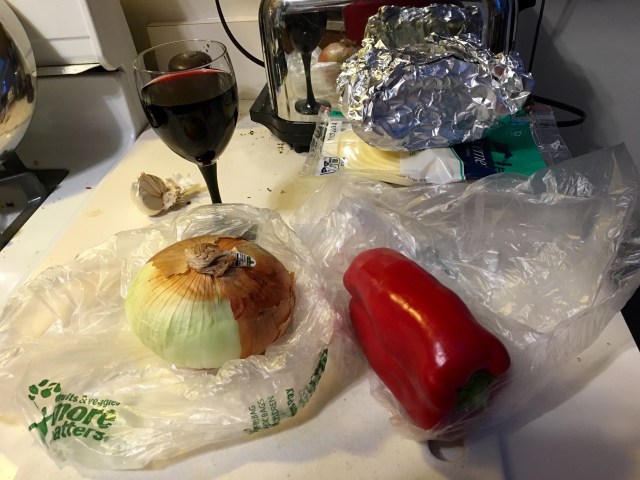
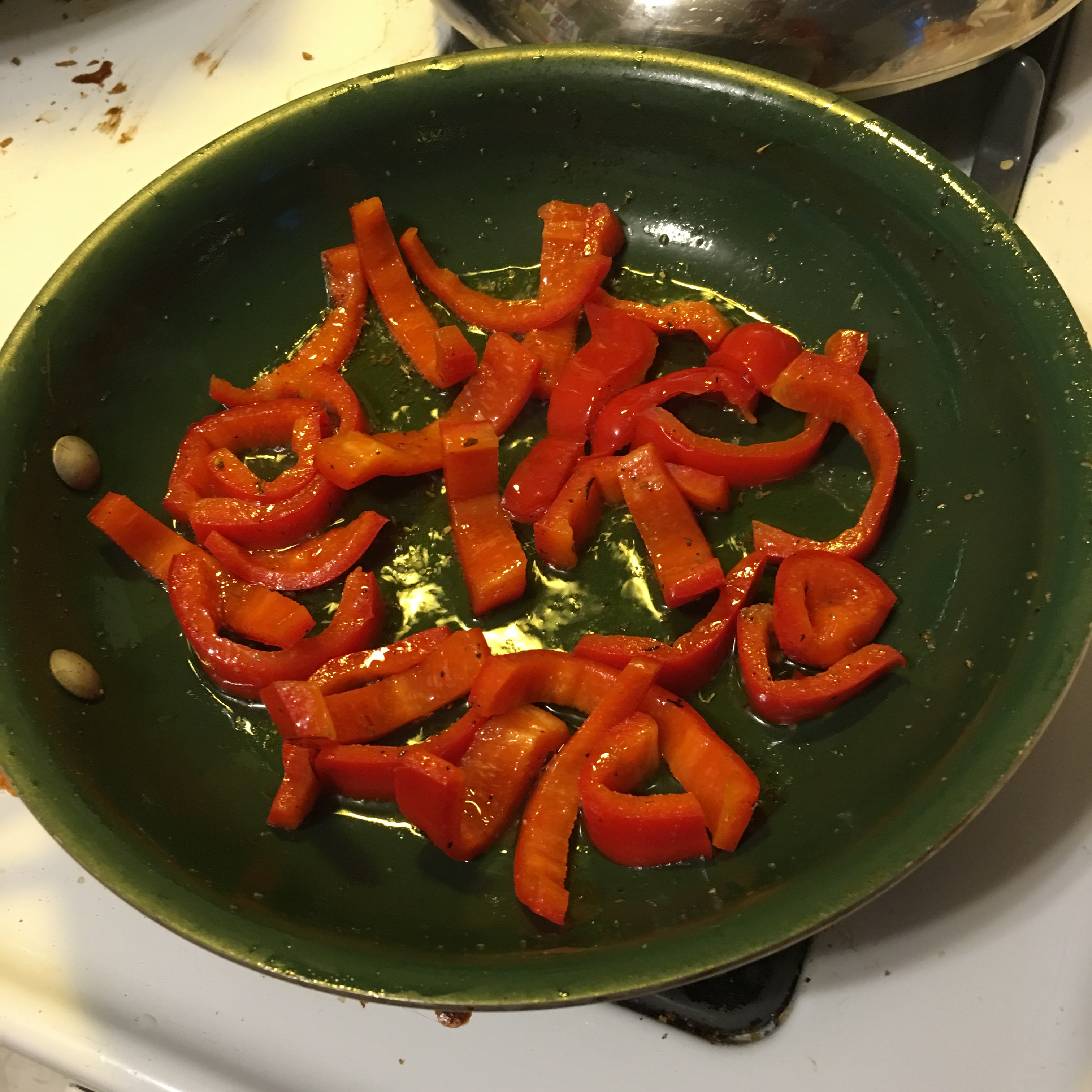
Heat up a skillet while you clean and cut up the pepper. How big or small the pieces are is a matter of personal preference. Add some olive oil to the warm skillet. When the oil gets hot enough (hint: after it becomes thin but before it starts to smoke or bursts into flames), toss in your pepper pieces and season to taste. Stir or toss the peppers occasionally while you cut your onion and slice or mince your garlic. Again, let personal preference prevail.
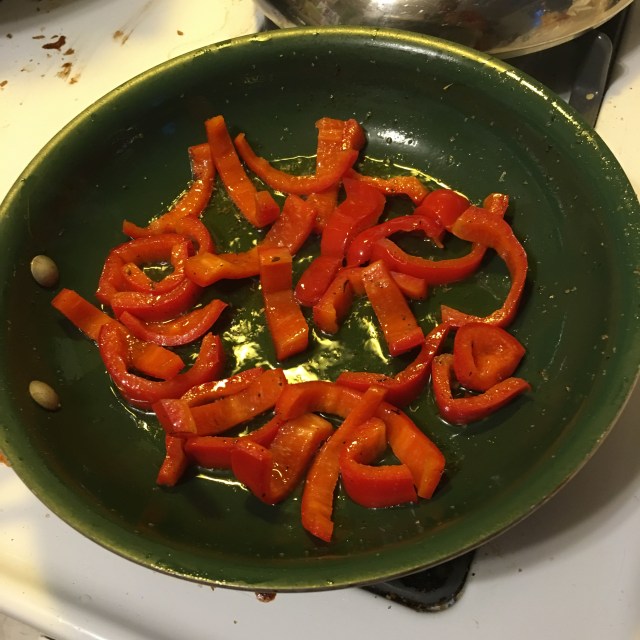

Just as the peppers begin to soften up, add the onion and garlic. If you didn’t add enough seasoning when you started the peppers, you may add a little more now. Be careful to regulate your heat so that the onion doesn’t brown too quickly, nor does the garlic scorch. If you burn the garlic, you’ll be sorry.
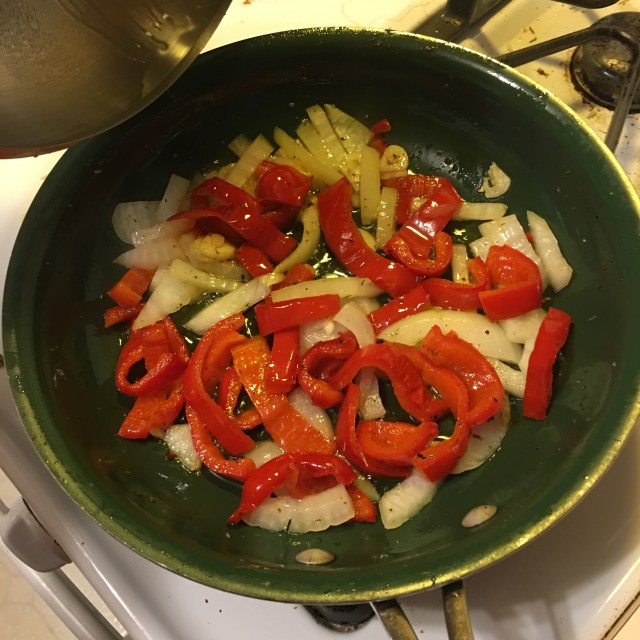
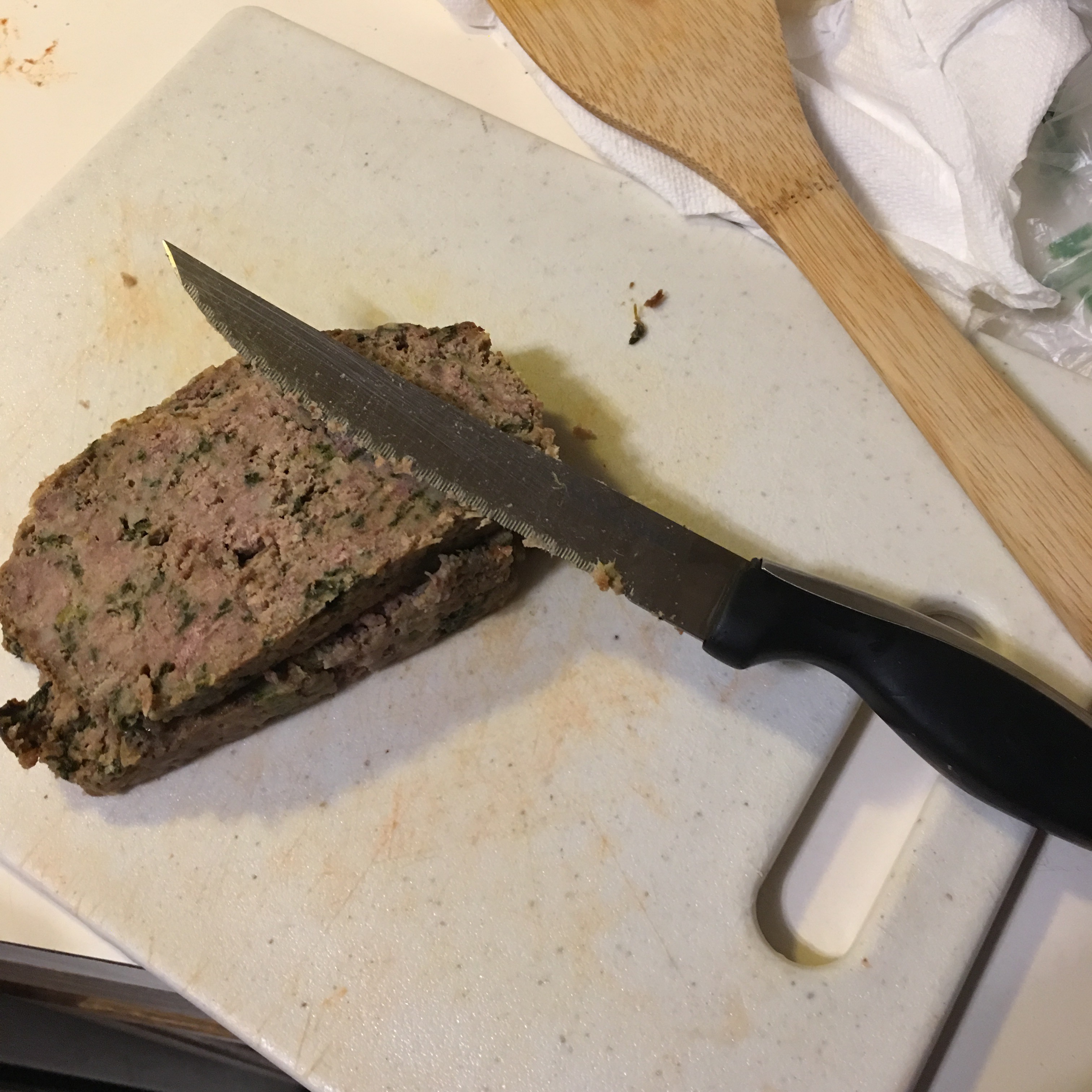
While the pepper and onion are cooking down a bit, cut up your leftover meatloaf. Note that I could have done this exact same thing with leftover steak, roast beef (not in gravy), chicken, Italian sausage, etc. Any of the things I just mentioned would go fine with the pepper and onion mixture.
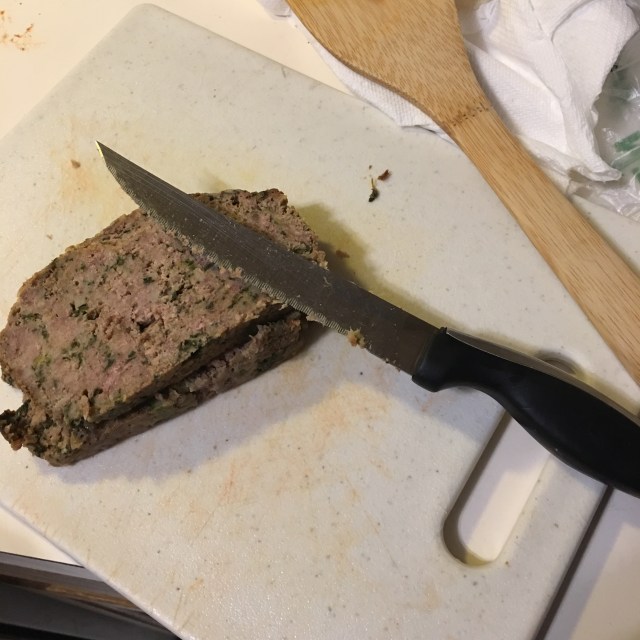

How big or small do you cut the meat? How did you cut the pepper? How did you cut the onion? As long as you like it, there is no right or wrong answer. This isn’t even a recipe, really. Did you see me measure anything for you? Me, neither.
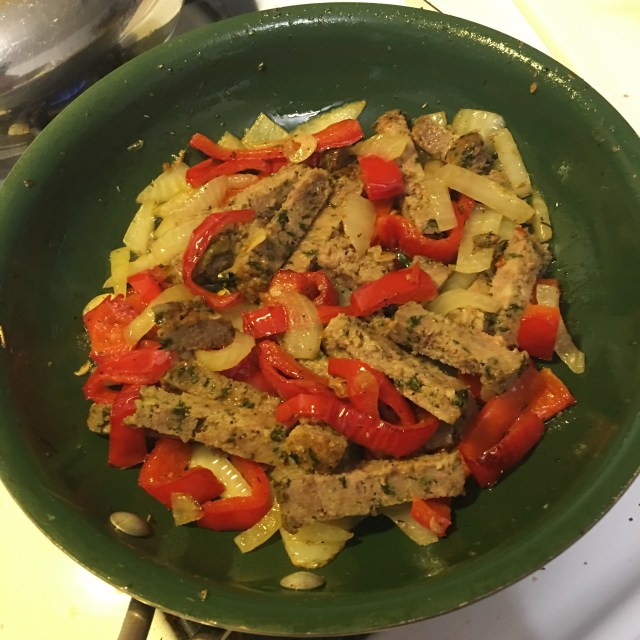
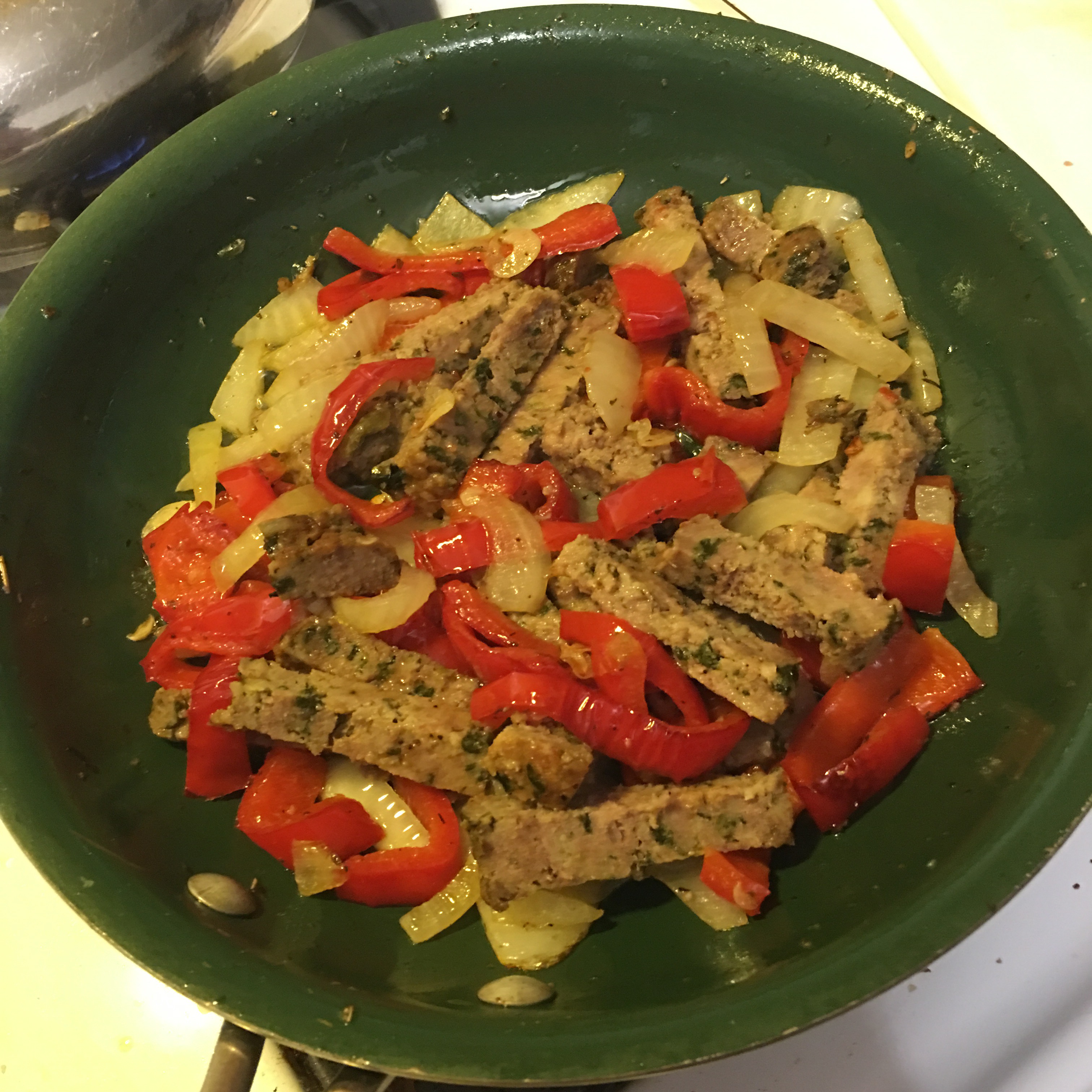
Add the meat to the other stuff in the skillet. Let me caution you now about seasoning the mix every time you add something. Can you? Sure, as long as you add very little each time. Me, I can pretty much feel my way through this aspect, but when in doubt, taste it.

Now depending on what just went into the skillet, you will either heat it up a little, brown it, or whatever. If you’re using leftovers (see the title of this blog post), whatever meat you used was already fully cooked. Don’t ruin it. For meatloaf, I like to heat things u until the edges of the loaf pieces brown a little. That’s personal preference.
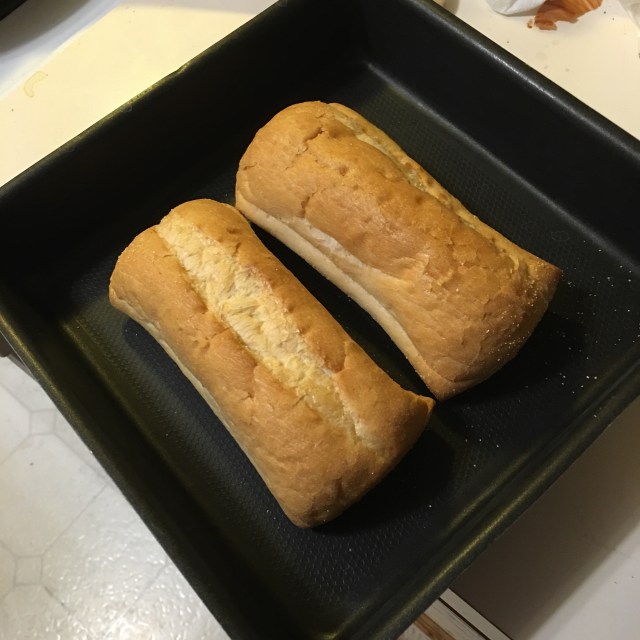
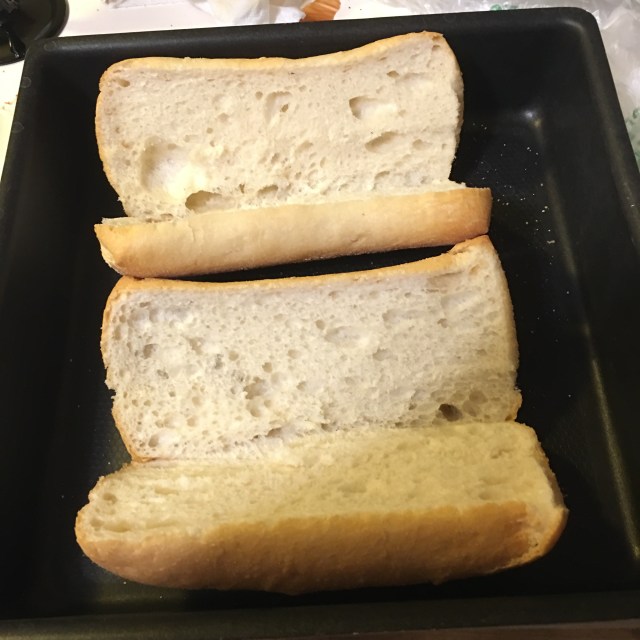
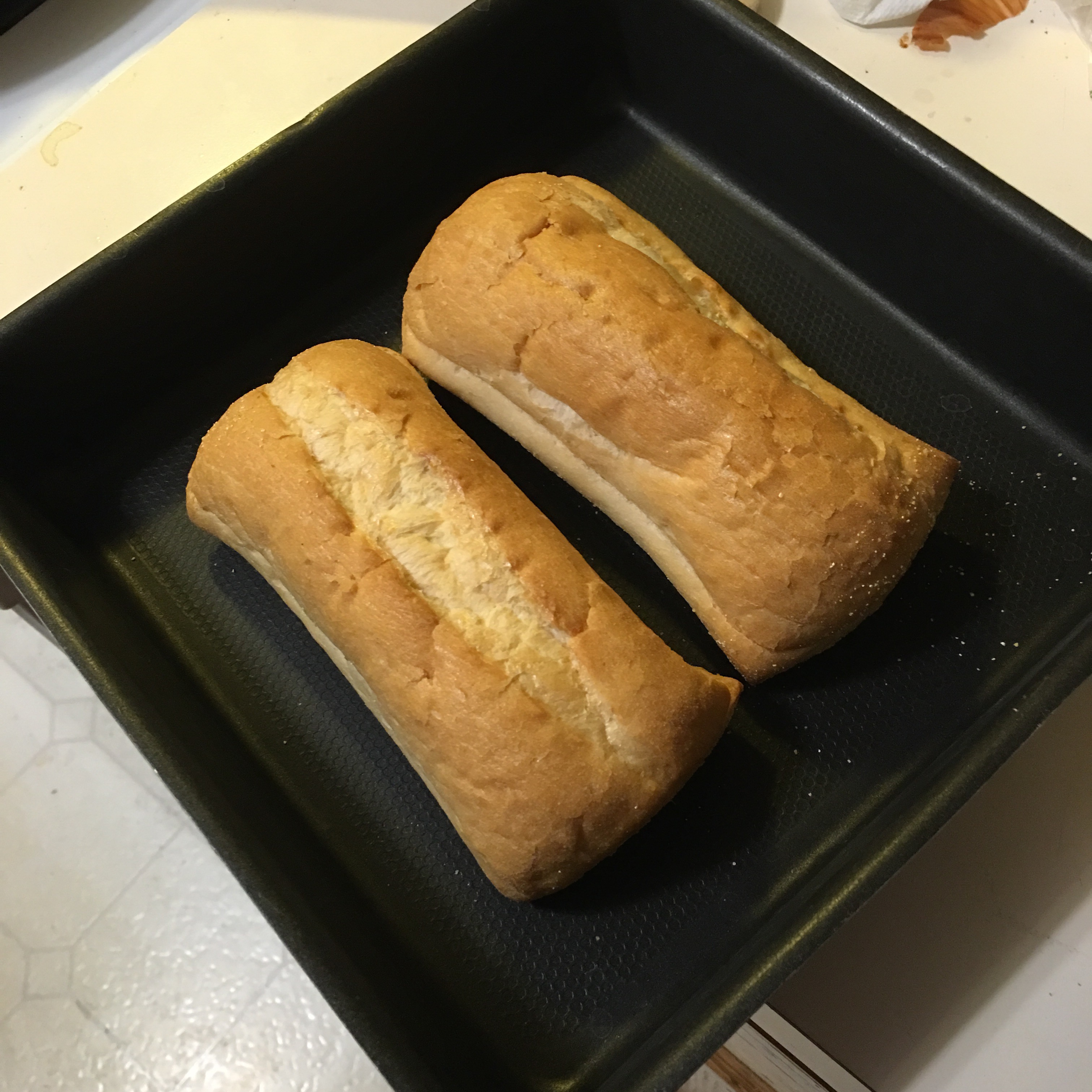
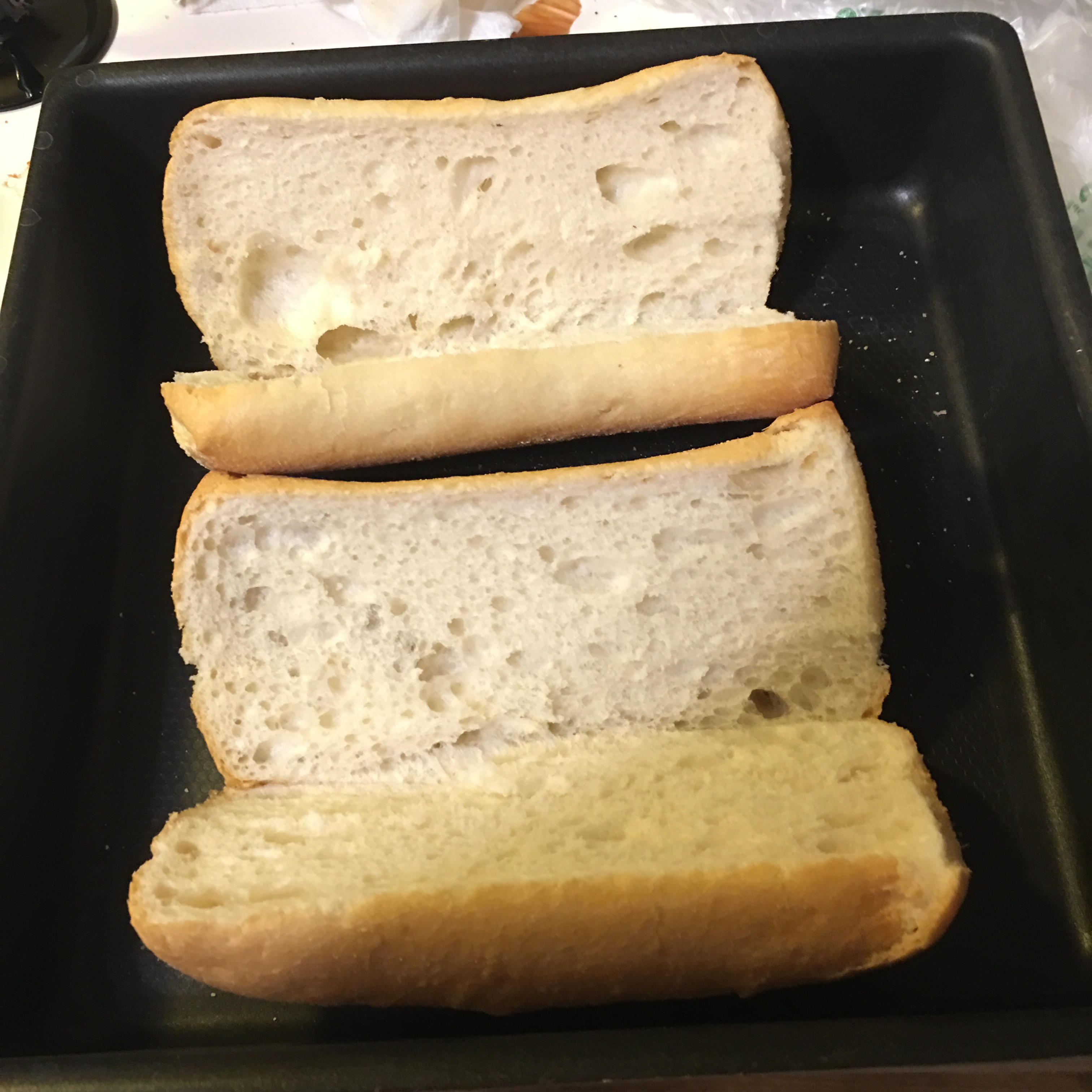
While the skillet mixture finishes, prepare your bread. Go ahead, talk to it if you like. On this go-around, I used prepackaged French rolls, which tend to be on the soft side. I don’t much care for soft bread, but I was making grinders—aka oven/broiler roasted subs—so I knew my soft rolls would come out toasted, nice and crisp on the outside, while still chewy on the inside. If you start with a hard roll or a very crusty baguette, your gums might not enjoy the experience when you bite into the result. Don’t ask me how I know this. Select a pan or tray that will support the sandwich(es) in the oven or under a broiler.
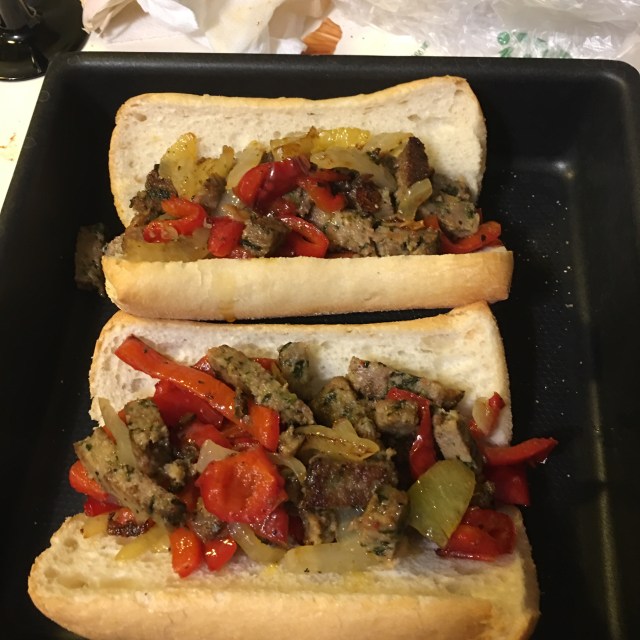
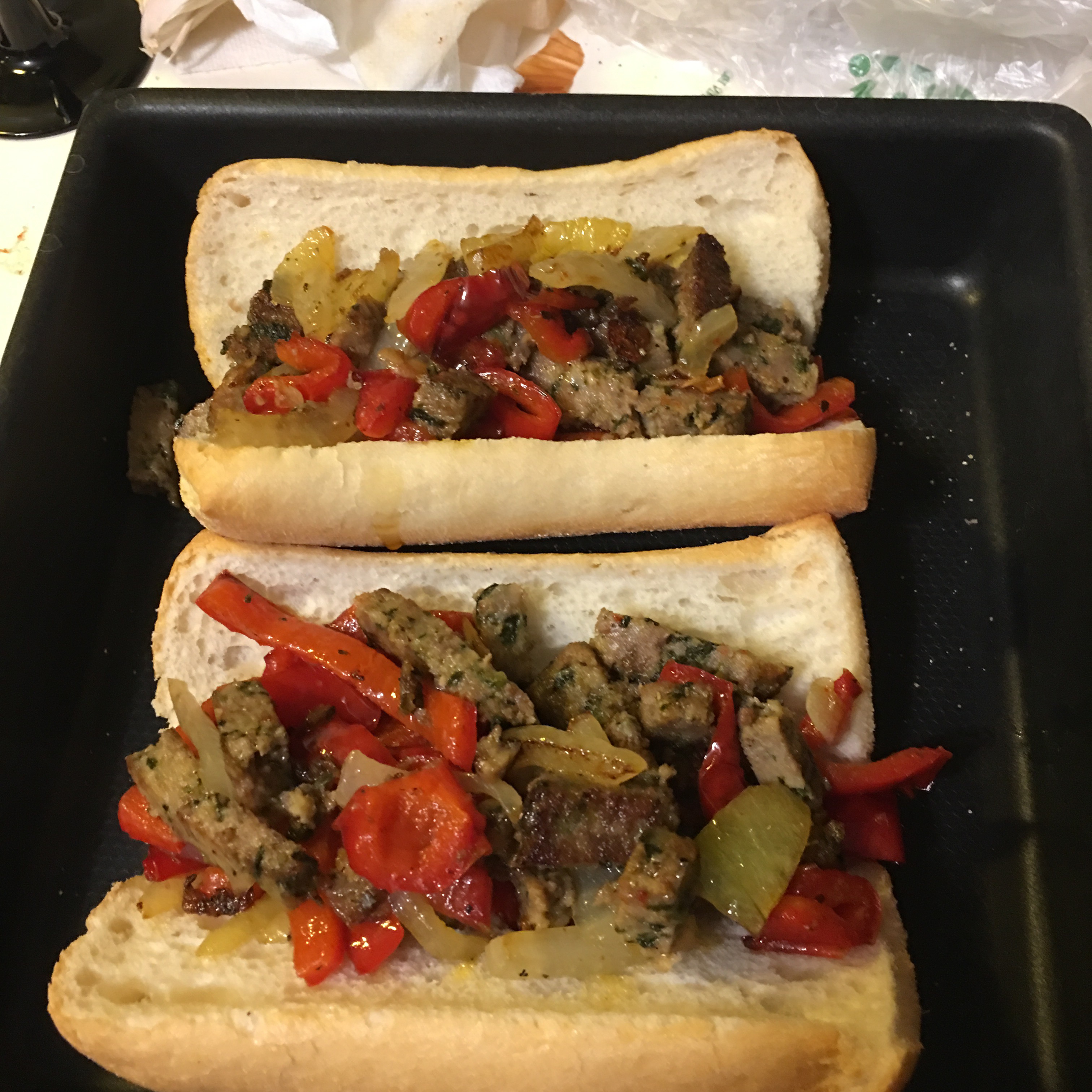
Distribute the mixture from the skillet onto your roll(s). In my opinion, if the bread soaks up a little bit of the now-seasoned olive oil, you will have committed no injustice. Just imagine the underside of tha roll, warm and crispy, yet releasing a bit of that seasoned oil for you when you bite into it. You’re welcome.

Heads up! The cheese is what makes your sandwich an oven grinder. i used provolone, which browns nicely and imparts a fair amount of flavor. Other cheeses work well, too, depending on what’s under it. Seek balance. Imagine pepper jack on chicken, mozzarella on meatballs drenched in tomato sauce. Get the idea? If you think/feel your way through this process, you won’t need a recipe. And that’s good, because I’m not giving you one.

Into the oven and/or under the broiler. The purpose here is twofold: toast the bread and melt/brown that cheese layer. A word of caution: Don’t open the oven/broiler door every ten seconds or you’ll be there forever. But by the same token, don’t ever just walk away from it, either. When working beneath a direct flame or heating element, things can change very quickly. Stay close. In between peaks in, use your nose to gauge the progress. But always be ready to stop the process—kill the heat source, yank the pan/tray out, whatever—when perfection has been attained.
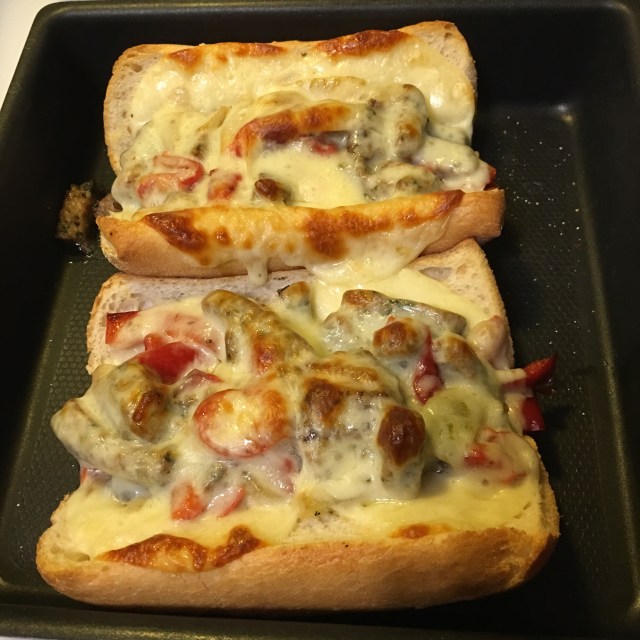
In all candor it took me longer to write this blog post than it took to create my Philly meatloaf oven grinder. When your sandwich comes out, it will be too hot to eat. Don’t ask me how I know that, either. So let it cool , but don’t let the darned thing get too cold either. You worked too hard for this. Enjoy!

I do enjoy cooking with wine. Sometimes I actually put some in the food. This wasn’t one of those times. One of these days I will publish a book filled with things like what I just shared with you. The working title of this book is What Recipe and in all likelihood, it will not contain one conventional recipe. Some readers will become upset about that. Others, in time, will “get it” and grow exponentially from the experience. But first I gotta’ write the book. Ha!

Thanks for hanging with me.

Pizza and Me

I love pizza. Always have. When I was quite young, the only kind of pizza I ever ate was homemade. My mother, grandmother, aunts, etc. all baked their own bread and made extra dough in order to make pizza. My grandmother made traditional pizza, with nothing more than tomatoes, herbs and grated cheese on top. My mom and aunts probably did the same thing at first, but then adapted to the American style, adding sausage and mozzarella.


My introduction to pizzeria pizza came in 1968, in the city of Clinton, Iowa. This is where we sometimes stayed overnight when visiting my eldest sister, who attended Shimer College, which was located in Mt. Carroll, Illinois at the time. We stayed at a Holiday Inn and had supper at a nearby Pizza Hut, which was nowhere near as prevalent then as it is now. I still remember the experience. We had gotten a cheese pizza—probably the only kind of pizza I’d eaten thus far—and I marveled at how thin the crust was, compared to the bread crust that I had been used to (these days they call that a pan pizza). I also marveled at the different flavor of this new and unusual pizza—bear in mind, I was only  seven years old at the time—and I begged my mother to make pizza like Pizza Hut. Forgive me, Ma! I was so young, and had no idea what I was suggesting. In retrospect, I have to believe that I only liked that pizza because it was so different from what I had been accustomed to eating.


Just the same, I’ve always loved pizza, although as the years went on, I became more cognizant of pizza, of what makes some pizzas great and others, well, not so great. After I got married, my wife became aware of this and would encourage me to critique any new pizza we tried, also adding her own observations. We even established some basic criteria by which any pizza could be evaluated, albeit subjectively. That is, regardless of the criteria being used, personal preference still plays a big part. Let me share our criteria with you, along with what I, personally look for in a pizza. We’ll go from the bottom up.

  1. Crust – I look for flavor and consistency, but of the two, consistency is king. Why? Because you can overcome a bland crust with flavorful ingredients, but there is just no way to make up for a wimpy crust. It make no difference what type of crust we are talking about; consistency matters. A thin crust should be crisp, and not just at the edges. Don’t give me a limp thin crust. That’s how it was before you cooked it. Now a bread (or pan pizza) crust should still be crisp on the very bottom, as well as the edges, but should be bread-like within. Now here it becomes very subjective. How do you like your bread? I like mine light and airy. Some people like theirs moist and spongy. My point is, how you like your bread will largely determine how you like your pan pizza crust. As far as flavor goes, the key ingredients at play here are flour and salt. Cheap flour will remind you of grade school paste. A lack of salt will remind you of nothing at all, and that my friends, is a dirty shame.
  2. Sauce – When I publish my book on the subject, I’ll have a lot more to say about this. But for now, understand that nothing truly compensates for either a weak sauce or a bad sauce. I want just the right balance of sweet versus tang, I want optimal use of salt, and I expect to taste tomatoes.Where my family comes from, we don’t even use a sauce; we use fried whole, peeled tomatoes—a fresco sauce, if you will. But no matter, just understand this: if your sauce came from a five-gallon institutional can, the last thing I want to experience is sauce that tastes like it came from a five-gallon institutional can. And there is no excuse for that, because the proper seasoning can work wonders.
  3. Meat – I know all about artisan pizzas, I don’t often eat artisan pizzas. When I say meat, I mean Italian sausage. You like pepperoni? That’s cool, but it’s not Italian. Pepperoni is nothing more than an American variety of salami. If I get it on a pizza, I get it in addition to the Italian sausage. When it comes to pizza, what makes Italian sausage good Italian sausage? The same thing that makes it good off of a pizza, namely the fat content and the seasoning. Me, I want to taste fennel. No, more than that. When this stuff is cooking, I want to smell the fennel while I’m still halfway up the block. As for the fat, either start with lean sausage or else cook the stuff before you put it on a pizza. I don’t want to feel as though I should have to swallow half a dozen napkins to soak up all the grease I just ate.
  4. Cheese – Whatever you use, it had better be real. “Cheese food” has no place on any pizza I eat, nor does imitation cheese. I want it real and I want to taste it.. Now here we get subjective again. Where my family comes from, they don’t use Parmesan; they use Romano—and that’s strong mojo, a much more robust grating cheese. Similarly, my mother didn’t use mozzarella in the early days; she used scamorza, which is similar, but not quite the same. But I only offer this for informational purposes. That is, I highly doubt that you will find a local pizzeria using scamorza and Romano.
  5. Veggies – Again highly subjective with regard to what veggies belong on a pizza. I won’t get into that here. I will only insist that they be fresh and not canned.
  6. Generosity – I was born and raised in Chicagoland, where pizza comes with an abundance of ingredients on it. We don’t skimp on any of the above-mentioned items. If you skimp, I’ll notice, even if we are not in Chicagoland.


When I make my own pizza, which is not as often as I like, I observe the criteria that I mentioned here. The rectangular pan pizza that you see pictured above is a reasonable facsimile of what my mother used to make for me, but I am the first to admit that my pizza is not as good as my mother’s, nor will it likely ever be. Why? She made her own bread almost every week. I make my dough once in a blue moon. My mother made her sauce from tomatoes that she and my dad canned themselves, using tomatoes that either came from my dad’s garden or that my mom and dad hand picked from an area farm. My mother made her own sausage. I tried that once. I might try it again someday. You get the idea. As much as I would give almost anything to taste my mother’s pizza again—and not from Pizza Hut, not even a Pizza Hut from the 1960’s—I cannot recreate what she was able to produce just about any time she wanted.

My mother passed away in 2006 and I have missed her pizza ever since.

Thanks for hanging with me.