“Experience is the hardest kind of teacher. It gives you the test first and the lesson afterward.”
— Oscar Wilde
In all candor, I have been unable to verify the authenticity of this quote. With that said, however, I do feel more than qualified to vouch for the truthfulness of the statement.
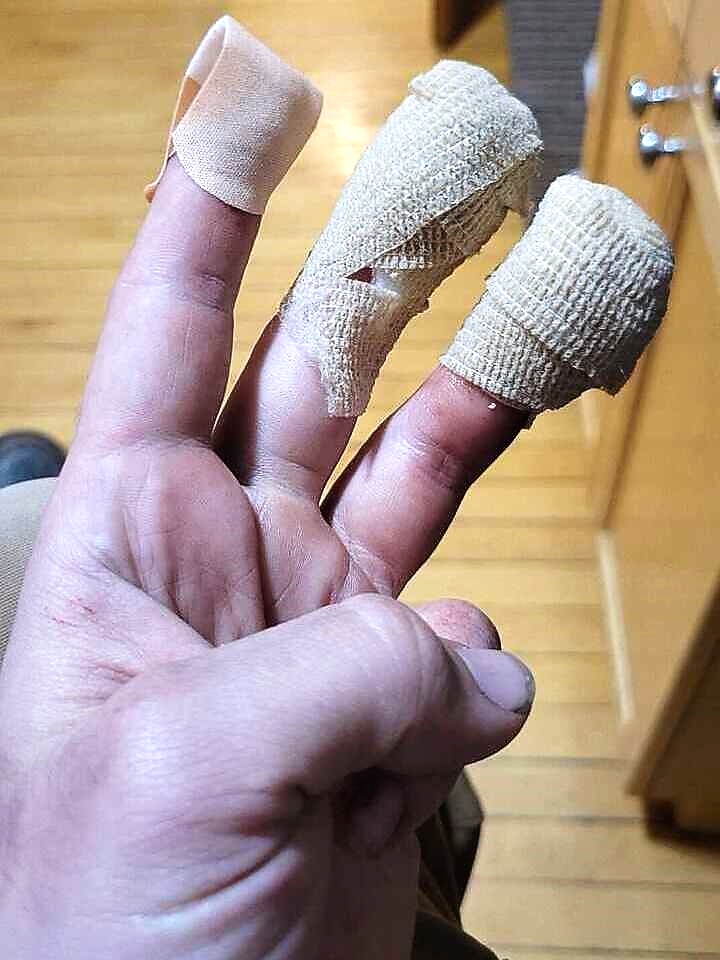
My son got into a rather nasty altercation with a laminate router he had been using last Sunday and as is usually the case, the router won. The blade ate into three of his fingers, causing a slight fracture in one and necessitating 18 stitches overall, along with a tetanus booster shot and a course of antibiotics. As I sit writing this, the full extent of his injuries remains unknown. There will be significant scarring. There may be some sensory nerve damage but he should retain mobility. He will be seeing a hand specialist, to get more answers and decide on a course of treatment. When he started calling people from an urgent care facility, he opened with, “First off, I haven’t lost any body parts.”
When a parent’s child is harmed, no matter how grown up they may be, the parent feels that. This parent does, anyway. The swell of emotions that I felt when I heard the news was extraordinary. In a single instant, I wanted to comfort my son, encourage the healthcare professionals who were treating him, and drag that sonofabitch router into a back alley to beat it into scrap metal with a sledgehammer.
He didn’t need to be told how much worse this might have turned out. He knew. A larger router would have taken the fingers outright, period. Fortunately, he makes his living as a craftsman and an actor. When we spoke on the phone, I half-jokingly told him, “Well, I guess you know you can kiss your career as a hand model goodbye.” But every half-joke contains a measure of truth in the other half. I quickly added, “but only three or four years ago, I kissed my own career as an Olympic weightlifter goodbye.” We both went with the wisecracks but we both understood. What’s done is done.
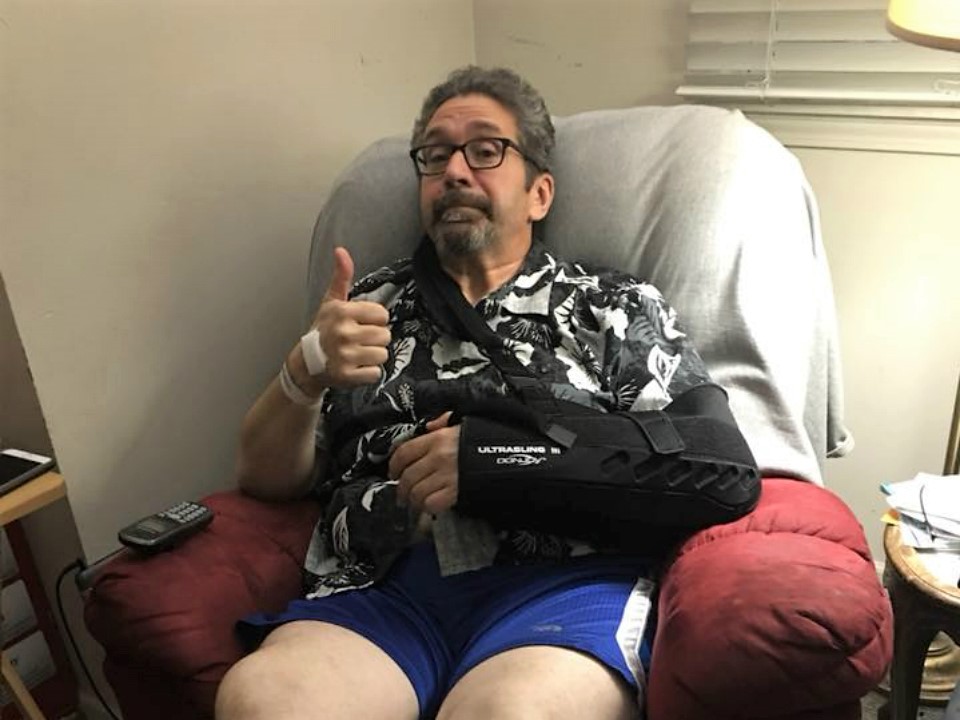
That incident as well as the conversation that followed brought back some memories, none of them happy ones. And each of them brought the same message: Life’s consequences are for life. Coming up on four years ago, as a result of my own foolish, careless actions, I traded my left shoulder for a prosthetic assembly of titanium and plastic that will never do the work of its predecessor. I can never again lift as much or as high and I may very well outlive the artificial joint that is now inside my body. Still, my recovery was better than 90% of those who have had this type of surgery. I chalk that up to sheer will. I was hellbent on riding my motorcycle and traveling with my pillion companion again, and for years to come.
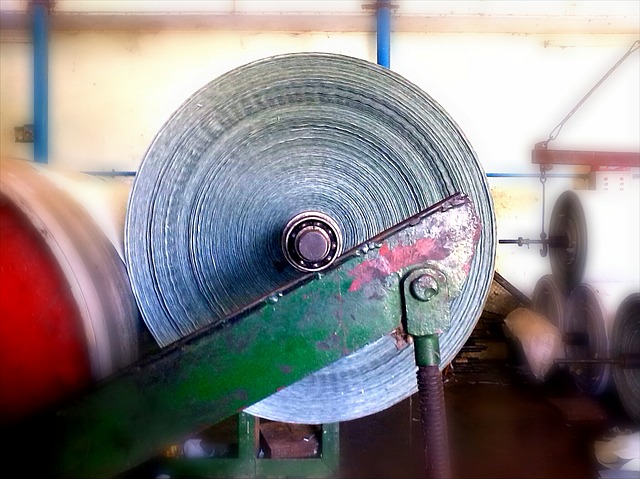
During my college years and for one year after that, I worked for a packaging company that was headquartered in my boyhood hometown of Blue Island, Illinois. The closely held corporation ran four factories across the US, including the one I worked at just about every summer, and some holiday breaks, from 1979 until 1983. The place I worked at was a paper converting factory, filled with corrugating machines, slitters, die cutters, stampers, printing and embossing cylinders, macerators, and balers. Just imagine lots and lots of large, motorized cylinders and blades, all in motion 24 hours per day, six and a half days per week. Me, I was lucky. I was just passing through, a college kid working there only as long as I needed to. But over the course of four years, I met many wonderful people. And many incomplete human beings.
There were several middle-aged women, housewife types I guess, with one or more short fingers. I never noticed it right away because they were such positive souls, always hard-working and never showing any evidence of loss. There was an older guy with a southern accent. He knew every machine in the plant, so people would often take his advice on productivity matters. And he was so jovial, everyone was always glad to see him. I can’t recall his name but he was short a few fingers and, as he claimed, a couple of toes.
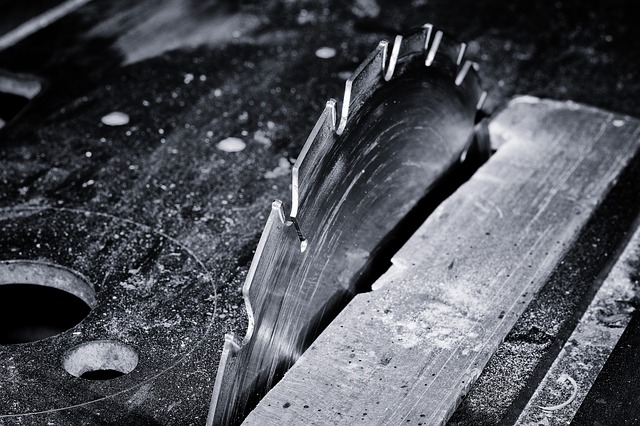
I had an aunt who was both a physical and occupational therapist by profession. She was the only college-educated member of her generation in our family and we were very close. I talked with her about the things I saw at that factory and nothing seemed to surprise her. The industrial injuries, she pointed out, were largely a matter of human nature, reflex reactions. “Your job is to run this machine. You’re working one day and suddenly something falls into the machine. Without even thinking about it, your gut reaction is to reach in and grab that object. The machine takes you in, too, but it’s too late.”
I saw that firsthand, working on a Sunday, when this kid — a young teen, probably working a summer job — was placing old newspapers onto a conveyor belt that fed into a macerator, which instantly pulverized the paper, to be used in the manufacture of insulated envelopes. The drive chain on the conveyor was a bit loose and always slipping off the gears, so at some point, the chain guard had been left off. You know, to save time. So the kid is sitting there, tossing old newspapers on the conveyor, when the drive chain slips off once again. He’d seen the maintenance workers put the chain back on, so he tries to feed it onto the moving gears himself, but his hand is on the wrong side and the chain draws his hand right in against the rotating gear wheel. He yanked his hand free at the last second and didn’t lose any fingers but his right hand was cut and bleeding badly. There was nobody on the limited Sunday shift to authorize anybody to do anything but work. Everybody is standing around trying to decide what to do. Blood is pouring from the kid’s hand. Me, I had nothing to lose, so I yelled, “Come with me!” I took the kid and one other guy to hold his hand up while I broke every law in the book to drive him to the local ER. No regrets. Nobody even questioned me about my actions the following week.
There was one guy, the sole member of the shipping department on the third shift (I heard they paid a buck-fifty an hour extra for people to work on that shift). He would have been in his twenties when I was there — older than me at the time but would seem like a kid to me now. Tall and thin, with thinning blond hair, he had a solitary digit remaining on one hand, which was always wrapped in a dirty whitish bandage. That lonesome appendage was long and judging by the way he used it, I thought that was his index finger. It was his thumb. A machine had taken the rest of his hand.
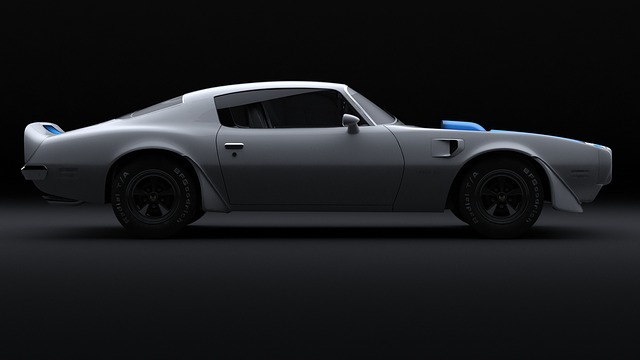
Some of my coworkers assured me that the guy I’m describing here had been guaranteed a job for life. I’m not sure how that played out, since the company was bought out the year I left and the Blue Island factory was shut down the year after. The kid drove a very nice Pontiac TransAm, metallic silver with the big firebird emblem on the hood. It was an awesome-looking car. I never once saw that young man smile, though. Not even once in four years.
These are the memories that flashed through my mind when I heard that my son’s fingers had gotten torn up on a Sunday afternoon. What’s done cannot be undone. Hopefully, though, we all learn from this harsh teacher called life, as we continue along. Thanks for hanging with me.



 Several more emails were exchanged, but the long and short of it is that before the day was over, my son had gone back to the same store and returned with a small chunk of imported caciocavallo that tasted better than the (presumably) domestic variety that I had bought before. We have since then tasted the cheese and found it to be quite excellent.
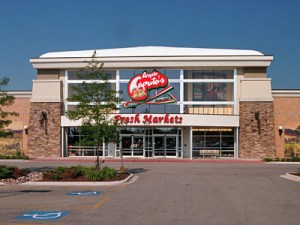
 But product quality aside, what kind of corporate retailer answers an email from a nobody like me the very same day I send it? I’ll tell you. This kind of retailer. Still family-owned and still taking a family pride in all that they do. The kind of company whose General Manager—the gentleman with whom I corresponded—is related to the company’s founder, in this case, Angelo Caputo.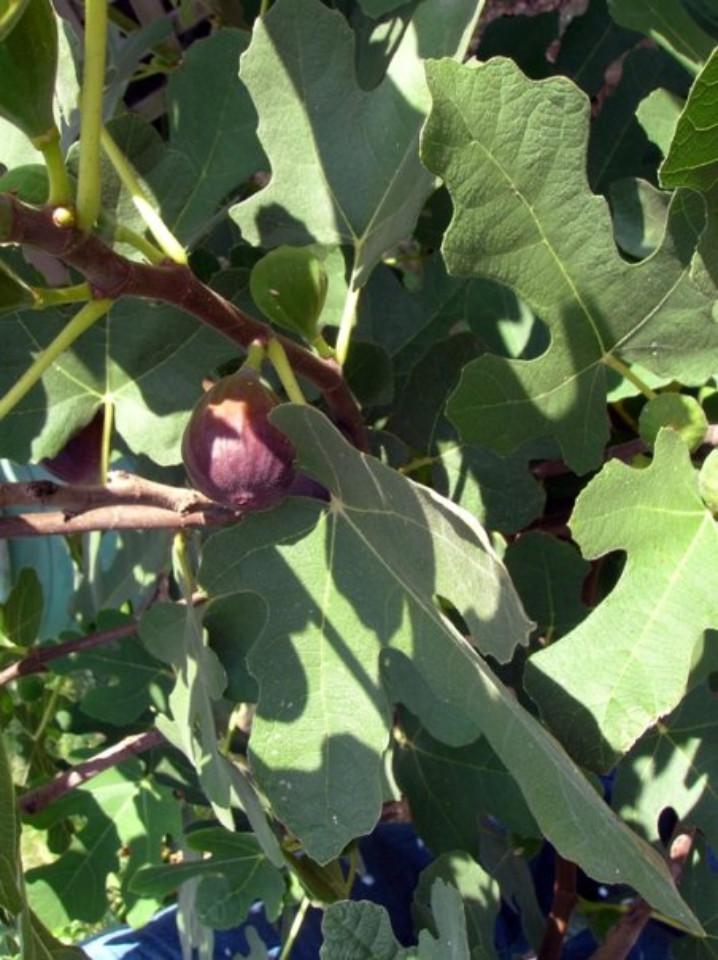
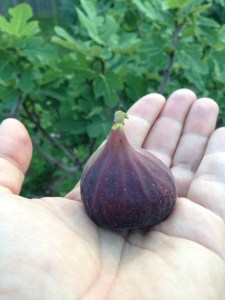 Figs are a tree/shrub fruit that grow throughout the tropics, Asia and the Mediterranean. They have been around for a while. Indeed, fig trees are mentioned numerous times in both testaments of the Bible. If you are familiar with the book of Genesis, you know that after having eaten from the tree of knowledge, Adam and Eve used fig leaves to cover their nudity. The gospels of mark and Matthew include accounts of Jesus cursing a barren fig tree, which proceeds to wither and die.
 Figs themselves (i.e. the fruits) are considered aphrodisiacs and their unique shape and characteristics are representative of both the male and female sex organs. Without getting too graphic here, the whole fruit is thought to resemble a man’s family jewels, while the cross section bears a resemblance to the female… um.. that is… oh, my. Well, anyway…
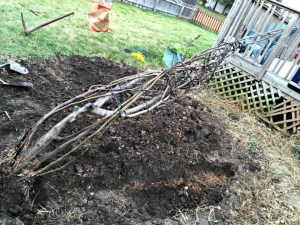 So how does one bury a fig tree? I’m glad you asked. In mid-to-late autumn, after all the leaves have dropped and there is little to no chance of another warm-up before winter arrives, you prepare the tree for burial by pruning and bundling the branches into a narrow, manageable package. Then you dig a trench from the base of the tree outward. The length of this trench must be equal to or slightly greater than the height of your tree. I should also mention that each year (this is an annual process), the trench will be dug in the same direction.
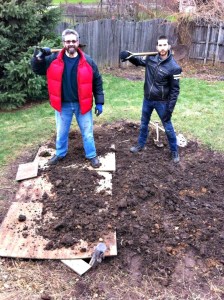 Once the tree has been convinced to lie down in the trench you’ve dug, you must cover the trench with boards, corrugated metal, etc., forming a sort of protective tomb for the tree. Then you pile dirt on top of the covering, closing off air flow and providing an insulating layer from the harsh elements of winter. In order to let moisture escape, my father would fashion a breather vent from an old section of downspout and some window screen material. Worked like a charm, so I began using them, too.
 By then I knew the drill. But even more importantly, by then I knew it could be done! A year later I had two thriving trees. At first they yielded only a handful of undersized (but delicious) fruit, but a few years later, I was collecting enough full-sized figs to warrant giving some away. I was happy. My father was proud. Life was good.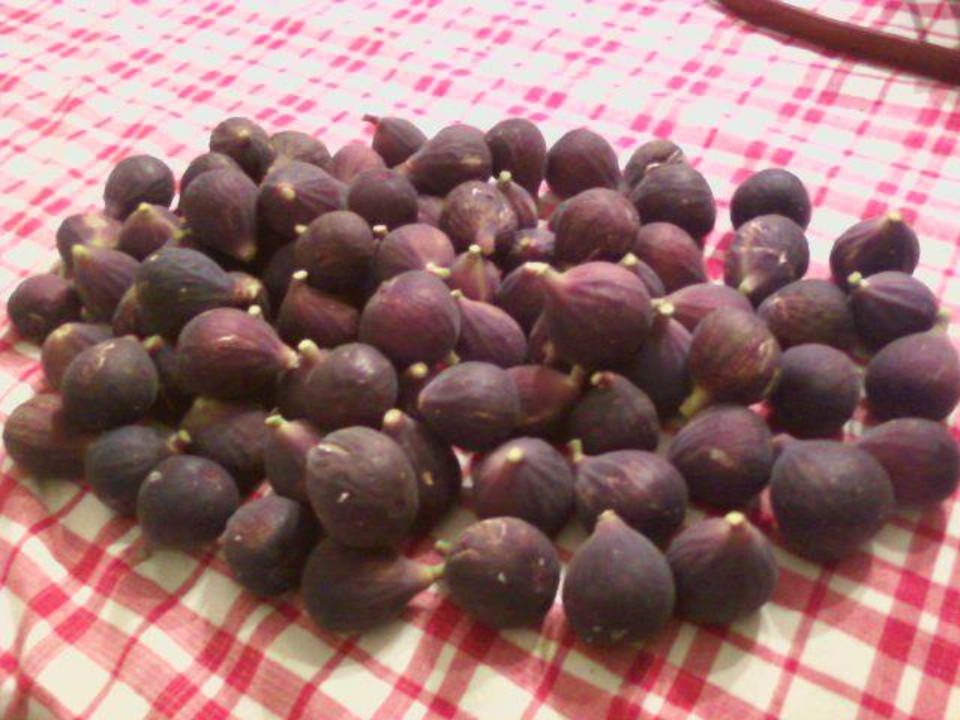
 My memories of Thanksgiving are not exactly the stuff of Norman Rockwell illustrations. Oh, there have been plenty of fond memories, just not your typical textbook Americana vignettes. For one thing, I didn’t grow up in a traditional American household. My mother and father were Italian immigrants, as was the overwhelming majority of my cousins. I was born here, but my first words were probably spoken with an Italian accent.
 The traditional American Thanksgiving dinner consists of roast turkey with cranberry sauce and dressing, mashed potatoes, green beans and other assorted goodies. My Thanksgiving dinners came with most of that, plus a steaming bowl of homemade pasta smothered in homemade tomato sauce and a huge platter of meat that had spent hours simmering in that sauce – things like homemade meatballs, braciole and salsiccia (aka fresh Italian sausage). There was always homemade wine and homemade bread on our dinner table. The insalata – a tossed salad dressed with vinegar and oil, plus a small plate of olives on the side, in case anybody wanted some – came after the main course and before the dessert, which may have included pumpkin pie, raisin pie (my father’s favorite), biscotti, and who knows what else.
 When I was a child, back in the 1960’s, there were still a good number of live poultry shops in the Chicago area. And since my grandfather, who briefly shared ownership of a small restaurant, refused to eat any bird we hadn’t killed ourselves, the centerpiece of our Thanksgiving dinner was usually still walking during the wee hours of Thanksgiving morning. I still recall a particularly traumatic experience I had one Wednesday afternoon prior to Thanksgiving, when I ran down to the basement of our Blue Island home, probably looking for my father, and came face-to-face with a tom turkey that was every bit as tall as I was. Maybe taller. We both stood there for a moment, staring at each other in the dim light of what was remaining daylight filtered through a small basement window above our heads.

 Was I nervous? Not at all. I was scared. But we did it! And together with all the other motorcyclists, we raised $325,092 for pediatric brain tumor research that day. Thus began a new tradition for Teresa and me. My daughter and I have been raising money for pediatric brain tumor research by actively participating in the Chicagoland Ride for Kids every year since 2003.
 And so it continues, year after year. Me, I wouldn’t miss this for the world. And now you know why. Thanks for listening.
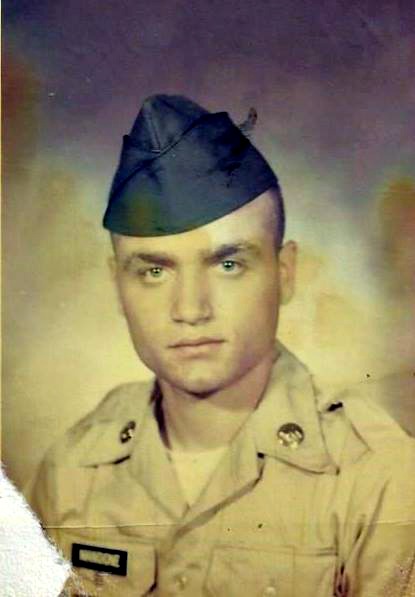 This guy I used to know from Blue Island passed away suddenly and unexpectedly on October 30. His name was Joe Mangione and he was a close friend of my older cousins in town, whom I idolized when I was growing up. He was in the Army during the Vietnam era, as were a couple of my cousins. He also rode motorcycles, as did my cousins – they were the ones who got me hooked before I even started grade school. Our knowledge of each other would have been limited to that – seeing each other at my uncle’s house in the 1960’s and early ’70’s, and perhaps at a few of my cousins’ parties thereafter – except that Joe and I had the pleasure of working together for a short period of time.
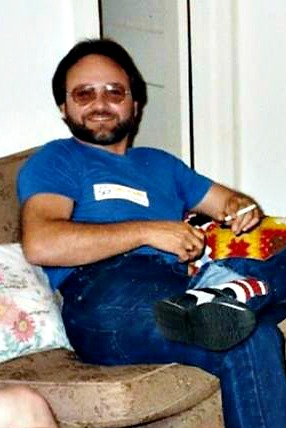 I had none of the above. But between Joe, Frank, my other cousins and a handful of other east side regulars who frequented the station, I had my role models – at least for one magical summer.
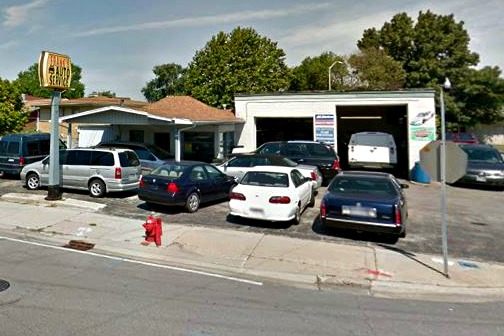 Yes, that was pretty good, but let me tell you my favorite Joe story. If this doesn’t illustrate how cool Joe could remain under pressure, I don’t know what would. We had been bleeding the brakes – a necessary step to remove any air bubbles that may otherwise remain in the lines following a brake job – on an early ’70’s Chevy Chevelle. It’s a simple enough operation. I went up with the car on the lift, while Joe tended to the brake lines. He would tell me to pump the brakes or depress and hold the brake pedal, as he opened and closed each line accordingly. Once the job was done, the car would be lowered and started, at which point the brake pedal would need to be depressed and pumped up one more time, as the power steering pump restored brake pressure. Simple, right?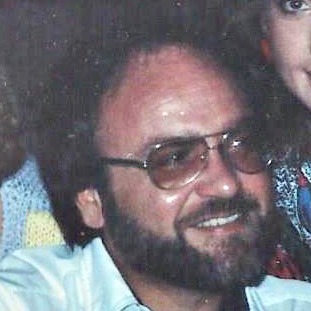
 This Is MGD Time