A Quick Visit in Paradise

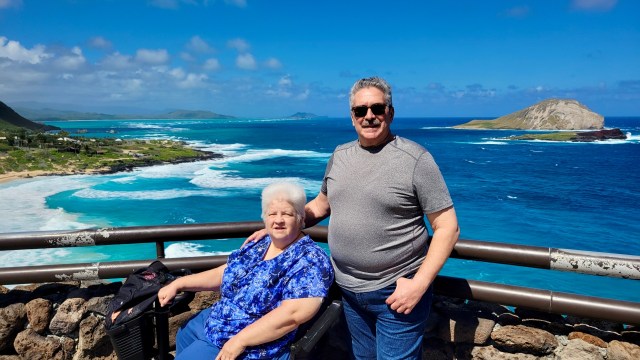
The author and his wife at Makapuʻu Lookout on Oahu.

It was a trip we could not afford to take, to attend an event I was not willing to miss. In short our son, who’s been living in Honolulu for three years, was appearing in his first professional opera, in a principal role to boot, and we had never been to Hawaii because of this or that financial issue. Well, no excuse was going to keep me at home this time.

But wait. People don’t travel to Hawaii to see an opera.

Oh, no? These people do. Walk with me, dear reader.
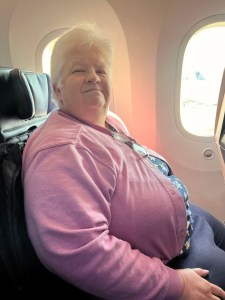
Photo of the author's wife, seated in an airplane.

It was a cold February morning when our son-in-law, a remarkable gentleman with a heart of gold, dropped Karen and me off at Chicago’s O’Hare Terminal 1, where we quickly checked our bags, secured wheelchair service for my wife, and proceeded on a long walk through the TSA security checkpoint and on to our gate. In no time at all, we were aboard a Boeing 787-10 Dreamliner and, after the our three hundred and some fellow passengers found their way to their seats, we were ready for a nine-hour sprint to the island of Oahu.

Despite flying economy, where we paid a small fortune to acquire three adjacent seats, each measuring 17.3″ wide and having 3″ of recline ability (per specs provided by United Airlines), our flight was reasonably comfortable. The windows didn’t have those pull-down shades. Instead they darkened electronically with the touch of a button. Less than an hour into the flight, they fed us breakfast. Six or seven hours later, we had a tiny salty/savory snack and a can of pop. The cabin temperature was above freezing, but I can’t say by how much. Fortunately, blankets were provided. Each one weighed a few ounces and was slightly wider than our seats.

Do I enjoy flying? No, not especially. Those who follow MGD Time know that I love taking road trips. Unfortunately, one cannot drive to Hawaii. But I digress.
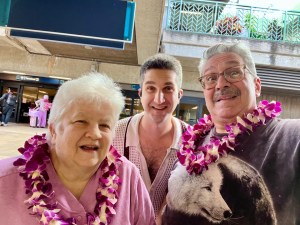
The author with his wife, and son, shortly after landing in Honolulu.

In no time at all, give or take nine hours, we were in Honolulu. And after what seemed like an extraordinarily long walk from our arrival gate to the baggage claim, we grabbed our bags and proceeded outside to get picked up by our son. When John arrived, he ran over to hug us and drape leis over our heads. Then we quickly loaded up the car and headed into the city.

Let me say this about the city. Like nearly every other city of consequential size, Honolulu has some really nice parts and some not so nice parts. Parts of Waikiki reminded me of Chicago’s Magnificent Mile with it’s upscale shops, restaurants, hotels, and more. But just like our cities on the mainland, one needn’t go very far from the best places to find the homeless, the uncared for mentally ill, and questionable looking storefronts that may or may not still be in business, and at which travelers wouldn’t likely stop to find out.

What’s different about this city is that it’s on a tropical island in the middle of the Pacific Ocean. As a result, the beautiful parts are that much more beautiful. The sad parts are that much more sad. And as my son pointed out to me, those who have hit bottom in life can’t exactly thumb a ride and go elsewhere. They have in effect become prisoners of the island.
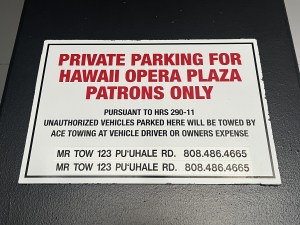
Sign inside a parking garage that begins, "PRIVATE PARKING FOR HAWAII OPERA PLAZA PATRONS ONLY"

Unfortunately, son number one’s opera was opening that evening, and his call time was fast approaching, so he needed to hand us off to his future mother-in-law Kim, who was also in town to see John perform in his first opera. So once in the city, we pulled into the Hawaii Opera Theater company’s parking garage to switch cars. It’s a relatively small parking lot underneath a building, but I felt important because, as a posted sign announced, we were in a private parking area and nobody was asking why we were there. In fact a few people even waved and said hi to our son, the professional opera singer.
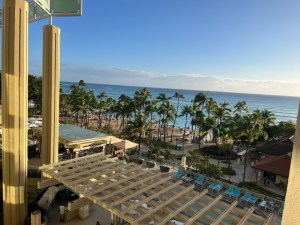
View of the Pacific Ocean from the author's hotel room

In due time, we were being dropped off at our hotel, the Hyatt Regency Waikiki Beach Resort and Spa, a twin-tower resort and convention complex complete with its own shopping mall, spa, tour services, restaurants, coffee shops, and more, so much more that they charge a daily resort fee to cover all of the “free” stuff you get by staying there — whether you use any of it or not. And before you say a word, I didn’t pick this place; that was our son’s doing. He knows a guy. What can I tell you.

Down at street level, space is at a premium and the undersized drop-off/pick-up/valet horseshoe drive is vicious busy most of the time. But once you step on the property, you’re on vacation and made to feel that way. By our son’s prior arrangement, we were given an accessible room with a view of the ocean from our balcony. A lifelong fan of waterfronts, I could have stood out there for hours, but my stomach and my wife reminded me that we needed to eat before it got much later.
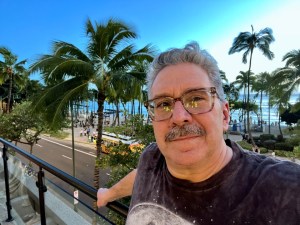
The author standing poolside with an admirable view of Waikiki Beach.

As we were both too tired to strike out on our own, we opted to dine at one of the less fancy restaurants on the premises, a poolside establishment on the third floor that opened onto outdoor seating, the pool, and yet another view of the ocean, which I wasted no time taking in once we had ordered our meal and drinks.

I tend to avoid eating at hotel restaurants unless I’m there on business and have little or no choice. They tend to be overpriced, especially the bar. Now put the hotel in Hawaii, where most things costs more anyway, and then put it in Waikiki, where everything tends to be more expensive, even for Hawaii. I had a cheeseburger and fries (cue up Jimmy Buffet if you must) while Karen had the tempura fish and chips with a side of pineapple coleslaw that was actually quite tasty. She had a coke; I had two pints of a local beer. We walked out $80 lighter. Welcome to Hawaii.

The following morning I was up and out on our balcony, watching not only the swaying palm trees and ocean, but a fair number of surfers who were out hoping to catch a wave. Our first full day on island was an absolute hoot: the Aloha Stadium Swap Meet, a giant open air marketplace in the shadows of a large sports stadium that is no longer in use. Here one can find all manner of authentic Hawaiian souvenirs, crafts, foods, and more, all at prices that are below what what they charge at the tourist traps. Two bucks to get in (one for locals), free parking, and lots to see, but do wear sunscreen.

This happened to be Karen’s birthday and John wanted to make it special in his own way. After picking up some groceries and wine, we went back to the kids’ home in Manoa Valley, where our son prepared his version of stuffed peppers, a favorite of Karen’s, and along with some dear friends of John and Emma, Kim, Karen, and I spent the evening eating, drinking, and sharing many stories. Not very touristy, right? That’s exactly how Karen wanted to spend her birthday. It was awesome!
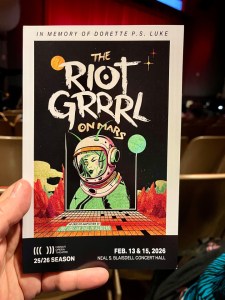
Karen and I had Sunday morning to ourselves and made the most of it by hanging out at our hotel and relaxing until it was time to get ready for our son’s matinee performance. Even though I’d like to convince you that I live for mornings like this, the truth is that it had been years since I spent a vacation morning doing nothing. Alas, my vacation schedules tend to take on some of the same characteristics of my work schedules, i.e. neither restful nor relaxing. But yeah, this was a nice way to just be somewhere, if only for a few hours.

A year or two ago, someone from the Hawai’i Opera Theatre, Hawaii’s premiere and oldest opera company, invited our son John to participate in their master class and he accepted. In short order, he began working for the company via some minor productions as well as their educational programs at area schools, both on Oahu and on Hawaii, aka Big Island. Last April, he was approached for a principal role in The Riot Grrrl on Mars, an English adaptation of Rossini’s Italian Girl in Algiers, one of HOT’s mainstage productions. After determining that this was not a practical joke, John accepted, a contract was executed, and eleven months later, Karen and I were in Hawaii to see our son, the opera singer.

We arrived at the Neil S. Blaisdell Concert Hall an hour early in order to hear a scheduled talk about the opera given by the musicologist Elina Hamilton out on the lanai. Neither Karen nor I had ever attended an opera, and I’m pretty sure this was the first time either of us had ever gone to hear a musicologist talking about one. Regardless, Dr. Hamilton turned out to be a delightful speaker and we were getting quite excited about the show.
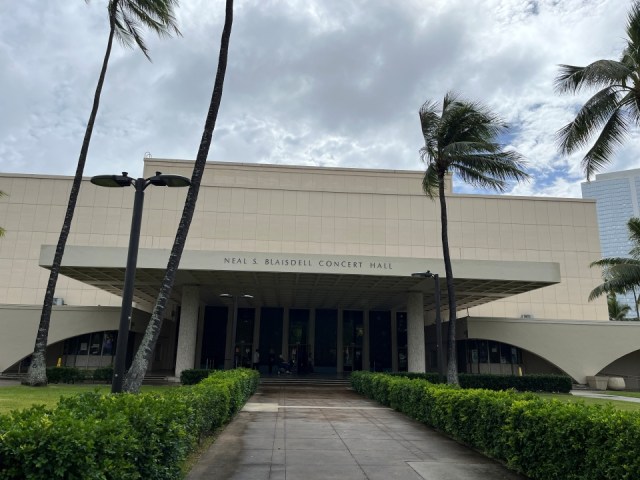
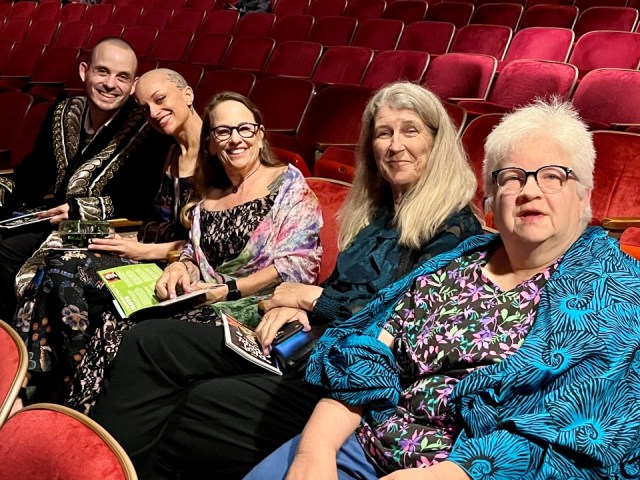
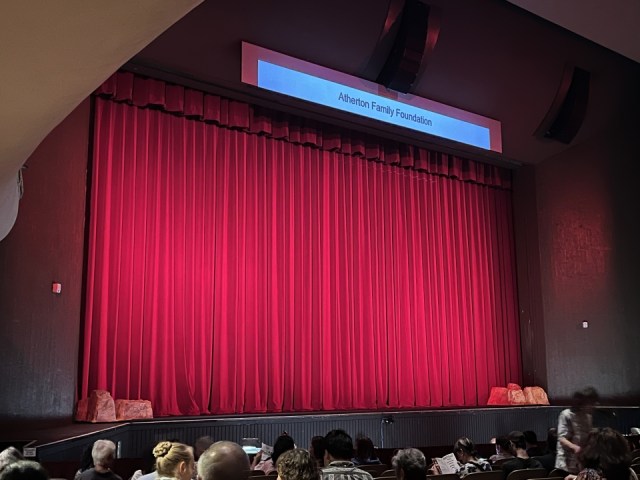
The concert hall is of modern design and well thought out, with an unobstructed view from every seat. Although the opera is in English, I was thankful that the performance featured supertitles above the stage so that folks like me could follow along. The only drawback to supertitles is that they appear above the entire stage space, nowhere near the performers, so I sometimes found my head rapidly and relentlessly bobbing up and down as I tried to follow both simultaneously.

The opera itself was hilarious. Our son, who played Gnip, the captain of the Martian Guard, appeared confident and comfortable in his role. The brief YouTube video that I am including here is the only available clip that I know of from the live performance. For his proud parents, it was over far too soon, yet I remain glad that we had been there.
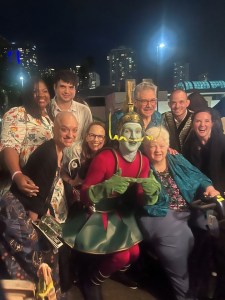
John D'Aversa as Gnip, surrounded by family and friends.

We waited outside to see John briefly before he and his fiancée headed off to an after-event involving supporters of the opera company. Karen and I went back to our hotel and as it had been pouring rain all evening, ended up back at the same restaurant before turning in for the night.

The few days that followed were devoted to spending time with John, Emma, and their friends, as well as with Emma’s mom. We went places and saw things, but not so much as tourists than as visitors. John and I even found time to slip away one evening to enjoy a few glasses of wine and some privileged father-and-son discussion time. That may not sound like much, but it’s one of the things I miss most about not having my son closer. This was our first in two years.
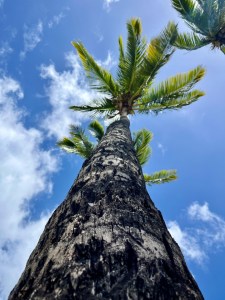
View of a tall palm tree from its base

John took great pleasure in showing us around the island, to places outside of the city, where the natural beauty of Oahu could be experienced firsthand. Every so often we would stop somewhere to get out and look around. Yes, I spent plenty of time appreciating the ocean, but I was also quite enchanted by the abundant tropical flora. In the Midwest, we have four distinct seasons, sometimes all in the same week. In the Hawaiian Islands, they have two, wet season and dry season. We were there during wet season, but only one of our days could actually be described as rainy. On the other days, every so often, it would rain for a few seconds and then stop. Most of the time, it was sunny.

I remember one such time that I found most extraordinary. We had stopped at one of many beach parks around the island and John and I had wandered off to look around and chat. At one point, we sat down on a concrete bench with the beach to one side of us and a large Banyan tree across in the distance. The sun shone brightly as we surveyed the view. Then it started raining, not hard but not a drizzle, either. We looked up to see not a cloud in the sky above. The only possible culprit was miles away in the distance, and we could only assume that the wind had carried airborne rain from that cloud across the island to drop on us. This is not uncommon. It’s also why there are so many rainbows in Hawaii.
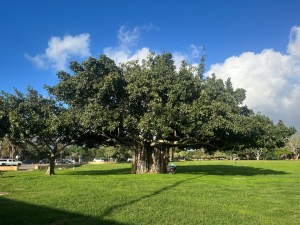
Banyan tree

I found the Banyan Trees particularly captivating. They are plentiful on the islands, although not a native species. Also known as strangler figs, what begins as one tree eventually looks like an ever-expanding cluster of them. As I understand it, the branches drop aerial prop roots that in turn develop into woody trunks.

During one of our excursions, John showed us a huge Banyan tree with an open space in the center, presumably where the host tree once stood. I strolled into the open center and turned about, looking in awe at the many tall trunks that surrounded me. Had I been there on my own, with copious amounts of time to spare, I’d have remained in that space for a little while, just to breathe and appreciate the stillness within. I rather enjoy meditating with trees.
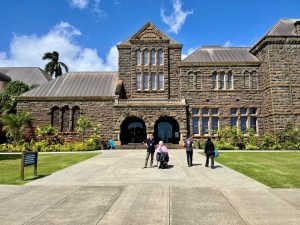
Main building, Bernice Pauahi Bishop Museum.

Karen and I had been looking forward to visiting the Bernice Pauahi Bishop Museum, aka Hawaii Museum of Natural & Cultural History, because John had worked there for a period of time and told us much about this institution. Named for Princess Bernice Pauahi Bishop, the last legal heir of the Kamehameha Dynasty, this is the largest museum in the state and houses the world’s largest collection of Polynesian artifacts. If you want to gain a better understanding of the original Hawaiian people, their history and culture — and how much of that culture nearly disappeared and why — this is the place to go.

I was astounded as well as saddened by much of what I learned, but I was also heartened by the activist revival of Hawaiian language and culture, which continues to this day. While touring the museum, we got to meet several of John’s former coworkers and learn about what each of them does for the museum.

While walking around at the museum, our son pointed out several exhibits that he had built. Until I saw these, it had never occurred to me that our son is capable of building fine furniture, yet chooses not to do so. He has his passions and follows those. I only wish I could have been more like him when I was younger and truly pursued my interests instead of merely dabbling in them.
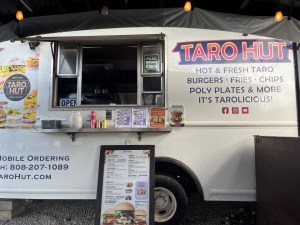
Taro Hut food truck

I have to tell you about this place we stopped at while John was taking us around the island. We had been meandering up toward the North Shore of Oahu and wanted to stop somewhere for lunch. After doing some quick research, John drove a little farther and pulled into what might best be described as a food truck court on the Kamehameha Highway in Kahuku, and went directly to Taro Hut, a one-of-a-kind experience featuring, among other things, amazing smash burgers served on purple taro buns along with taro fries.

Taro is a tropical root vegetable and a staple food of the islands. This is what poi is made of. All I can say is that the purple taro buns were delightfully light as well as tasty. taro fries are less greasy than their potato counterpart. They are very crunchy outside and tender inside. The flavor is hard to pin down, definitely not a potato, but tasty nonetheless. Taro Hut is a true find and gets two thumbs up for me.
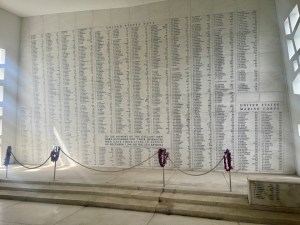
Inside the shrine at the USS Arizona Memorial

The last place we visited before preparing for our red-eye flight home was Pearl Harbor. We didn’t have much time, so we weren’t able to do a full tour. We were, however, able to board a boat to the USS Arizona Memorial. This was for me a somber, sobering experience. It’s one thing to watch videos or read about Pearl Harbor, or to hear someone else talking about it. It’s another thing entirely to be there, to stand there over the wreckage and the remains. The only way I can describe it is to say that I felt the presence of those who lay below.

I have never served in the military but I have a great deal of respect for those who have. It has long been my nature to celebrate life and mourn for the loss of life “before one’s time.” Thus it was impossible for me to visit Pearl Harbor and not be moved by the experience.

Then it was over. In what seemed like no time at all, Karen and I were back at Daniel K. Inouye International Airport, making our way through the USDA and TSA checkpoints before journeying clear across the facility to our departure gate. We spent the night flying back to Chicago. I don’t think either of us slept very much during the flight, but we did doze now and then.

It was a trip we could not afford to take, but I’m damned glad we took it. We got to see our son and future daughter-in-law for the first time in well over a year and witness John’s entry into professional opera. Karen and I had finally made it to Hawaii, maybe for the only time, but who knows. I had taken my first trip off the North American continent. And we had gotten a taste, albeit a brief one, of a Polynesian paradise.

I don’t know whether this is unusual or not, but I never found myself wishing I could stay and live in Hawaii. Oahu is a beautiful place, especially away from the city. The ocean views and plant life are both awe-inspiring to me. And not once during our trip did I complain about the temperature. But I always felt my role to be that of a visitor, that I was there to experience and appreciate this island in the middle of the Pacific Ocean and then go home.

As always, thanks for hanging with me. For whatever it’s worth, it’s windy, cold, and snowing outside my window as I finish writing this for you, but it sure feels great to be home!

Exploring the Charms of a Used Bookstore

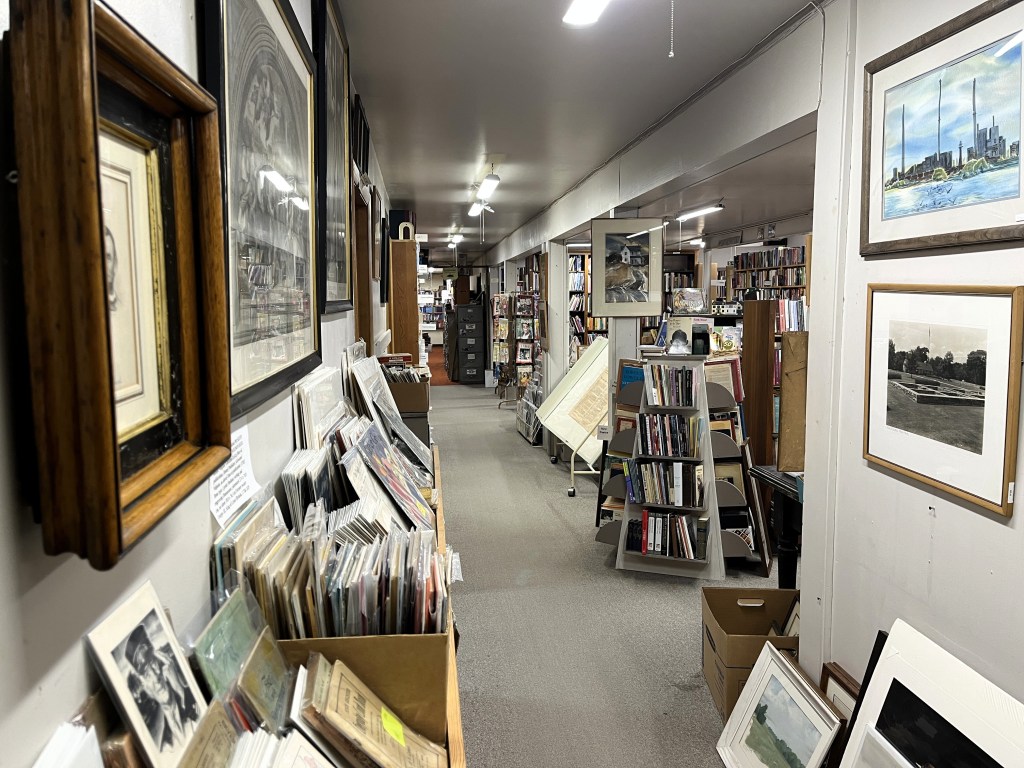
We don’t need anymore books! My wife and I have more volumes shelved, stacked, and stuffed throughout our home than we could ever hope to read during whatever remains of our respective lives. Adding more to the overflow is just not logical. This truth has never stopped us from regularly going out on our book hunts, mind you. So far it hasn’t even slowed us down. And few things are more alluring in these pursuits than a good used bookstore, those celebrated purveyors of used and antiquarian printed matter. The best of these establishments are full of character and sometimes a few characters, too. The structure in which these are found doesn’t much matter. We have discovered awesome booksellers in strip malls, repurposed warehouses, and wonderfully timeworn buildings. The real magic, the allure of a good used bookshop, is always on the inside.

We will often incorporate book hunting day treks into our birthday celebrations, anniversary celebrations, and spontaneous “let’s get out of here” days. Such was the case recently when we decided to celebrate Karen’s birthday and Valentine’s Day with a little daytime road trip down to Springfield, Illinois to checkout a shop called Prairie Archives.

On the way down, we stopped at Wally’s, a travel-themed mega fuel center, convenience store, gift shop, popcorn stand and more, with really clean restrooms. The only Illinois location is just off Interstate 55 near Pontiac. Road travelers who appreciate places like Sapp Bros. Travel Centers and Iowa 80, aka The World’s Largest Truckstop, will also appreciate Wally’s. Try the popcorn.

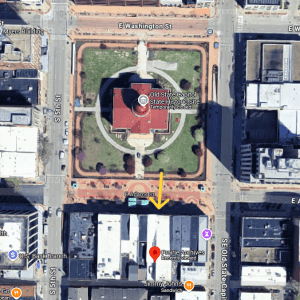
Image from Google Maps

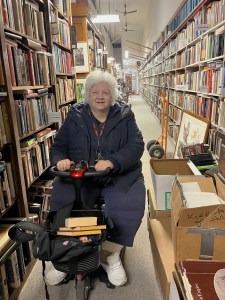
Prairie Archives is nestled in a row of shops on the Old State Capitol Plaza. The Old State Capitol Historic Site, the centerpiece of this plaza, is currently closed for restoration and site improvement projects. Visitors can’t get much more downtown that this location, but motor vehicles are not allowed anywhere on the plaza, which includes Washington and Adams Streets between 5th and 6th Streets. As such, it’s not possible to park in front of Prairie Archives or on the portions of 5th and 6th Streets adjacent to the plaza. Parking anywhere near the plaza can be, shall we say, interesting. This presented a potential challenge for my wife, who uses a mobility scooter to traverse distances of any consequence, but we were optimistic.

We thought we had it made when we drove down the tight entrance ramp into an underground parking garage directly beneath the plaza. With the Old Capitol Building closed, there seemed to be plenty of vacant parking spaces down there, including an ADA spot right next to the Adams Street pedestrian exit. Alas, when we tried to exit there, we discovered an “out of order” sign on the elevator, which would have been the only ADA-friendly exit available. We even tried buzzing the locked door beneath the temporarily closed Old Capitol Site, and eventually a guy came out apologizing and letting us know there was no safe way for Karen to get out of that underground garage. Fortunately, they didn’t charge us for parking.

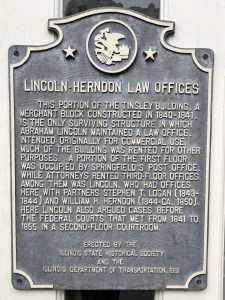
Did I mention that the down ramp into the garage is tight? Baby, that’s nothing compared to the up ramp, which is not only tighter than the down ramp, but also blind until the very point of exit. Once out, we began circling city blocks and eventually snatched an ADA space with a two-hour parking limit, as opposed to the fifteen minute spots that are common in this area. From what we were told, they don’t seem to enforce the meters by the old capitol, but they strictly enforce those time limits. Go figure. In any case, we had our space and only had to walk a couple or so blocks up 6th Street, which took us past some official-looking state and federal offices as well as the Lincoln-Herndon Law Offices, the only remaining building in which Abraham Lincoln maintained a law office, also closed for renovation as of this writing.

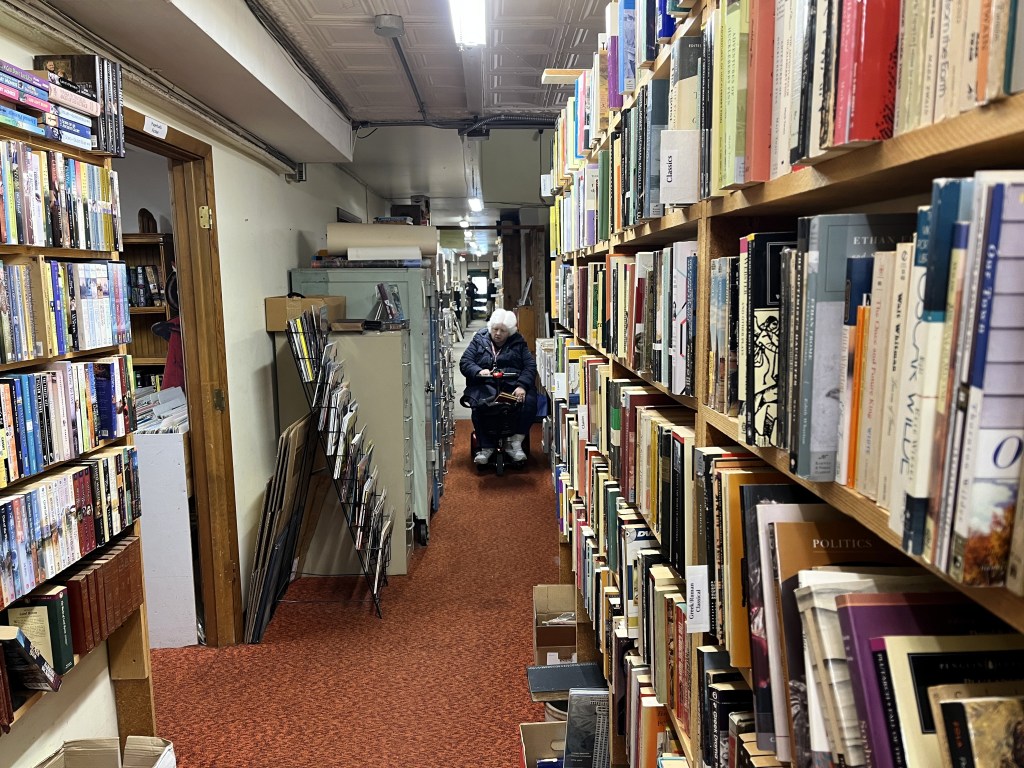
Moments later, we were at our destination. The storefront facade of Prairie Archives is meticulously maintained but also a bit misleading. At first glance, a first-time visitor might be fooled into thinking that this is just a small shop, a quick in-and-out for most book browsers. Oh, but fooled is the right word! Once inside, visitors will discover that the shop goes on and on from front to back, with additional rooms off one side, all of it covered with volumes and volumes of books. Printed art, too.

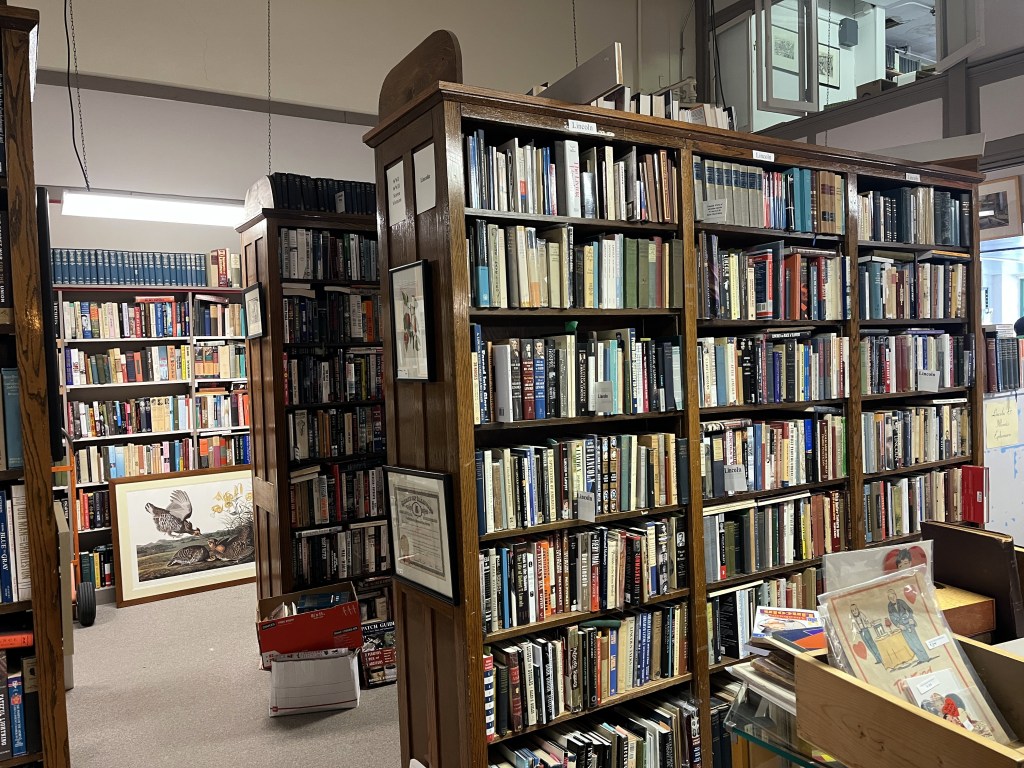
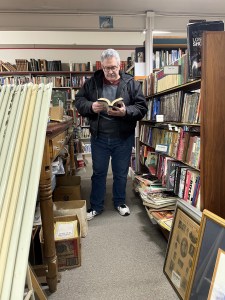
As is the case with all good used bookstores, the bookshelves at Prairie Archives are tall, plentiful, and full. I found my head starting to spin as I attempted to look over all the titles in my favorite sections, but I was grinning the whole time. Every so often I came across a card sticking out of a row telling patrons that there were over 20,000 more books shelved elsewhere and that the staff is always glad to look up specific titles in their database, to see if they are available. That friendly staff, by the way, quickly became one of my favorite things about this shop. They were always available to answer questions, explain the layout, and more.

There is also a friendly shop mascot, a smallish, cream-colored Golden Retriever named Lola, who greeted us when we arrived and checked up on us a couple of times while we were browsing. Never intrusive, Lola would just calmly approach to make sure we were okay and to see if we wanted to pet her. Of course we always wanted to pet her. Then she would wander off in search of other patrons. Karen and I are both extremely fond of shop animals, be they dogs, cats, birds, or something completely different. Shop pets tend to add character and enrich the customer experience. They tell us something about the owner, too. This is something you will never find in a big chain store.

Visiting bookstores has always felt like an adventure to me. This goes all the way back to my childhood years. My family was never wealthy and there were plenty of times growing up when my folks had to say “no” to this or that thing that I wanted them to buy for me. But to the best of my recollection, they never said no to getting a book. I had an aunt who sometimes took me to downtown Chicago and we would often stop at Kroch’s & Brentano’s, which was then the largest bookstore in the city. She always allowed me to choose a book and so I discovered the joy of bookstore browsing at a very young age.

As I was perusing the various aisles and side rooms at Prairie Archives, I began to wonder about the people who never visit places like this, the ones who don’t gain any pleasure or satisfaction from browsing bookstores, libraries, and such. Or worse yet, those who can’t. Isn’t it sad to realize that there are a substantial number of people in our society who will never know what they have missed in life. From fiction to nonfiction, classics to current events, poetry to comic books (and what a collection this place has), there are entire worlds and endless possibilities shelved in places like this, just waiting to be discovered by ordinary people like you and me..

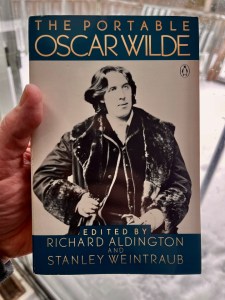
I left with only addition to my personal collection, The Portable Oscar Wilde. The Viking Portable Library is a series that originated during World War II. The compilations were intended to be carried by soldiers fighting in the war, who were forced to move around often and travel light. The series itself continued growing into the 1970s and my particular paperback was published in 1981. It’s in remarkable condition and provides well over 700 pages of Wilde’s works. Not bad for five bucks, eh? My wife, as usual, came away with a handful of finds, including two more books from a children’s series that she has been collecting for decades. We were in there for well over ninety minutes and both came away quite satisfied.

There are at least three big used bookstores within about an hour of each other in this part of the state. We could easily have visited two that day, but as we intended to get home (about 180 miles) ahead of an approaching winter storm, we opted to head back after this one. We have been to one of the others, twice in fact, but Prairie Archives is the only one I have presented here thus far. Could someone visit all three in a single day? Yes, I’m sure they could, but it would be a long day indeed, as this would require arriving at the first store when it opens and likely leaving the third at or around closing time. Could be a fun overnight road trip, though. Or you could just be like us and keep coming back. Ha!

More to come. And as always, thanks for hanging with me.

Getting the Blues Part Four: Evolution

On Tuesday morning, it was time to leave Clarksdale and head up to Memphis, Tennessee. Built on a bluff just across the state line from Mississippi, Memphis is where the Mississippi Delta begins and has been called the capital of the Delta by some. The Blues Highway, US 61, leads through the Mississippi Delta country to Memphis and many delta blues musicians traveled north to and through this gateway city. Both rock and roll and soul music were born there. And coincidentally, my family and I first traveled to Memphis over 20 years ago at the invitation of my friend Matt to meet up with him and and his family to tour the city and spend some quality time together.

We left the Shack Up Inn and headed up Highway 61, stopping for breakfast at a Waffle House near Tunica, which is popular for its casinos. Matt and I don’t gamble, but as you may have noticed, we do eat. You already saw my standard Waffle House breakfast, so no food pic this time. Interestingly enough, though, this particular restaurant has a sizable water retention pond running beside the highway. Because of the pond’s elongated shape, at first glance, I thought it might be a creek. But upon closer examination, we determined that it was a pond and that it was inhabited by a fair number of turtles. Spoiled turtles. They were so used to being fed by well-meaning restaurant patrons, any time somebody would walk up to the pond’s edge, the turtles would all swim over expecting food. This was an amusing sight to see.

It probably took longer in the 19th century, but today one can drive from Clarksdale to Memphis in well under two hours. As we approached the metro area, we opted to skip the Interstate and stayed on US 61. This took a little longer and brought us through some vastly different areas of the city, which may be considered good or bad depending upon the eye of the beholder. Matt and I both appreciate the non-touristy side of this world and besides, we were in absolutely no hurry.

Despite having taken our time, we got into Memphis far too early to check into our hotel, so we opted to visit the Stax Museum of American Soul Music, a favorite for both of us. Even though Stax was forced into involuntary bankruptcy at the end of 1975, their legacy lives on. Booker T. & The MGs, the Staple Singers, Isaac Hayes, Sam and Dave, and Otis Redding, just to name a few, were all Stax recording artists. Thanks to the local community leaders who formed The Soulsville Foundation, the Stax Museum now stands on the former site of the Stax Records. And right next door, the Stax Music Academy and the Soulsville Charter School were also made possible by this same foundation. It’s a hell of a story.

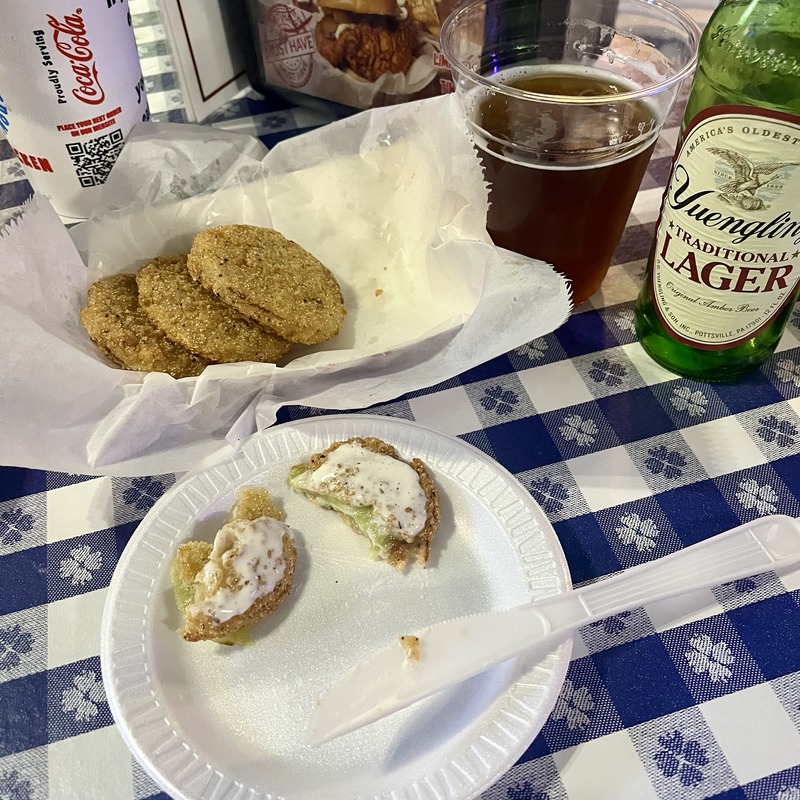
Matt had proposed eating supper at Gus’s World Famous Hot and Spicy Fried Chicken in downtown Memphis, which was the chain’s first Memphis location and in fact only the second Gus’s location before it became a chain. Gus’s serves up southern spicy (not the same as Nashvillel hot) fried chicken, which is very flavorful but not painfully spicy. We opened with an appetizer of fried green tomatoes — my first time — which were quite tasty. Then Matt had a plate of fried chicken while I opted for their “limited time only” hot and spicy chicken sandwich, which is made with a boneless thigh, not a breast. Everything was quite good.

From there we walked to The Green Beetle, the oldest tavern in Memphis, located on the opposite side of the same block as Gus’s. This place had originally opened in 1939 as The Green Beetle Cafe and enjoyed some rather famous visitors before morphing into a dive bar and changing hands several times until rising to its current iteration, owned by the grandson of the Beetle’s original founder. It was okay, and reminded me of the college bars I used to frequent back in the day, though I think we had been expecting a bit more charm. Also, just a word to the wise, which way you walk around the block from Gus’s really matters. It’s almost upscale on one side of that block and sort of war-torn on the other.

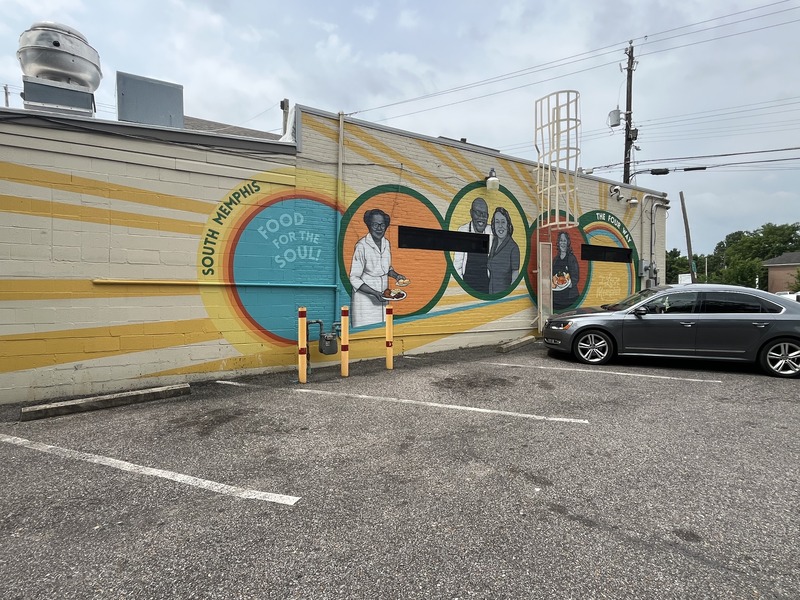
The following day, after sleeping in a bit, we enjoyed lunch at a favorite spot that Matt had introduced me to a couple of decades ago: The Four Way Soul Food Restaurant, the oldest of its kind in Memphis. Although The Four Way was frequented by the likes of Elvis Presley and Dr. Martin Luther King, it’s not exactly a tourist destination. What it is, though, is a phenomenal soul food restaurant with a longstanding reputation as a gathering place where black and white diners can eat together — not a common thing for the place and time this restaurant was established (1946) and the years that followed.

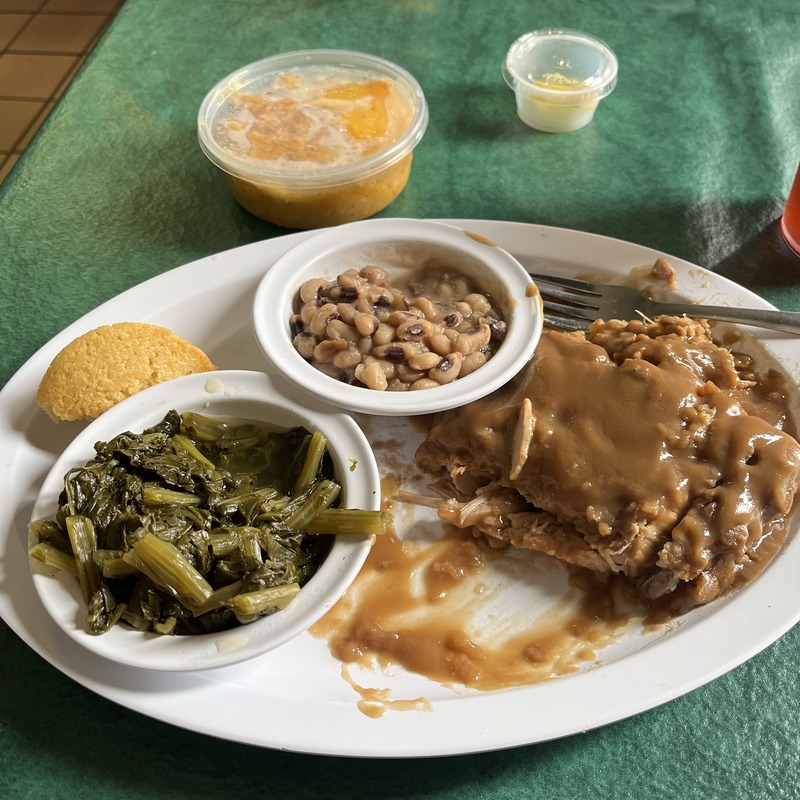
I have never had a bad meal at this place. Matt had the chicken fried steak, black eyed peas, and pickled green tomatoes. I had a fork-tender, smothered pork chop, black eyed peas, and turnip greens. Both of us finished off with a delicious peach cobbler. Everything was wonderful, as always.

As an aside, I was sad to learn that the gentleman who had greeted me at the door so many years ago, Willie Bates, had passed away in 2017. I’ll never forget the way he greeted us and made us feel welcome, telling us the story of how he had bought The Four Way out of a desire to give back to the neighborhood. On my way out the door that first time, I walked over to tell him how much I had enjoyed eating there. I’ll swear, I thought the man was going to cry. That kind of thing sticks with me.

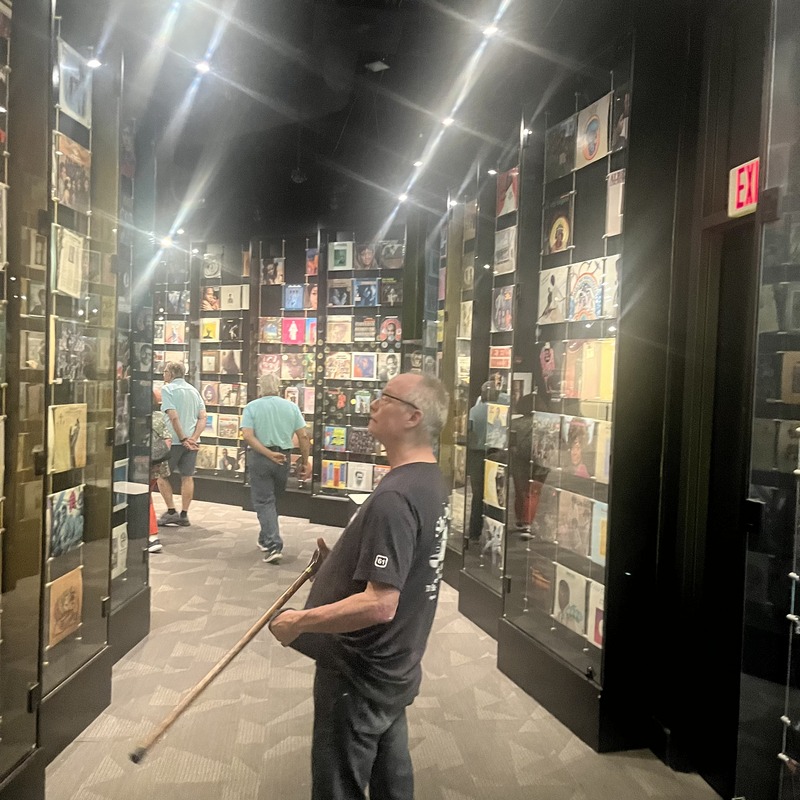
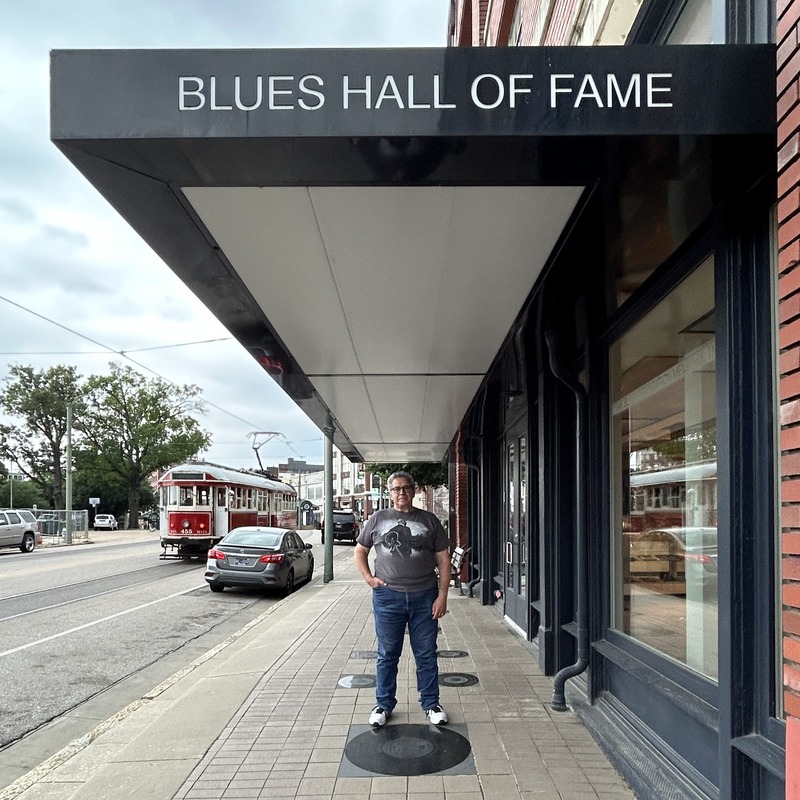
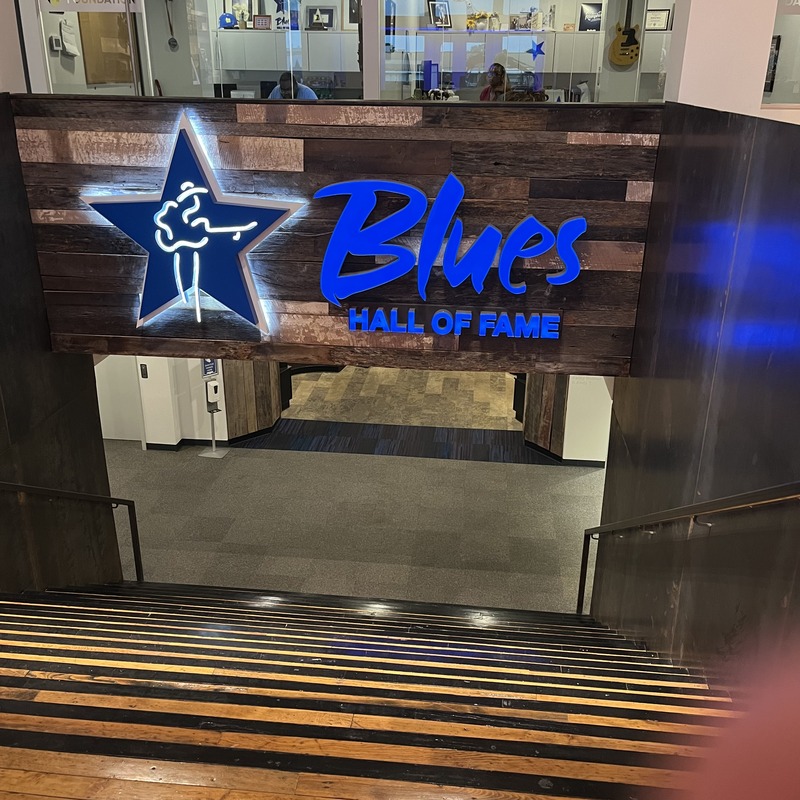
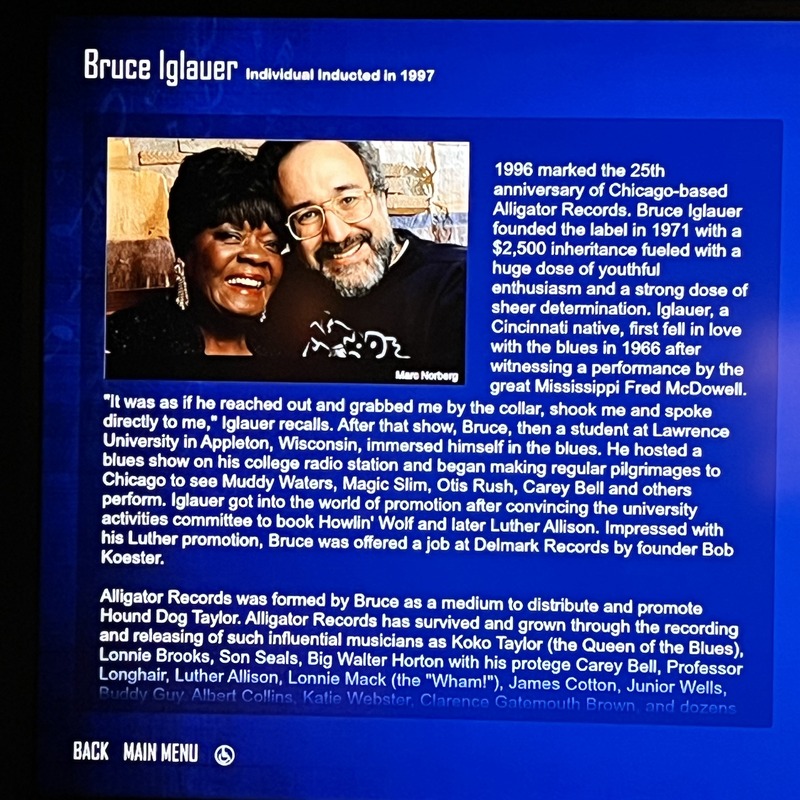
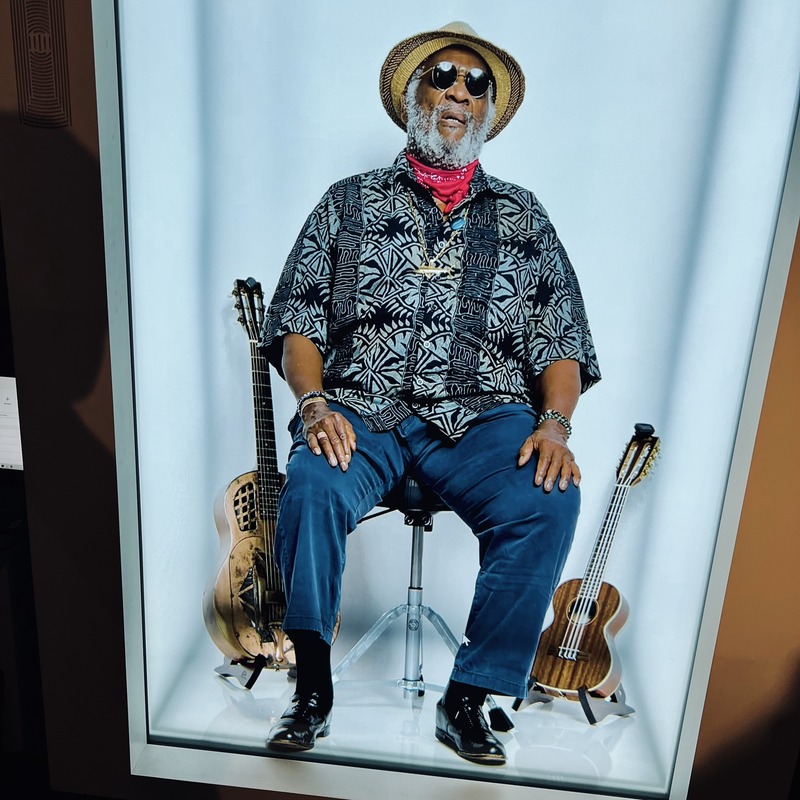
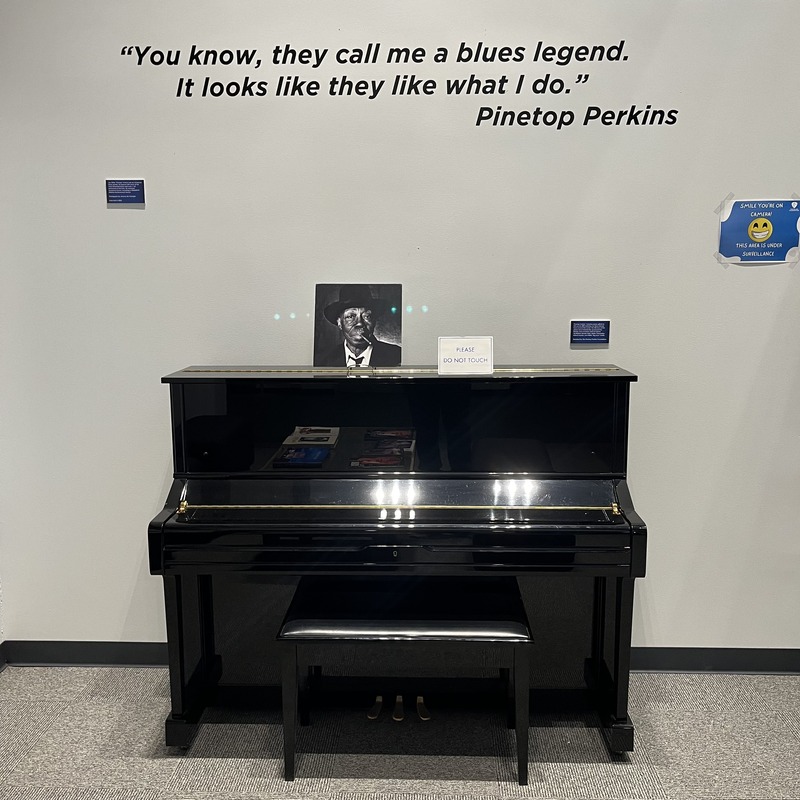
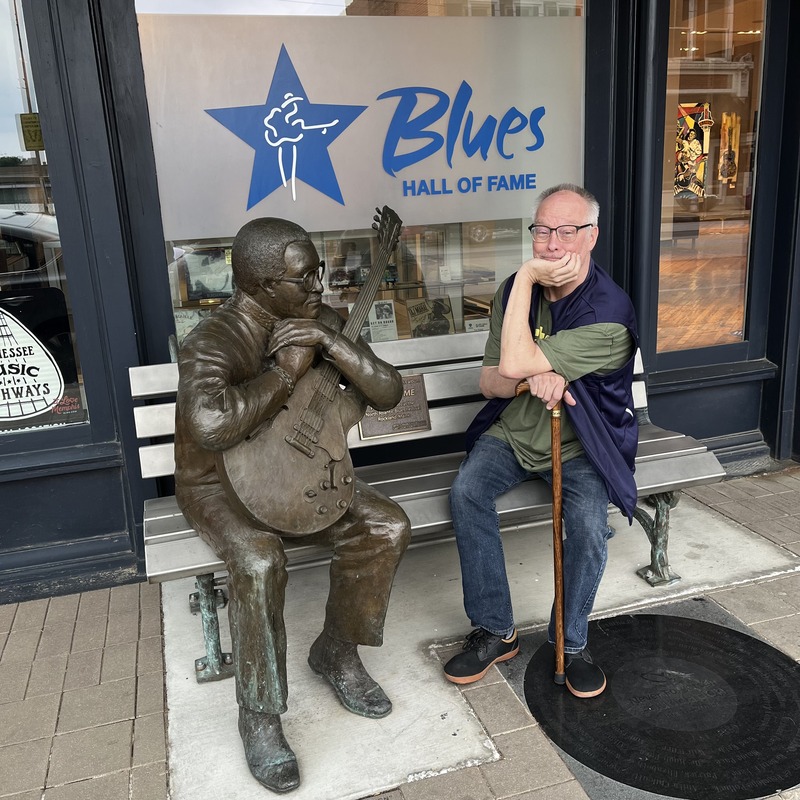
Next, we went over to The Blues Foundation’s Blues Hall of Fame Museum. Although the Hall of Fame has existed since 1980, this museum opened in 2015 and so, did not exist the last time I had been to Memphis. What a place! This museum was designed to provide an interactive and sensory experience. Besides all of the artwork, artifacts, displays, and recordings, for an additional charge, visitors can experience the museum’s interactive hologram exhibit featuring Taj Mahal. The Blues Hall of Fame is only the second museum in the United States to have utilized this technology. For about twenty minutes, Matt and I asked questions and this life-sized, three dimensional recording of Taj answered them. I’ll swear, he looked like he was gonna’ step out of that box any moment. But that was just the icing on the cake. The entire museum is great and well worth visiting.

For supper, Matt found us another hidden gem: Sam’s Deli of Memphis. Sam’s features a variety of Indian specialties but the menu overall can best be described as global. After opening with vegetable samosas an naan, Matt had this huge Italian salad and I enjoyed an equally huge sandwich called Mango Bonfire, made with Indo-Chinese chili chicken. The food was delicious and the portions more than generous. It’s best to come hungry to Sam’s!

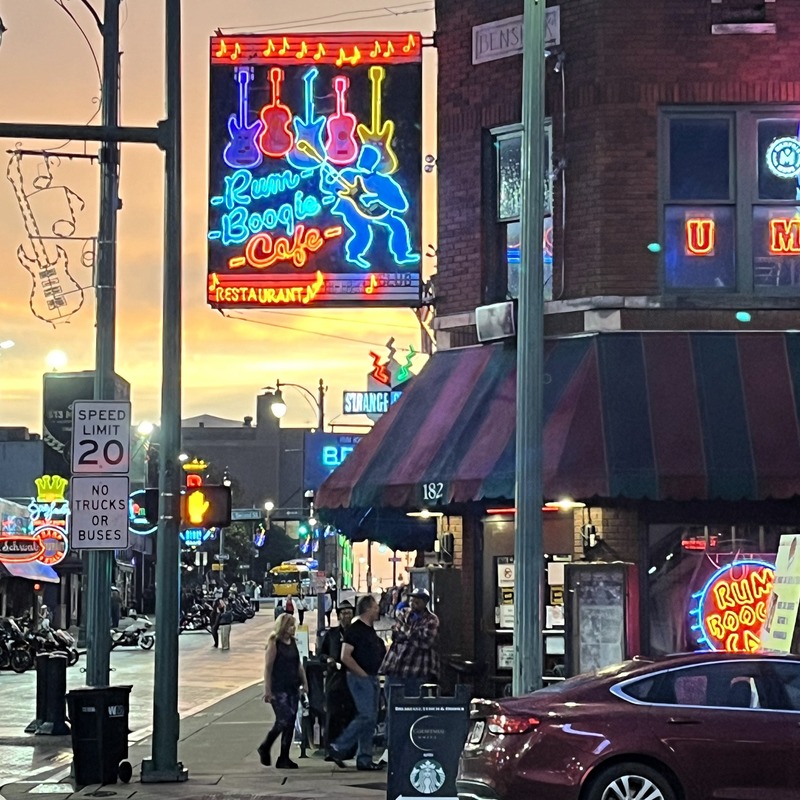
We spent the final evening of our road trip on historic Beale Street, as it seemed fitting to do so. Beale Street had been a music hotspot long before it ever became a tourist attraction. Since the mid-1800’s, around the time of the Civil War, Beale was home to Black-owned businesses, clubs, restaurants, and shops. This is where the Delta musicians used to come up to play for Black audiences. Today the historic Beale Street district is considered the top tourist attraction in the state of Tennessee.

I had made only one request and that was to visit some clubs other than my favorite, the Rum Boogie Cafe. While I do love the Rum Boogie, it was the only club on Beale Street that I had been to thus far. So instead, we wandered into 152 Beale Street, which I believe was called “Club 152” once upon a time. Currently, this establishment seems to maintain absolutely no online presence. It’s a big place with two bars and seating throughout, including a row facing streetside. There was a band playing, a pretty good one, too, but not too many people were hanging out in there. I was not able to figure out the band’s name, but they deserved a bigger audience than they had. The bartender was pleasant enough, but again, not very busy. Matt and I listened to the band as we enjoyed our drinks, and then moved on.

We briefly — and I do mean briefly — ducked into another establishment, whose name I cannot recall, and quickly discovered that (a) it was open mike night and (b) the doofus at the mike was really drunk, really getting into the song he was singing, and really, really devoid of any talent whatsoever. We walked out faster than we had walked in and headed over to B.B. King’s Blues Club, a super popular place. We paid our cover, got seated, and stayed for a while. The band, who seemed to specialize in R&B and rock and roll covers, was extraordinarily polished. Although I had been hoping to hear more blues that night, I must admit they were quite good. The place was pretty full for a weeknight and the servers seemed to be working hard to keep up. On the bright side, my drinks were good and strong. It was a good way to finish the night.

Before leaving Memphis Thursday morning, we found our way to Brother Juniper’s, a delightful and truly local breakfast restaurant that is also highly supportive of its community. I gorged myself on a couple of huge blueberry pancakes with a side of thick-sliced bacon and a mug of steaming black coffee as I contemplated how I was going to lose all the extra weight I had surely put on over the course of the past week. As much as this trip had been about the music, it also proved to be a decadent excursion into southern cuisine — and I ain’t talking health food.

After we had both eaten our fill, we gassed up the car and headed north out of Memphis on Interstate 55. Within minutes, the skies opened up and let loose with a heavy thunderstorm and torrential rain. The storm eventually subsided, but that rain would follow us all the way to Illinois.

Once in Illinois, per Matt’s request, we took a planned detour to Tower Grove Cemetery in Murphysboro to pay our respects at the gravesite of Larry “Big Twist” Nolan. When we were younger, both Matt and I had been fans of Big Twist and the Mellow Fellows, a blues band that had become a top draw on the nightclub circuit in the 1970s and ’80s. The band played at Marquette University, where we had gone to college, every year that I was there, I think. It was still raining when we got out of the car and walked over to his gravestone. I had been there once before, so I knew exactly where to find it. We talked a little bit, took some photos, and then departed for home.

Unbeknownst to either of us, two days after we had made that stop, the Murphysboro Historical Society was to unveil a historical marker dedicated to Big Twist, who had lived in Murphysboro and raised his family there. We have already agreed that the next time we are in that area, we must return to Murphysboro to view the marker.

The drive back to Plainfield was a long one, but save for a brief scare when we kept smelling raw gasoline (not ours), it was uneventful. I was deeply touched when at one point I asked Matt what part of our journey he had enjoyed most and he pointed to me, submitting that it had been a long, long time since we had talked “like we used to.” That much was true. Once upon a time, it would not have been unusual for us to stay up into the night, spinning yarns, painting dreams, or solving the problems of the world. As we get older and take on the burdens that typically accompany adulthood, life sometimes distracts us from that which is most important. I will strive to remember this going forward.

Our journey concluded that Thursday night. Matt continued on to his home and I basked in the glow of it all as I began to unpack. We had ventured out in search of the blues and in that regard, we were successful. I can’t wait to do something like this again!

Well, this has been a long one, four installments worth. If you have been following along the entire time, I am grateful to you and, as always, I thank you for hanging with me.

Getting the Blues Part Three: Different Exposures

Not everything is open on Sundays and/or Mondays in Clarksdale. The juke joints are silent and many shops are closed, even some that claim to have hours. But what is open can be absolutely wonderful and deserves to be experienced. After doing a bit of research, Matt and I planned our activities and proceeded to thoroughly enjoy the rest of our stay in town.

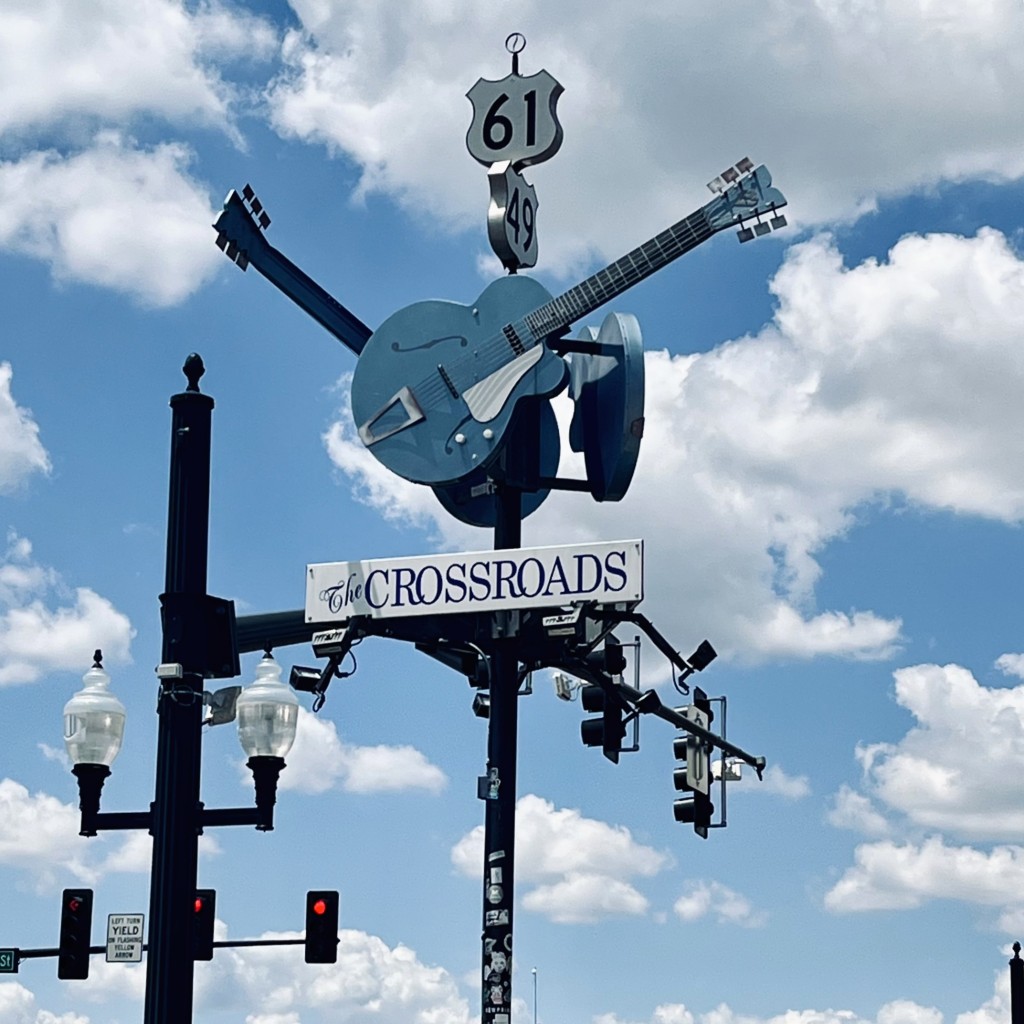
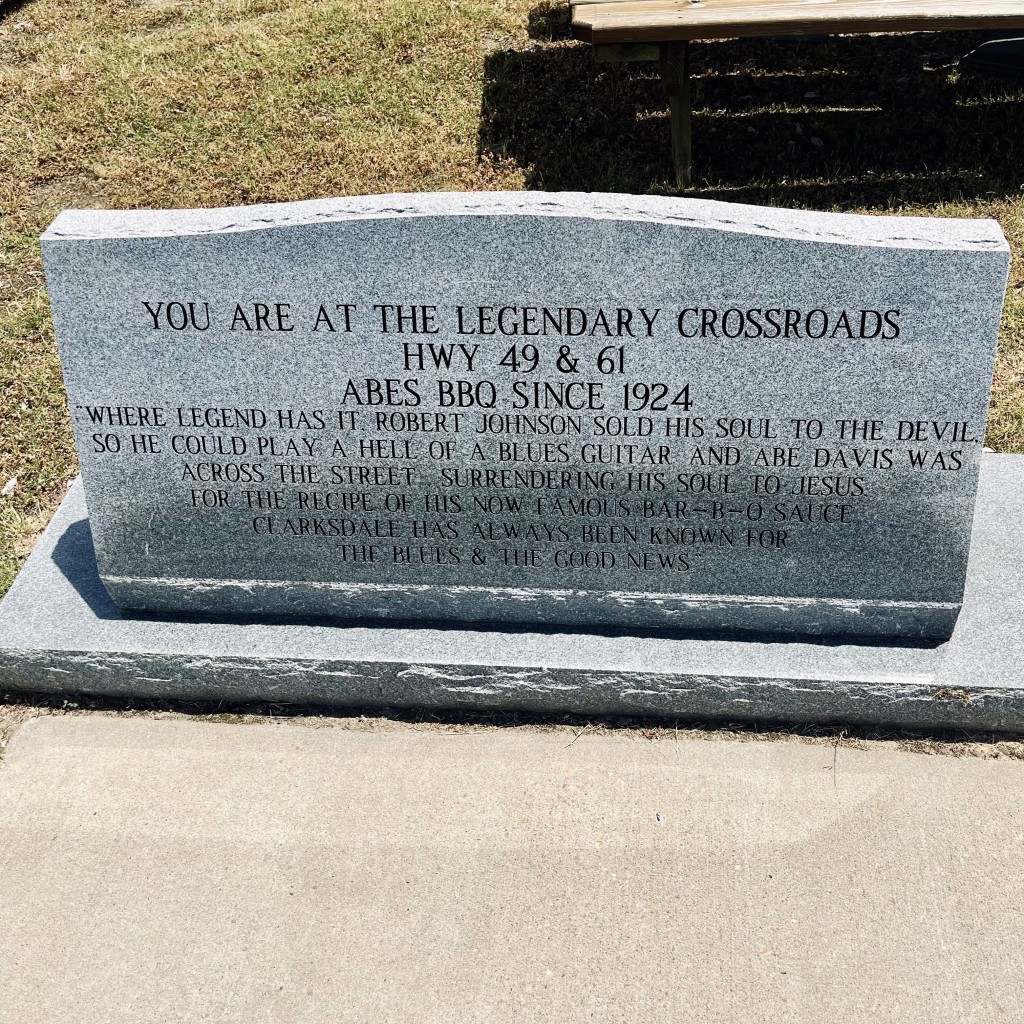
After enjoying a nice breakfast at Grandma’s House of Pancakes on Third Street on Sunday morning, we took a short ride beyond the downtown area to the intersection of US Highways 61 and 49, the legendary crossroads where some believe a young delta blues musician named Robert Johnson sold his soul to the devil to become a famous blues guitar player. Whether or not this ever happened, seeing the famed crossroads was an item on my bucket list, an item that has now been crossed off.

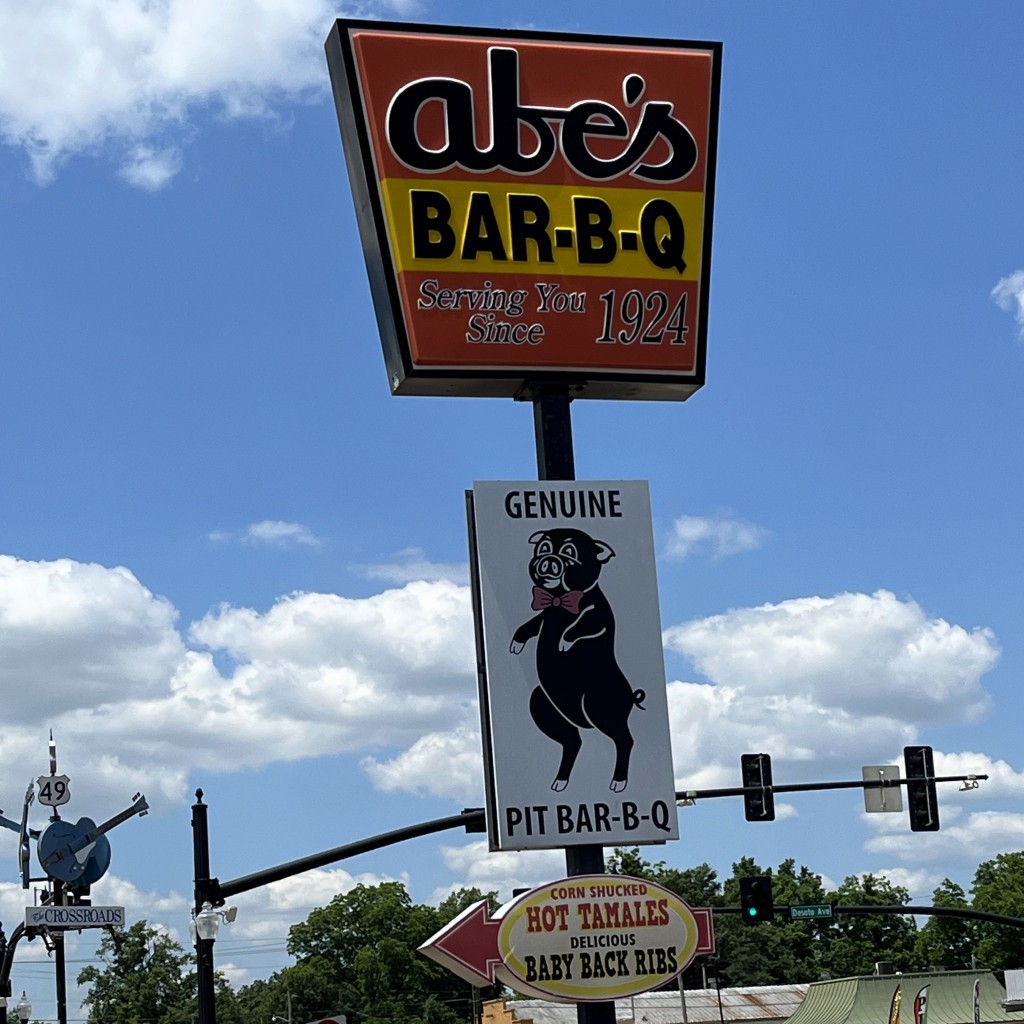
Yes, I have been to the crossroads, though I chose not to go at midnight. I have enough problems already; I don’t need any new ones. It’s a pretty busy intersection nowadays and on one corner of that intersection, we noticed a renowned BBQ restaurant, but it was not open at the time, so we went back the following day for lunch. More on that later.

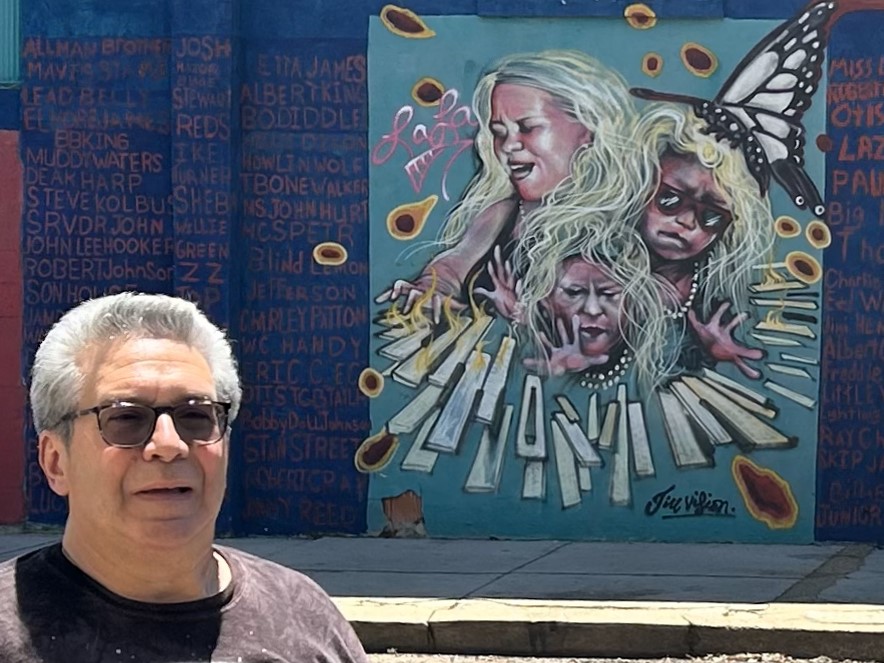
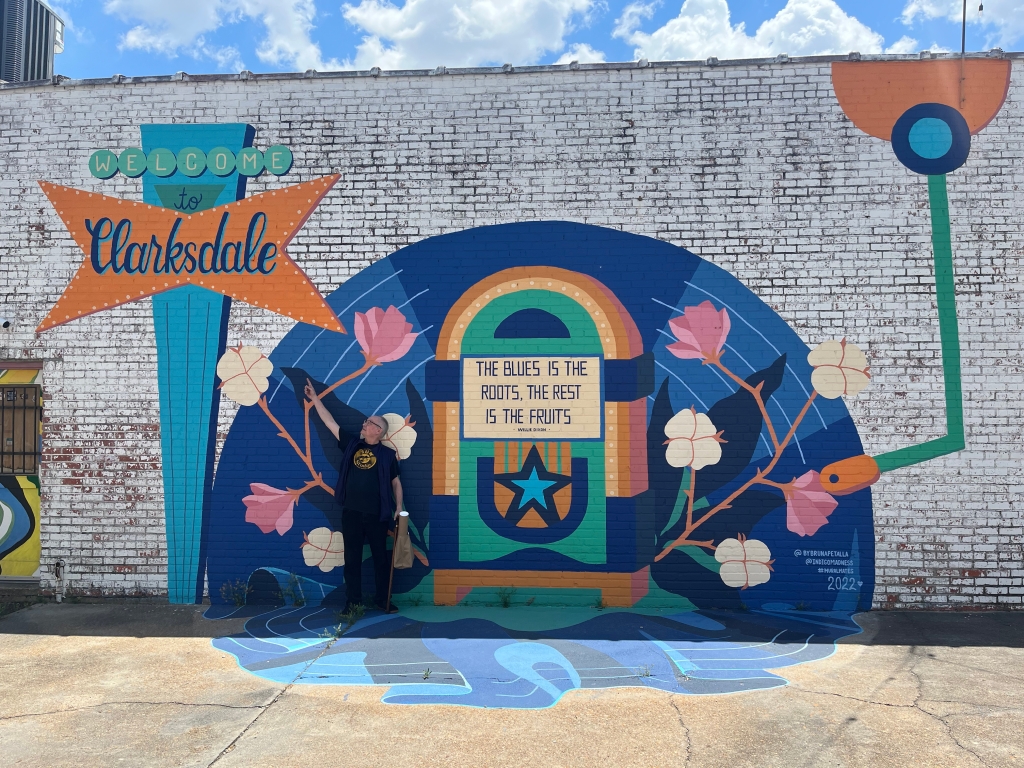
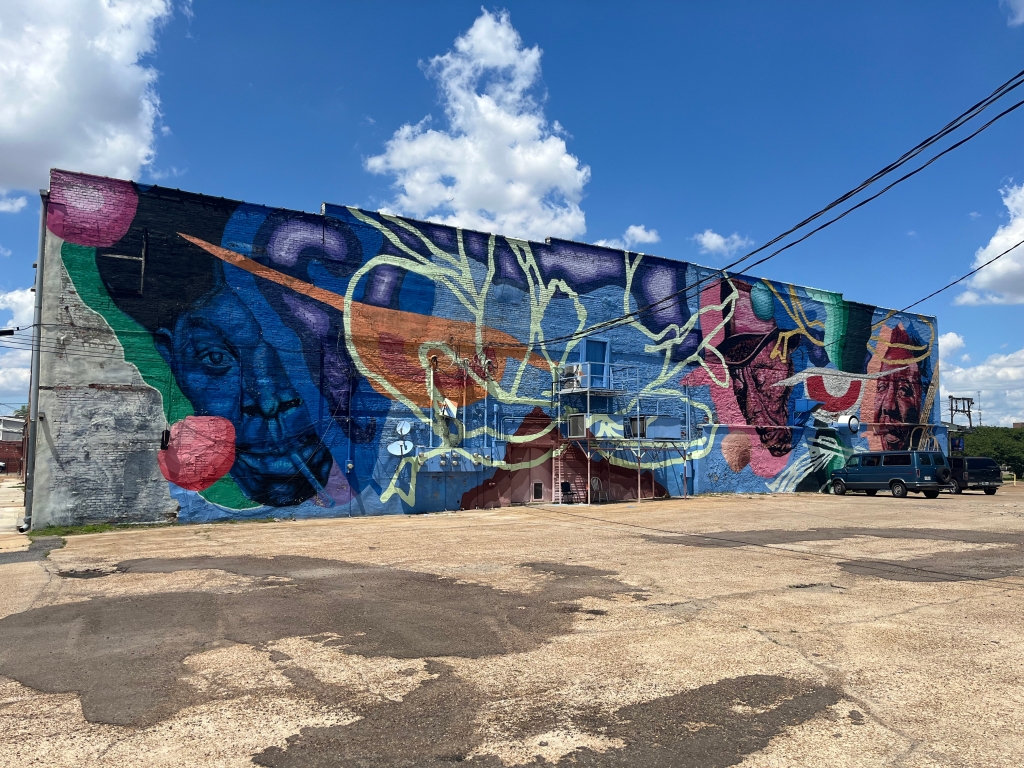
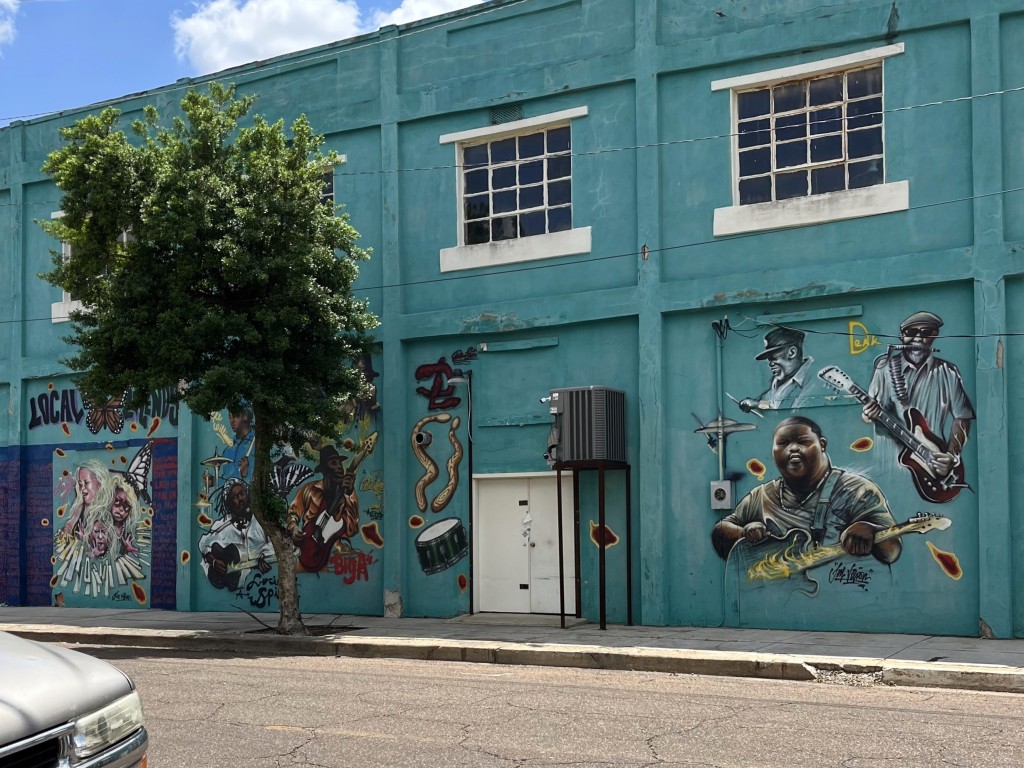
We spent a fair amount of time, both Sunday and Monday, in the downtown area walking around, exploring, and determining what was open on either day. Four things are prevalent in downtown Clarksdale. For openers, murals are everywhere, some of them quite good. You can’t walk very far without seeing a mural painted on the side of a building, or on the face in some cases. These are not acts of graffiti, but intentional works, many of them signed by their respective creators. Most, but not all, have musical themes. These murals are best appreciated while on foot. When you’re walking and you come across an interesting mural, it’s easy to stop and look at it; maybe even take a photo or two. When you’re driving, things go by too quickly, even at 25 miles per hour. And besides, your eyes should be on the road, watching for pedestrians, and so forth.

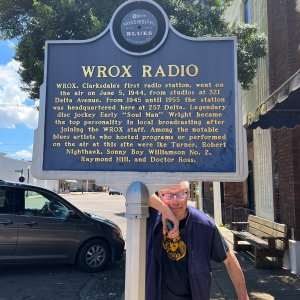
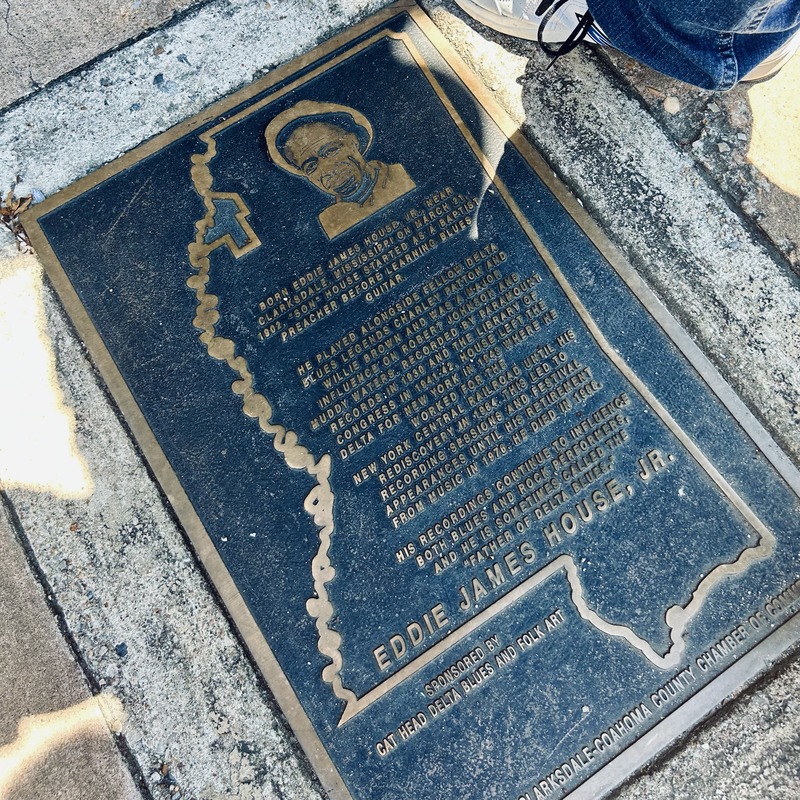
Also prevalent are the local historical markers — freestanding signs and bronze plaques — which share a great deal of information about significant businesses, people, and time periods that affected Clarksdale. Did you know that among other things, the rock and roll/R&B pioneer Ike Turner worked as a disc jockey at WROX Radio? That station is still in operation today, although not in its original location, and we listened to it while driving back and forth between our shack and other parts of Clarksdale. One can get a good sense of what has transpired in this city by reading these markers.

An unfortunate reality in downtown Clarksdale, as can be found in many other communities large and small, is urban decay. Right alongside the active commercial, retail, and residential structures in town are vacant ones, some of which have been abandoned for years already. We walked past a few former storefronts that were not just empty but falling apart.

It’s not all doom and gloom, though. The Ground Zero Blues Club occupies a building that had been empty for decades. On the next block, a former freight depot now houses an excellent museum, which I will get to shortly. Numerous unique and wonderful shops, restaurants, and music venues — some new and some that have been around for quite a while — are still very much in operation. Clarksdale also hosts a variety of festivals throughout the year. All of these things are drawing people from around the world to visit. I’m just one of those people. In my mind’s eye, these are the things that could very well reverse the decline of this city and make Clarksdale become for blues what Branson, MO became for country music.

Speaking of music, that’s the fourth prevalent thing. Communities with a substantial musical heritage are different from other communities in that their musical significance permeates everything. You’ll find it woven into the decor of restaurants and hotels. Their respective event calendars will be peppered with music and music-related happenings. And music won’t just be something to find downtown; for all intents and purposes, it is the downtown. Clarksdale is like that.

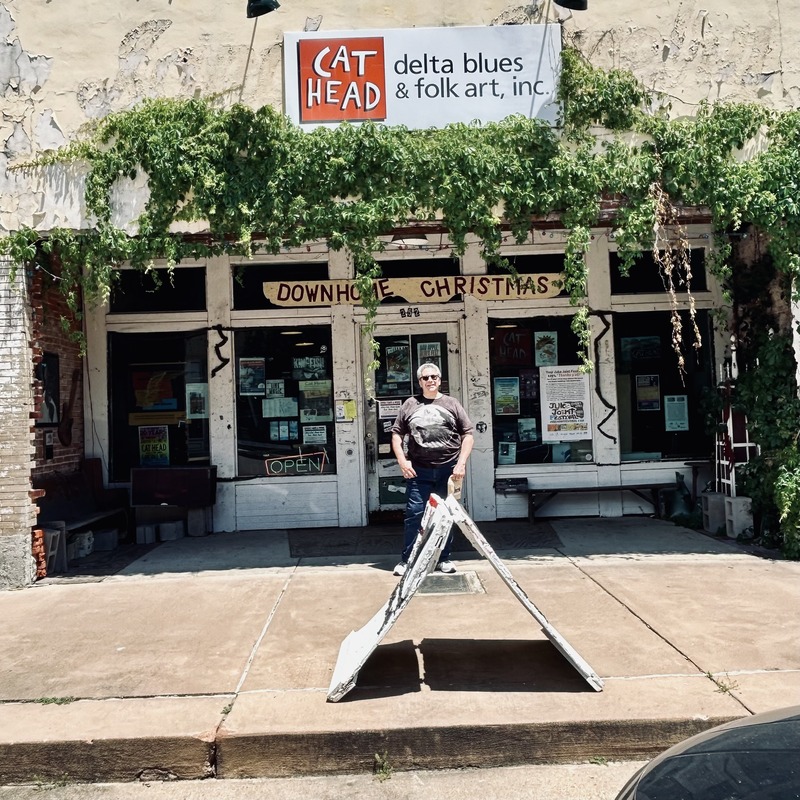
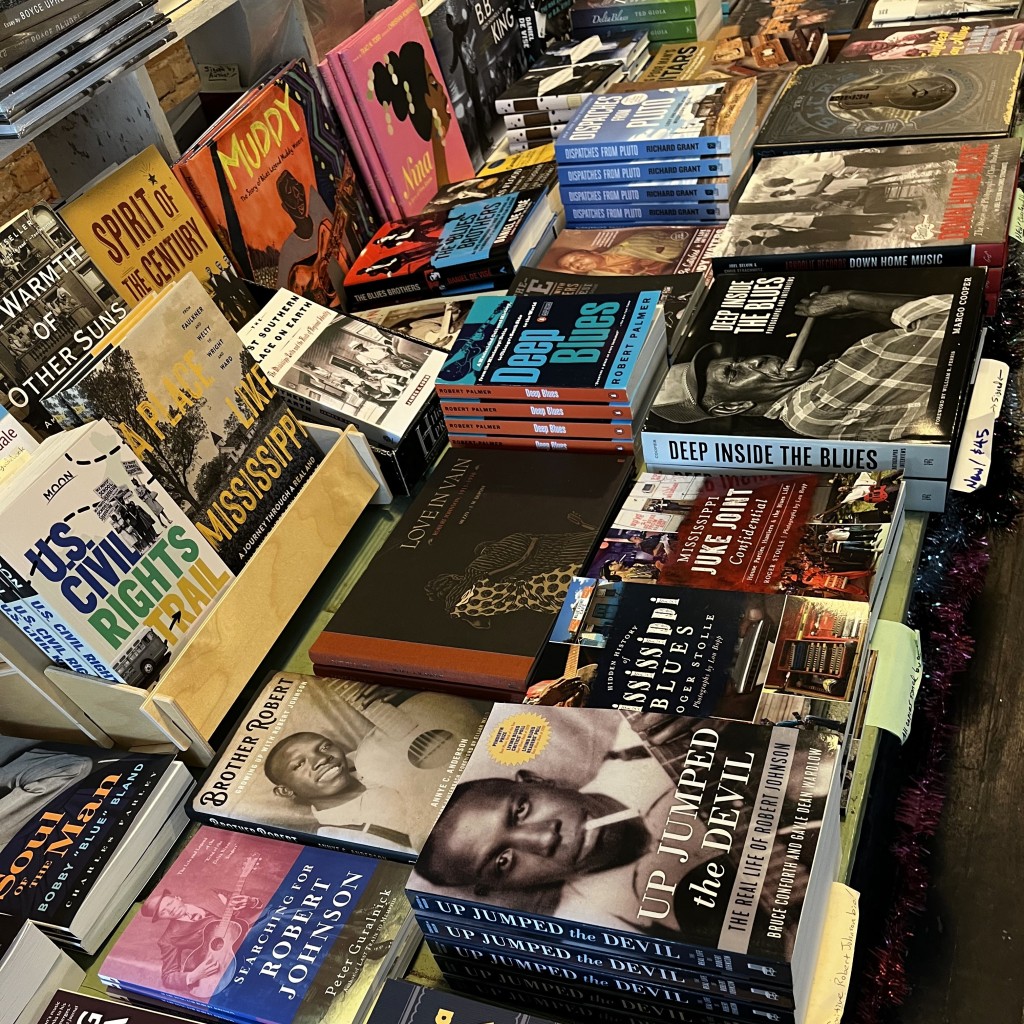
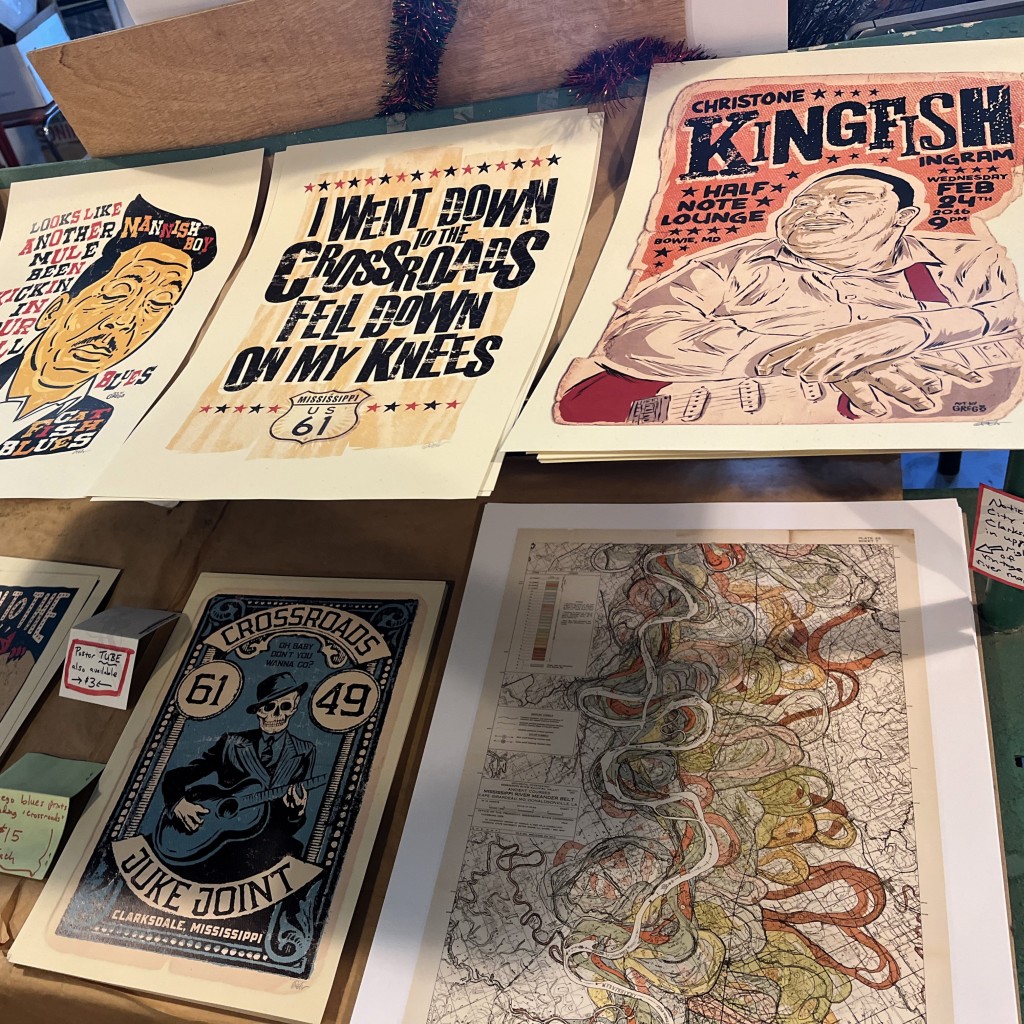
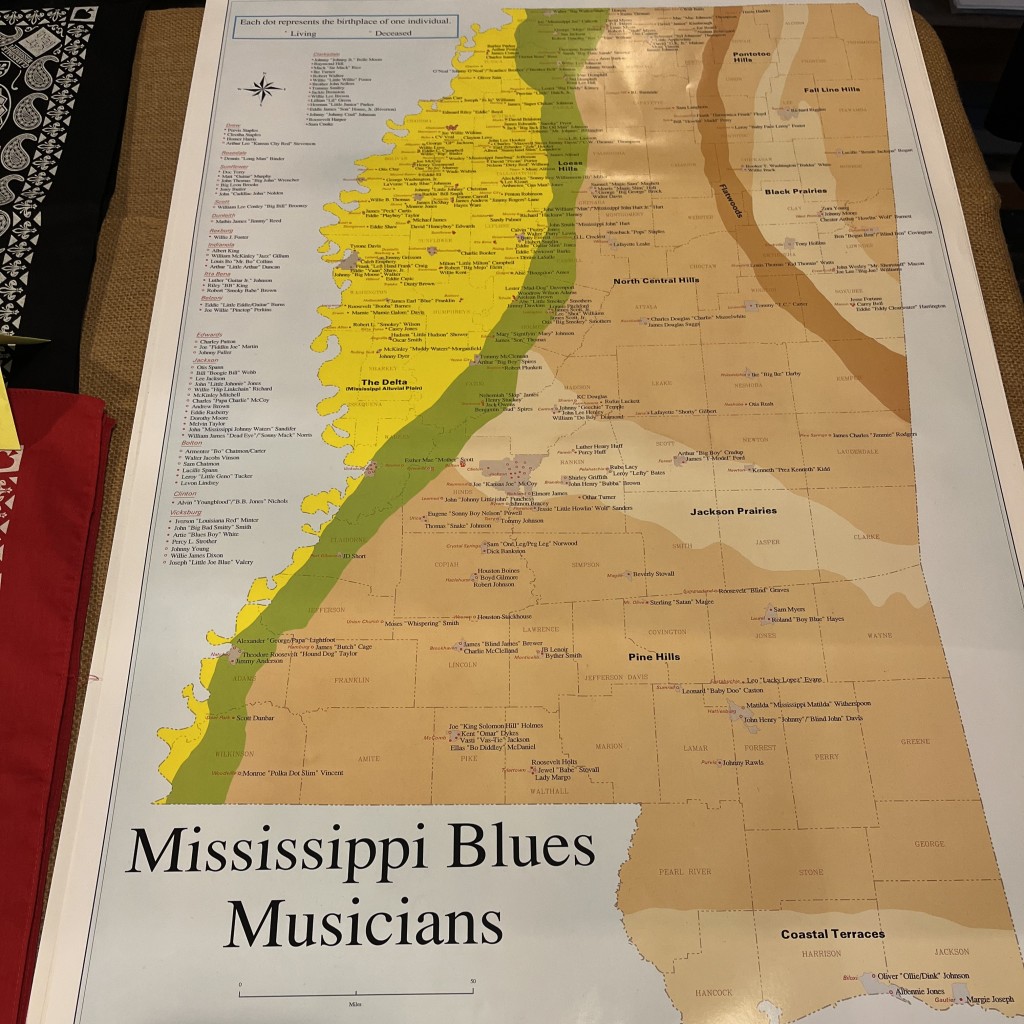
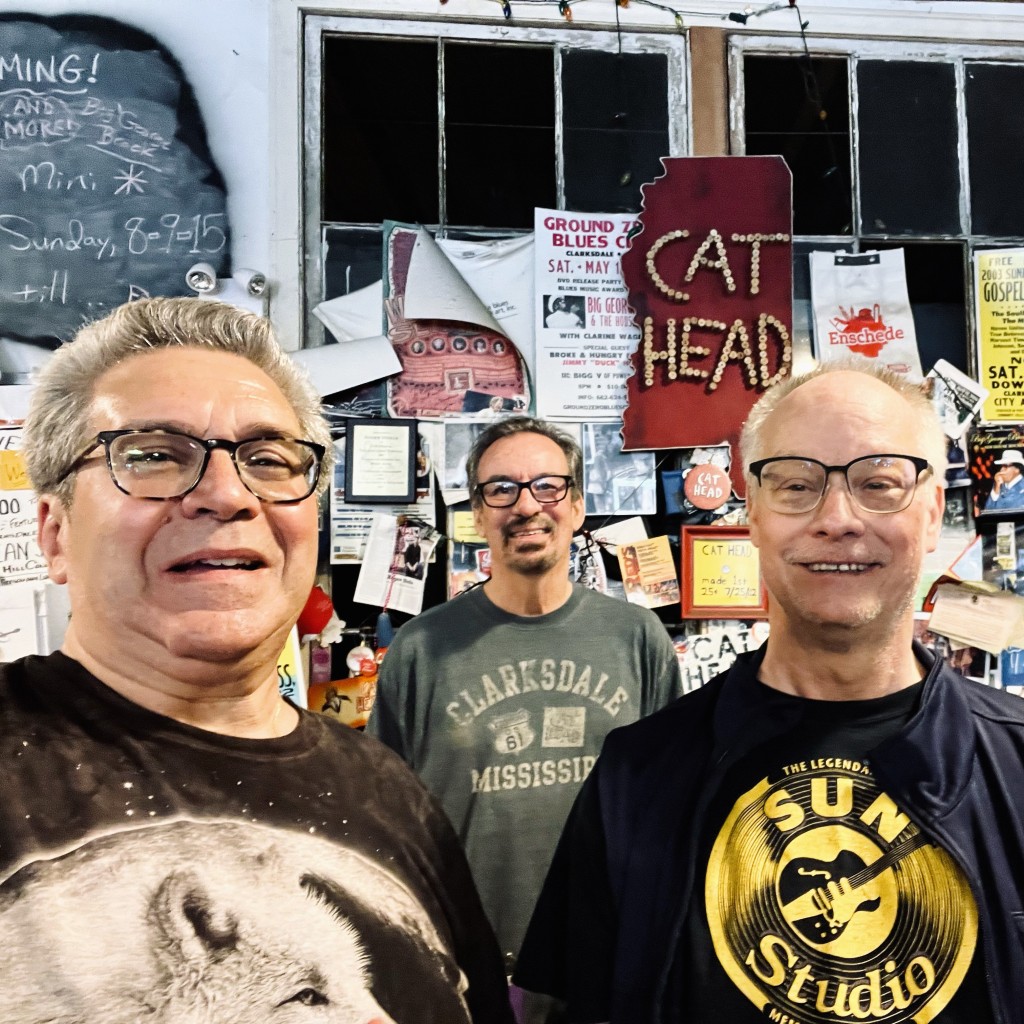
We discovered an amazing shop called Cat Head, self-described as “Mississippi’s Blues Store” by its founder, a gentleman named Roger Stolle. Roger is an amazing individual who moved to the already declining city of Clarksdale for the express purpose of promoting the delta blues tradition from within. I hadn’t known that when I visited the store, but it’s really an amazing story. One must visit Cat Head in person to experience what it’s all about. They sell a variety of merchandise, all related to the blues. They host live music performances and have supported or personally executed numerous projects aimed at promoting Clarksdale and its rich history.

Matt and I did not have the pleasure of meeting Roger Stolle while we were there, but we did get to meet another awesome individual. A gentleman named Frank, who had been minding the shop that day, engaged us in conversation as we were perusing the merchandise. When he found out we were staying at the Shack Up Inn, he asked which shack we were in and when Frank learned that we were staying in the Mule, he remarked, “You’re the guys who got moved from the Sweet Honey.” Naturally, I inquired as to how he knew that. Turns out Frank is one of the owners of the Shack Up Inn! Frank is also yet another individual who moved to Clarksdale because he gets what the Shack Up Inn is about and believes in the potential of Clarksdale. Frank is also a friend and fan of Roger Stolle, which is why he was helping out at Cat Head that day.

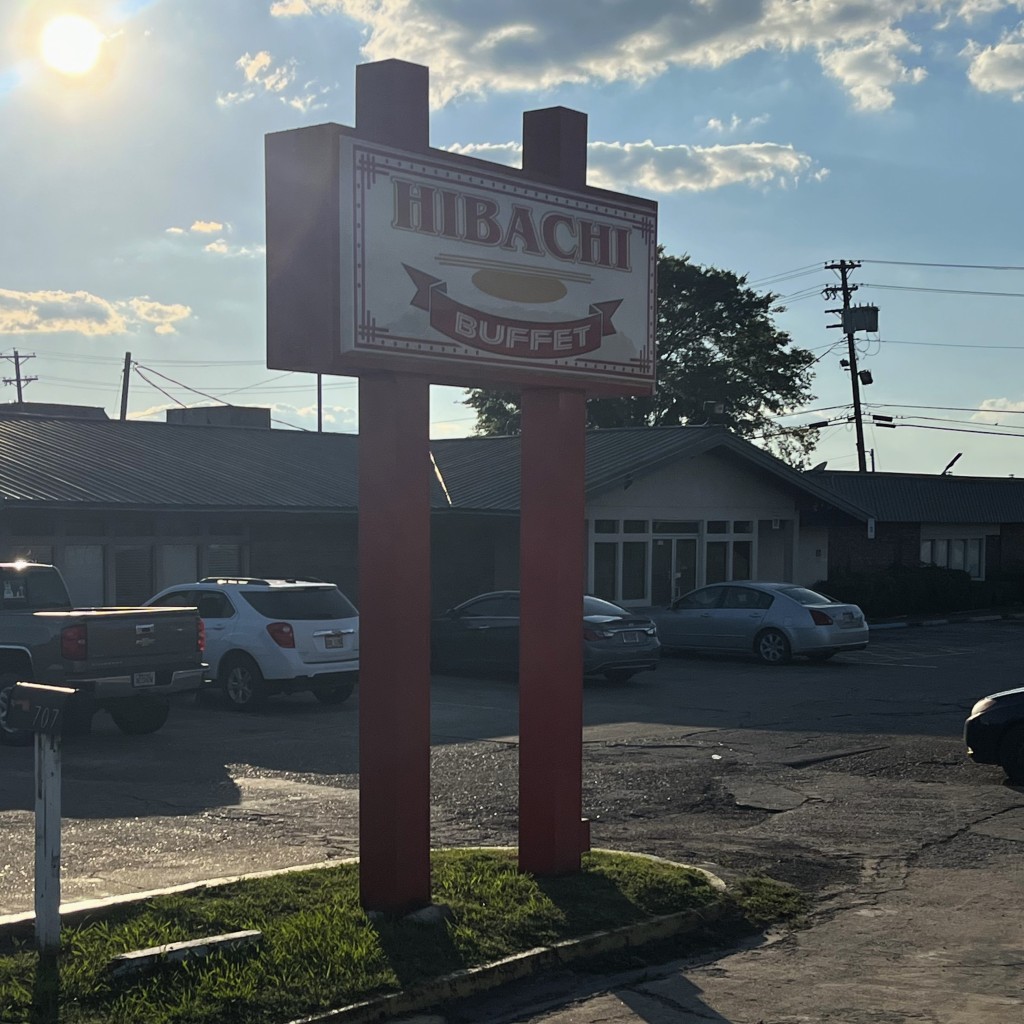
I had an aunt who would say about certain towns, “They roll up the sidewalks on Sunday evenings,” meaning that just about everything would be closed. I recalled her words as Matt and I began researching our Sunday supper possibilities. Most of the downtown places are not open on Sunday evenings, so we opted to go beyond that area to try Hibachi Buffet, out on State Street, which is well-rated online and open seven days a week. And man, did we strike pay dirt! The sheer variety of cuisine, from Asian specialties to Cajun and soul food dishes, all of them delicious, made me an immediate fan. Even before the pandemic, good buffet restaurants had become few and far between. It’s nice to know that there are still some good ones out there.

The juke joints are also quiet on Sundays, but Clarksdale boasts having live blues seven days a week and they deliver on that promise, too. One need only go as far as Cat Head’s “Sounds Around Town” page to see who’s playing where and when. Now I have to be honest, I wasn’t too sure about going to a hostel to hear blues music, but I was joyfully mistaken. The Auberge Clarksdale Hostel is a very inviting establishment and their Old Madidi Bar, formerly the Madidi Restaurant that was owned by Morgan Freeman and Bill Luckett until 2012, features live blues music in a somewhat intimate setting that Matt and I enjoyed very much.

Our entertainment for the night was provided by Terry “Harmonica” Bean, a delta blues artist — in fact, a very capable one-man blues band — and a most pleasant and personable entertainer. Matt and I found a low table with two comfy chairs by a window, located directly across from where Terry was seated and playing exactly the kind of music we had expected to hear down in the Delta. He played guitar, harmonica, and an amplified stomping board as he sang some of the best blues we would hear on our road trip. And when I say played, I mean worked. That man came on at 7:00 PM and didn’t call it quits until after 10:30 PM, taking only one incredibly short break during that whole time. We absolutely loved it!

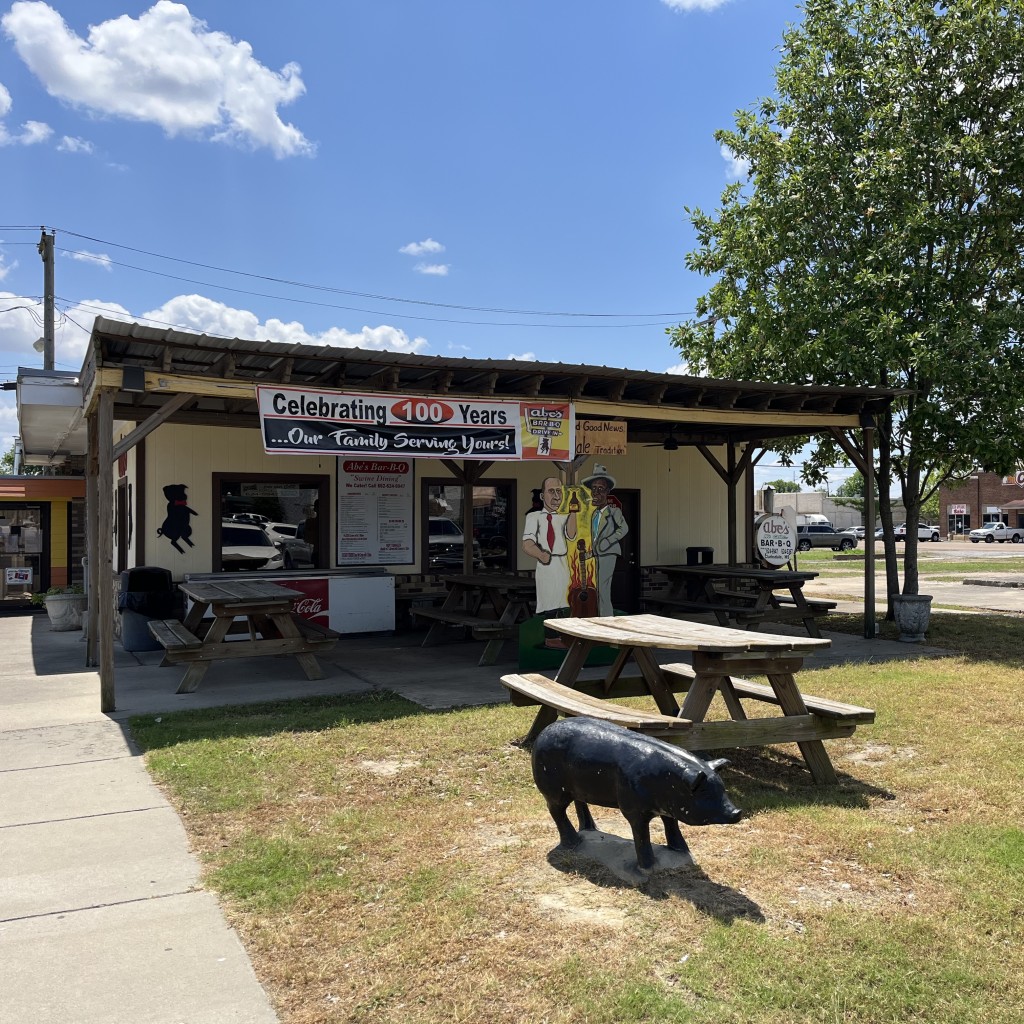
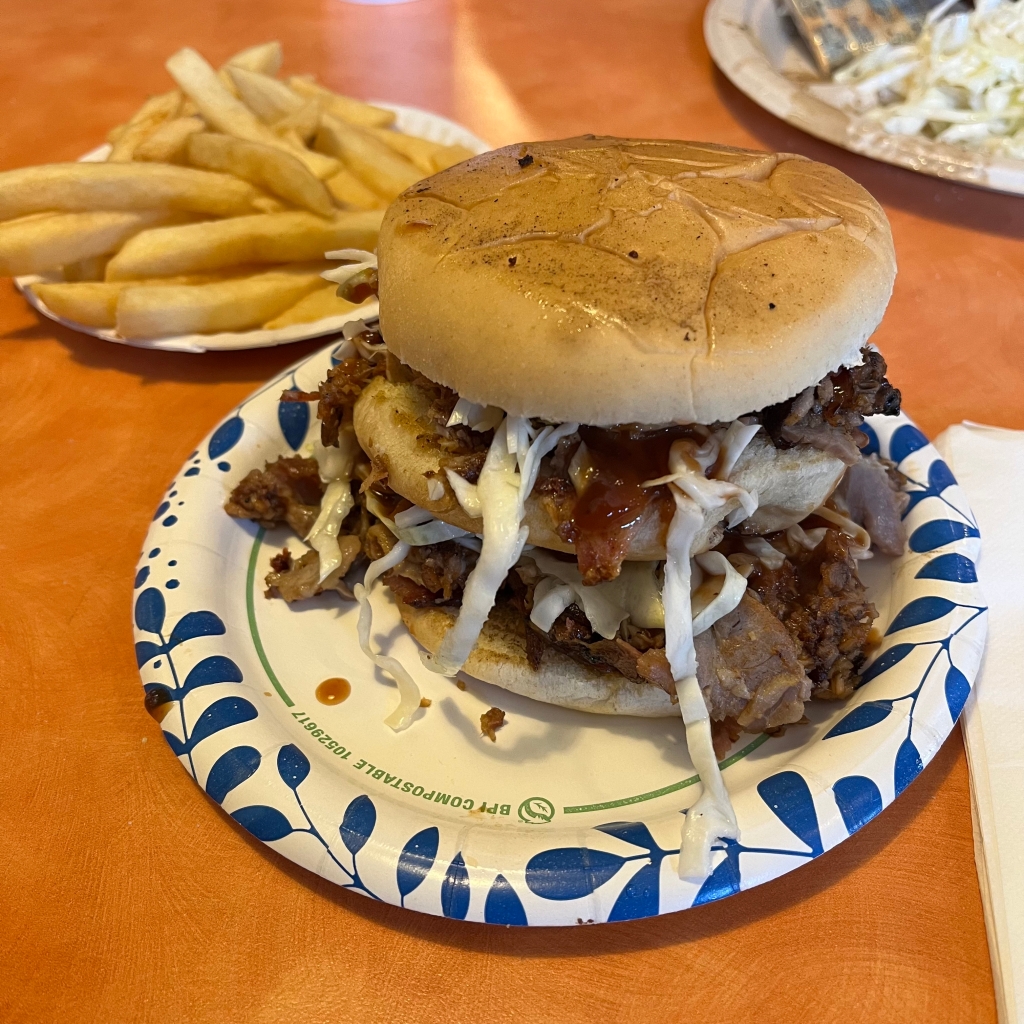
On Monday, we returned to the famed crossroads right around 11:00 AM to see what Abe’s Bar-B-Q had to offer. Abraham Davis, a Lebanese immigrant, went into the restaurant business in the 1920’s and eventually moved it to the present location. His son, Pat Davis, Sr, took over the cafe in 1960 and the name was changed from Bungalow-Inn to Abe’s to honor the founder. Mr. Davis’ BBQ has been a regional sensation for 100 years now and judging by the line that had formed by noon, Abe’s remains a favorite with locals and travelers alike. Matt had a plate of hot tamales, which interestingly enough is a delta dish, and I had the Big Abe, a double-decker BBQ pork sandwich topped with coleslaw. Both were quite good and we were very glad that we had the idea to come in ahead of the lunchtime crowd.

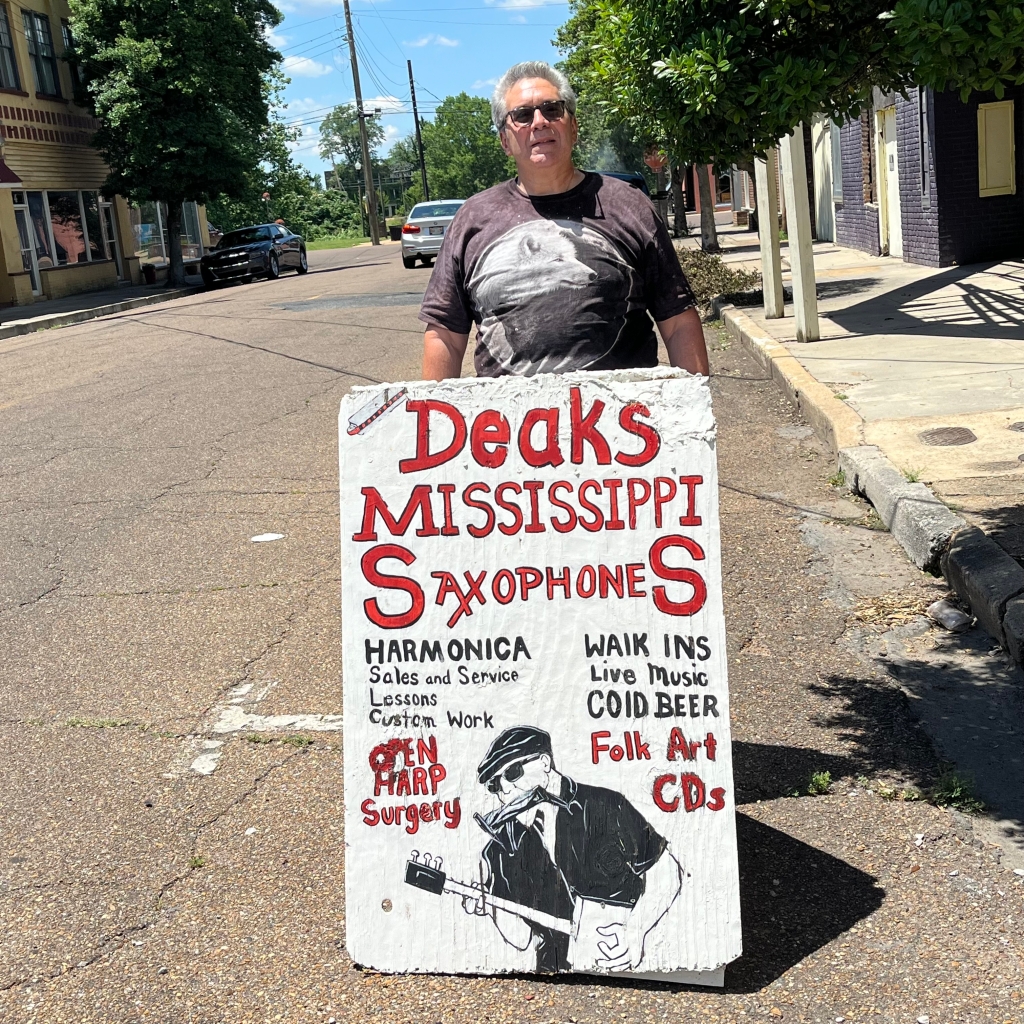
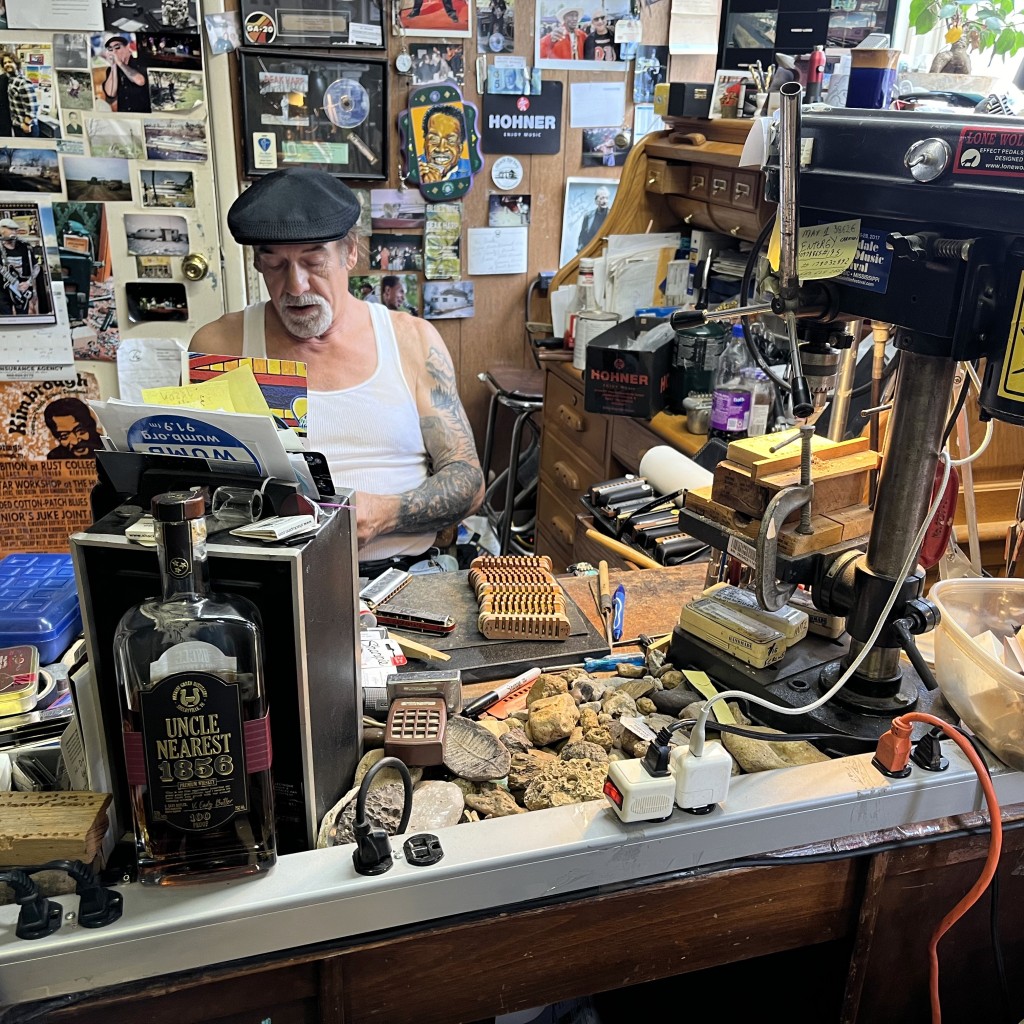
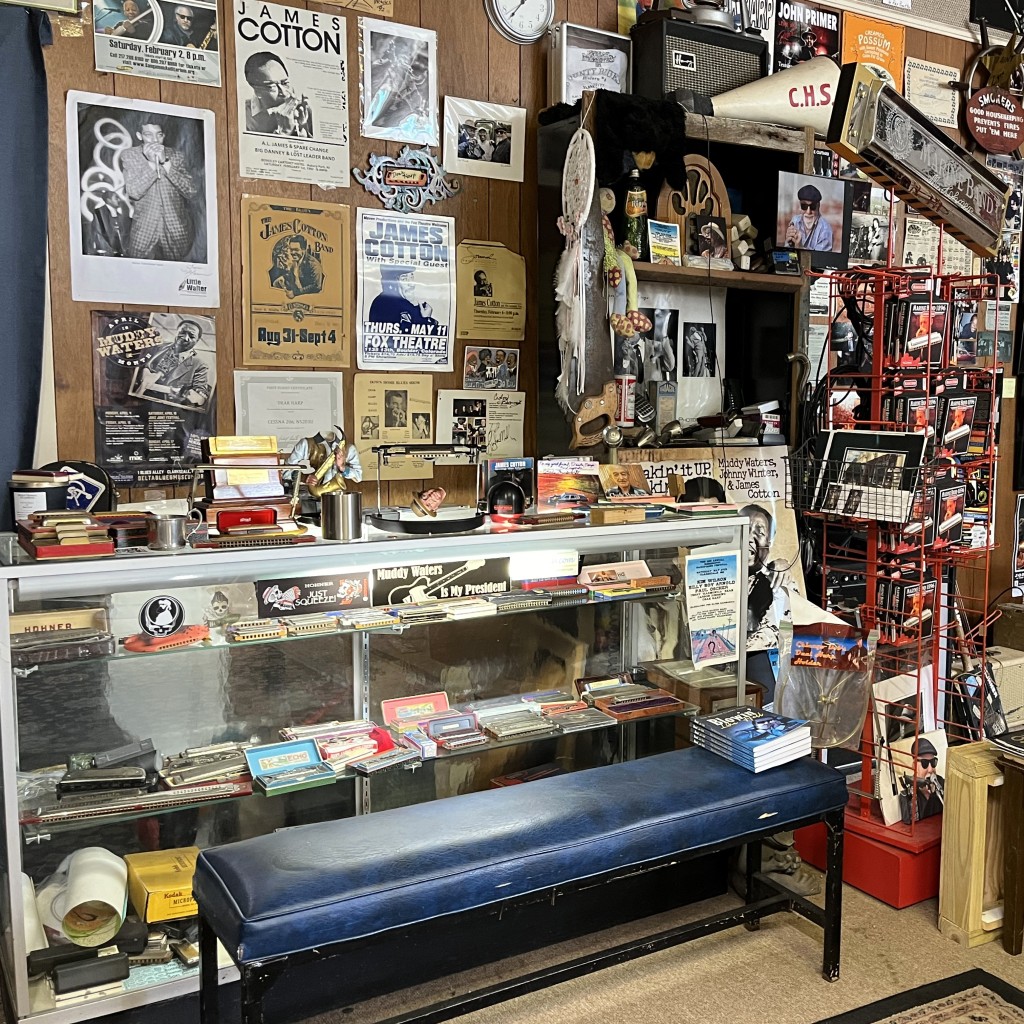
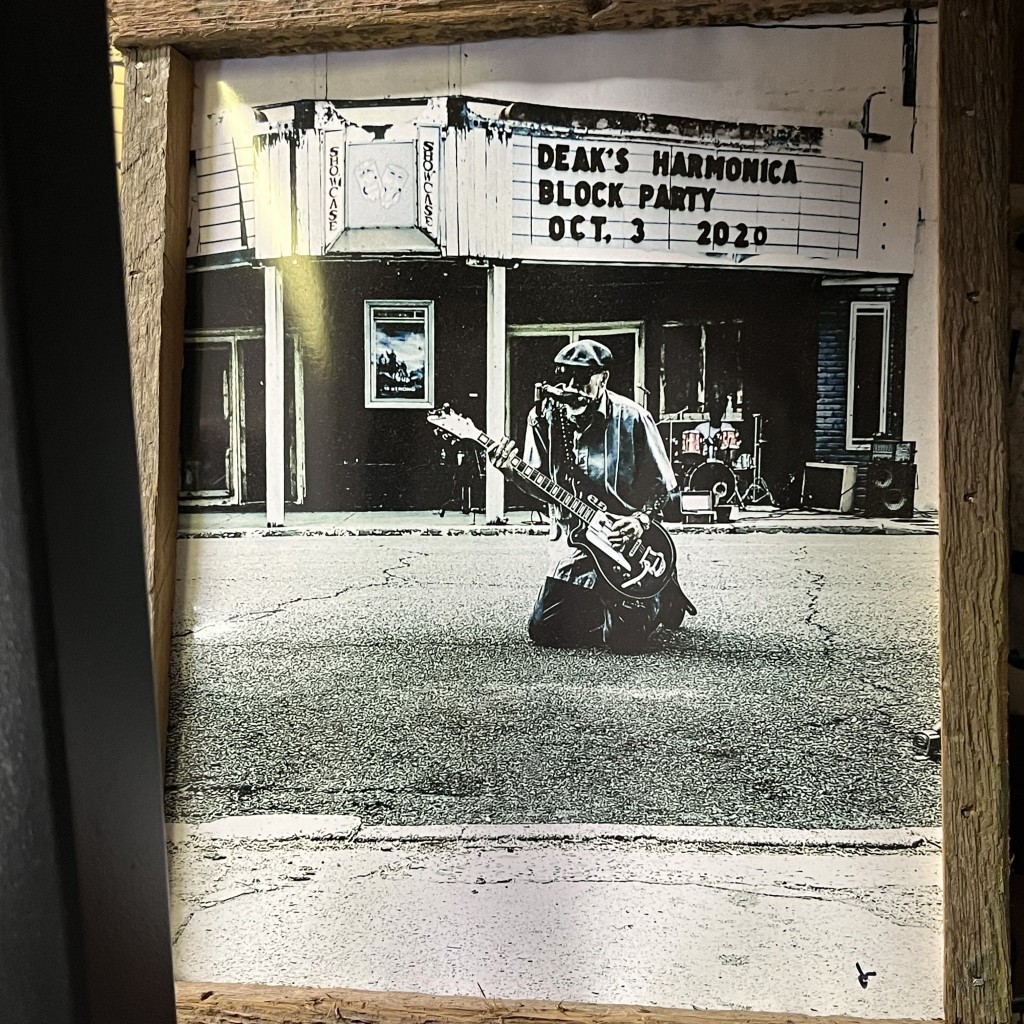
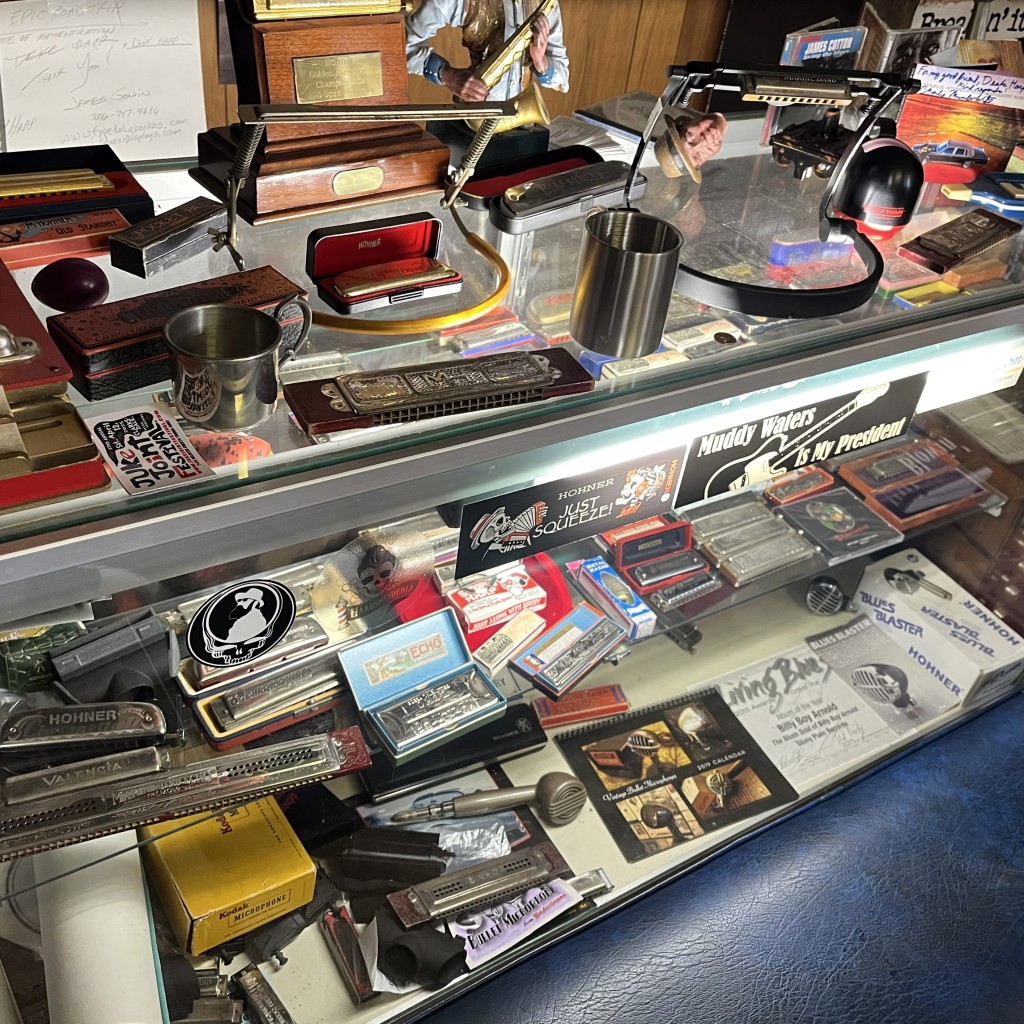
Okay, this is a good one. On Third Avenue downtown, next to a former movie theater, is Deak’s Mississippi Saxophones & Blues Emporium, a must-see shop for any blues pilgrim while in Clarksdale. As is the case with Cat Head, you will not find another place on earth quite like Deak’s shop. Part store, part museum, part service center, and just a nice place to stop and visit. Deak Harp, an accomplished musician who used to tour with James Cotton, can take an ordinary off-the-rack harmonica, disassemble it, modify and customize the innards, and build a professional instrument. He did exactly that for Matt, who plays the harmonica on occasion, while we went off to do some more touristy stuff.

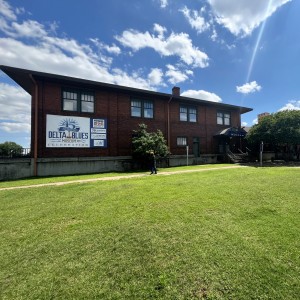
Where does one go on a Monday afternoon in Clarksdale to kill ninety minutes or so? I heartily recommend the Delta Blues Museum, which is housed in a former railroad depot just east of the Ground Zero Blues Club. A lot of thought, planning, and work have gone into this place and it shows. Their mission statement says it best: “The Delta Blues Museum is dedicated to creating a welcoming place where visitors find meaning, value, and perspective by exploring the history and heritage of the unique American musical art form of the blues.”

Unfortunately, photography is not allowed inside the museum, so the only photos I have are from the exterior. But within those walls is a vast treasure of exhibits, artifacts, and many, many stories of the blues from its beginnings down in the Mississippi Delta to the global phenomenon that it has become. Although I consider myself a blues aficionado, I really know only a fraction of the whole story. Places like this are where people like me can go to gain additional knowledge and a better perspective on the genre. In truth, we could have stayed longer. There is a lot to see in there! Very cool.

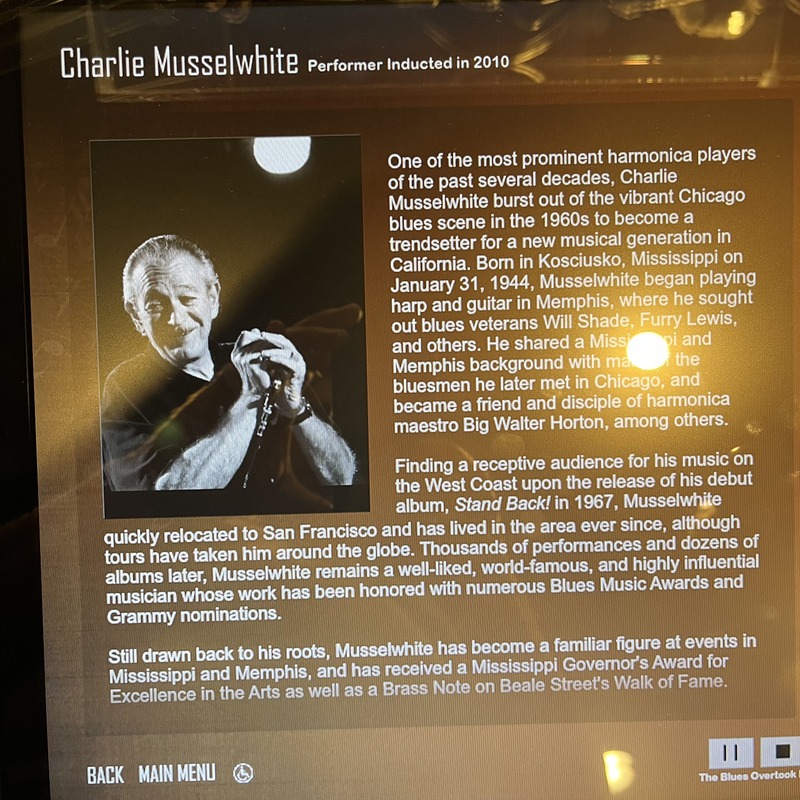
It was just over 90° in the shade when we returned to the shop to complete Matt’s purchase and believe me, we were feeling it. I sent Matt ahead to Deak’s and walked over to my car to fetch some bottled water. When I walked into the shop, I found three gentlemen inside talking. Matt was in an old upholstered chair by the door, Deak was seated at his work desk, and seated in another upholstered chair near Deak sat none other than Charlie Musselwhite, one of the greatest blues harmonica players of our time. A pivotal figure in helping revive the Chicago blues scene in the 1960s, Charles Douglas Musselwhite is a Grammy Award-winning artist who has also won 33 Blues Music Awards and has been inducted into the Blues Hall of Fame. And there he sat, smiling away and passing time with Deak Harp and my friend Matt.

When the opportunity presented itself, just to be sure, I asked, “Excuse me… Is that Charlie?” Everybody nodded, including Charlie. I tried not to gush too much as I stepped over to shake hands and introduce myself. The conversation continued about harmonica playing, life as a blues artist, and so on. Before we left, Matt and I took turns photographing each other with the two blues men, who then continued their visit after we bade them goodbye. I’m sure Matt and I were grinning ear to ear as we walked back to the car.

As we headed back to the Shack Up Inn, I made a point of stopping to snap a photo of a peculiar sight that we saw every day while in Clarksdale. On US Highway 49, between the inn and the city proper, is a railroad crossing at which a long line of freight cars has been uncoupled to allow highway traffic to pass through. What makes it odd is that the line of freight cars extends in both directions as far as the eye can see. And that line never moved or changed during the entire time we were there. The cars aren’t old or rusted. It just appears as if someone long-term parked a very long freight train down here.

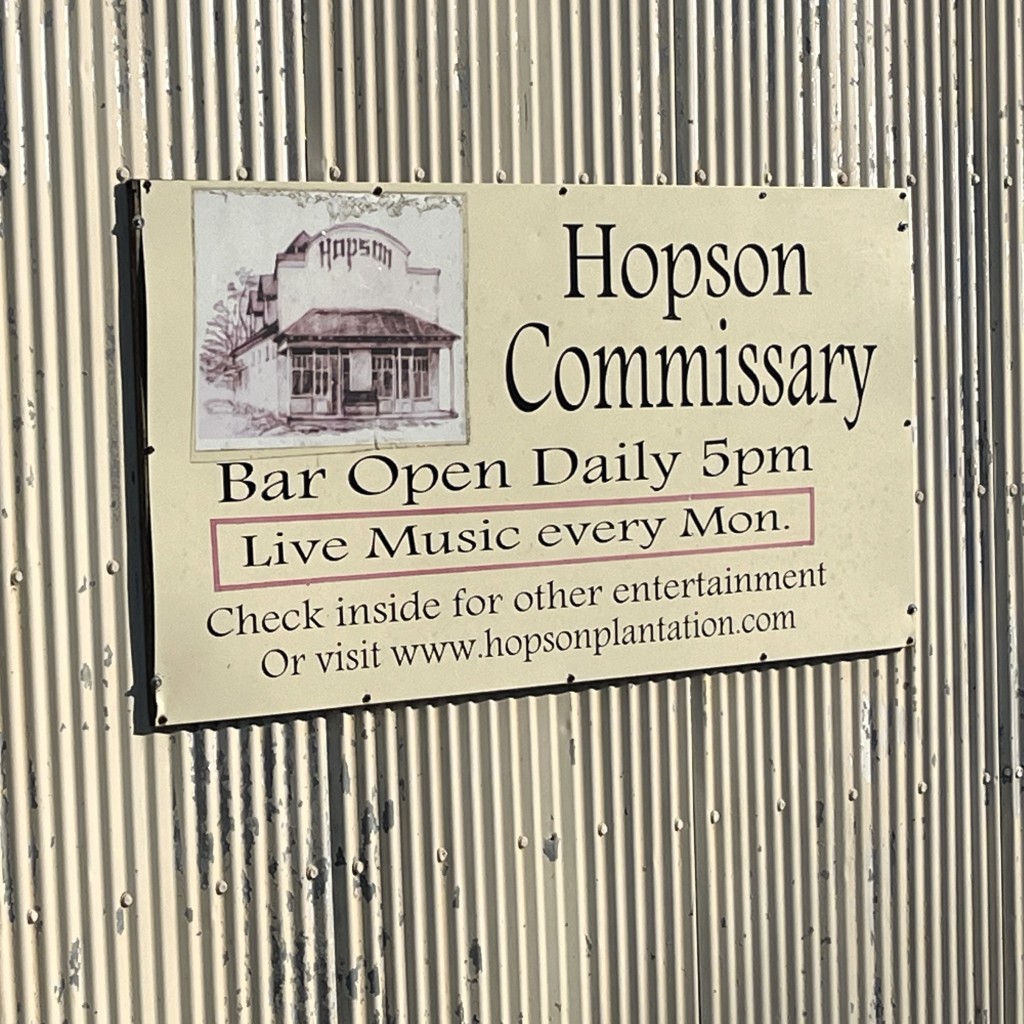
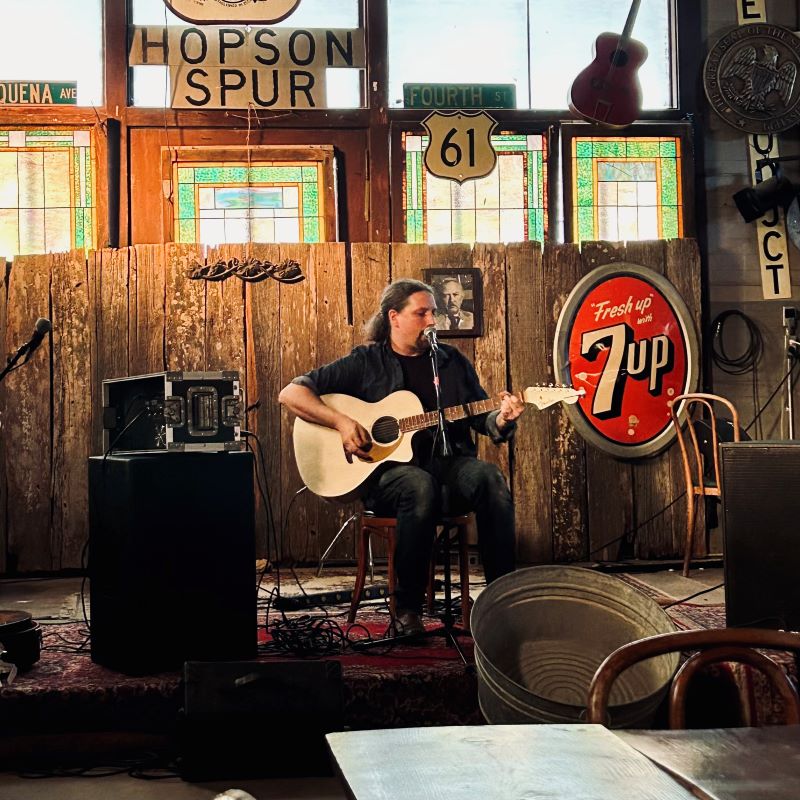
We spent our last evening in Clarksdale at the Hopson Commissary, which is located on the same plantation as the Shack Up Inn. This 100-year- old building used to be the commissary for Hopson Farm in the early 1900’s. Now it serves as an event venue and on Monday nights, they feature live music and a homestyle buffet dinner.

The food was wonderful, my beer was cold, and the staff was warm and friendly. On stage, Marshall Drew, a local folk rock singer-songwriter with a pleasant voice and playing style, entertained everybody. This was an easy way for us to finish off our stay in Clarksdale, as we then had an incredibly short drive back to our shack, where we could kick back, relax, and ponder all that we had seen and done during our stay.

We still had one more city to visit on this road trip, but I’ll save that for next time. Thank you so much for hanging with me!
Getting the Blues Part Two: Down to 662

“There’s a sound oozing from the ground
And it cuts right through
You can only find it
Down here in the 662″
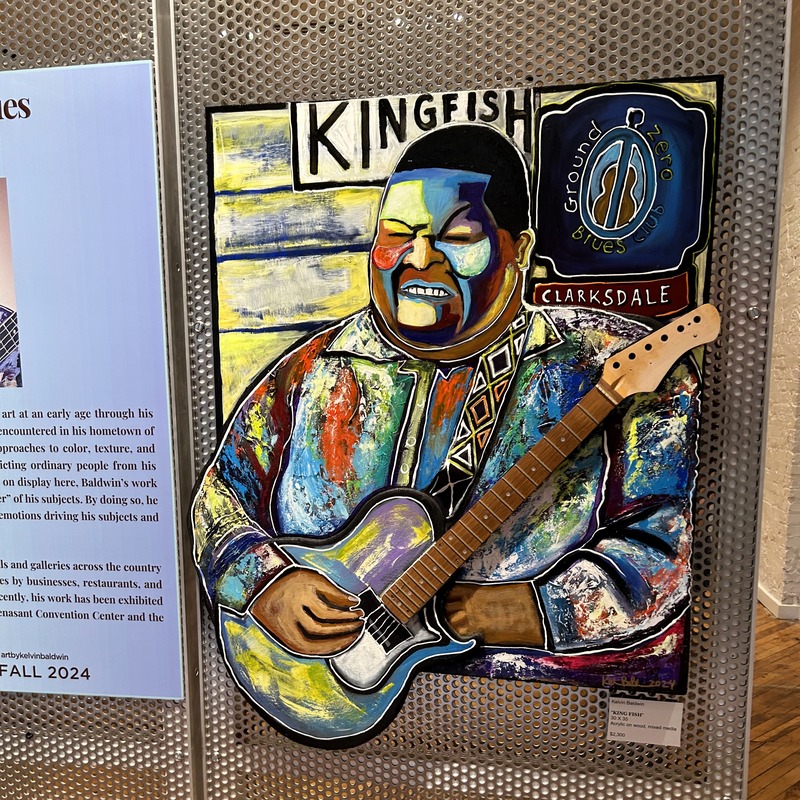
— from “662” by Christone “Kingfish” Ingram and Tom Hambridge

Matt and I woke up Saturday morning ready to continue our journey, but not before indulging in a Waffle House breakfast. When I travel, I prefer to eat at establishments that don’t exist where I live. That is, I don’t want to drive hundreds of miles only to end up eating at a Burger King. Yes, Waffle House is a chain, but they have no locations anywhere near my home. Quite frankly, I’d prefer that it stay that way because during my southern travels, that’s what makes eating there special to me.

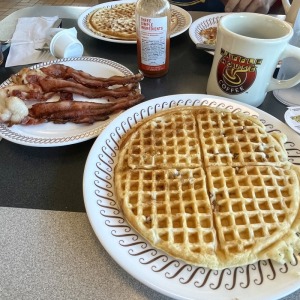
I always order the same thing, every single time I stop at a Waffle House — pecan waffle, side of bacon, and plenty of black coffee — and for reasons I’m not even sure of, I always snap a photo of my meal before chowing down, usually to share, as I am doing now. I assure you that there is nothing fancy about either my recurring breakfast or the establishment that serves it, but I generally receive positive acknowledgements for fellow Waffle House aficionados. It’s almost a cult thing, like eating at White Castle, though I am seldom compelled to photograph a bag of sliders.

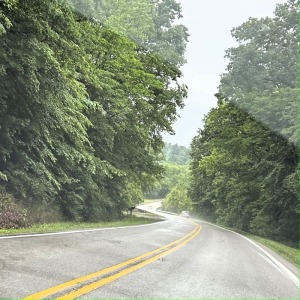
We spent the majority of our day, over five hours, on the road. The first 350 miles or so were on Interstate 55. Then as we got near Memphis, Tennessee we got onto US Highway 61, known as the Blues Highway, and continued south. We were now in the Mississippi Delta, part of the Deep South. The Delta is considered the cradle of the blues and we were headed for a city steeped in blues history as well as legend: Clarksdale, Mississippi.

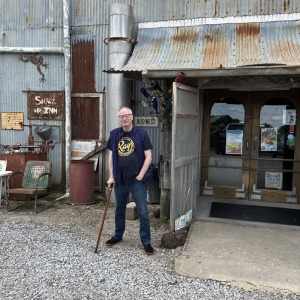
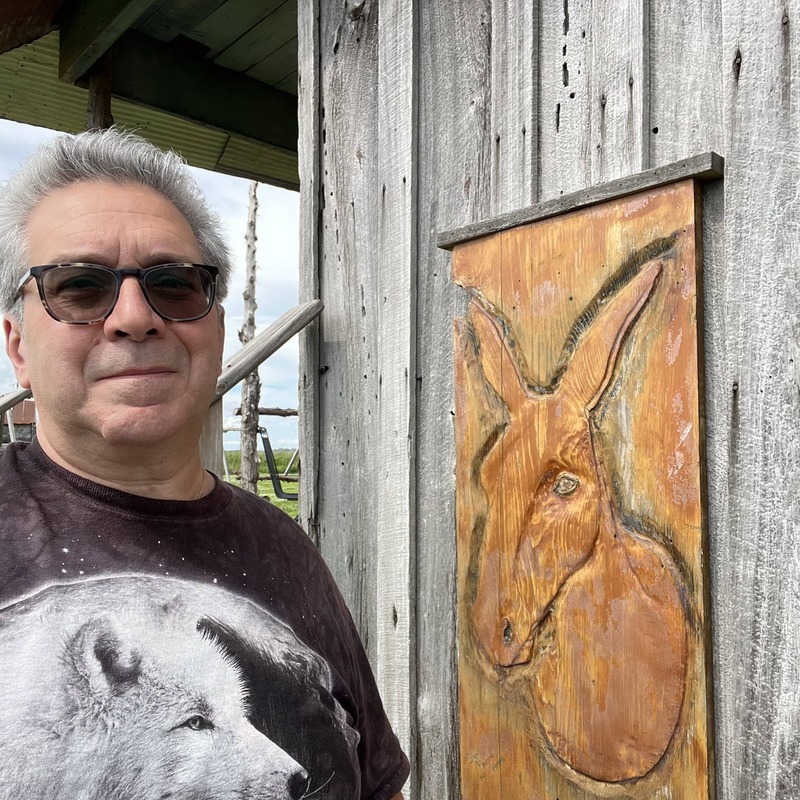
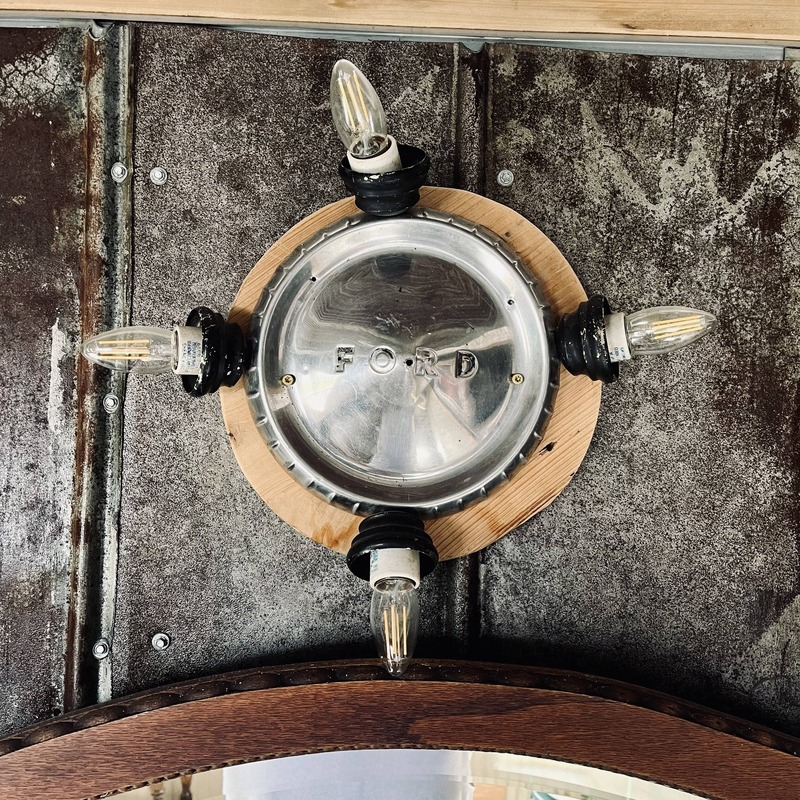
We arrived in Clarksdale around mid-afternoon and after driving around to get the lay of the historic downtown area, we went south of town to The Shack Up Inn, an unusual and most incredible collection of modernized shotgun shacks, grain bins, and a converted cotton gin. Everything is corrugated tin and Mississippi cypress boards. On the inside, the furnishings are theme-appropriate, but quite clean and with running water, heat, and air conditioning.

We were supposed to get a two-bedroom shack called the Sweet Honey, but due to a ruptured hot water heater in one of the other shacks, they had to move someone else there the day before we arrived. So we got the Mule, which is a new addition to the property. Matt and I both had our concerns when we heard this, but once we saw our shack, our concerns evaporated. The Mule may be a renovated sharecropper shack, but the thing was more than large enough for the two of us. I’ve seen houses smaller than this!

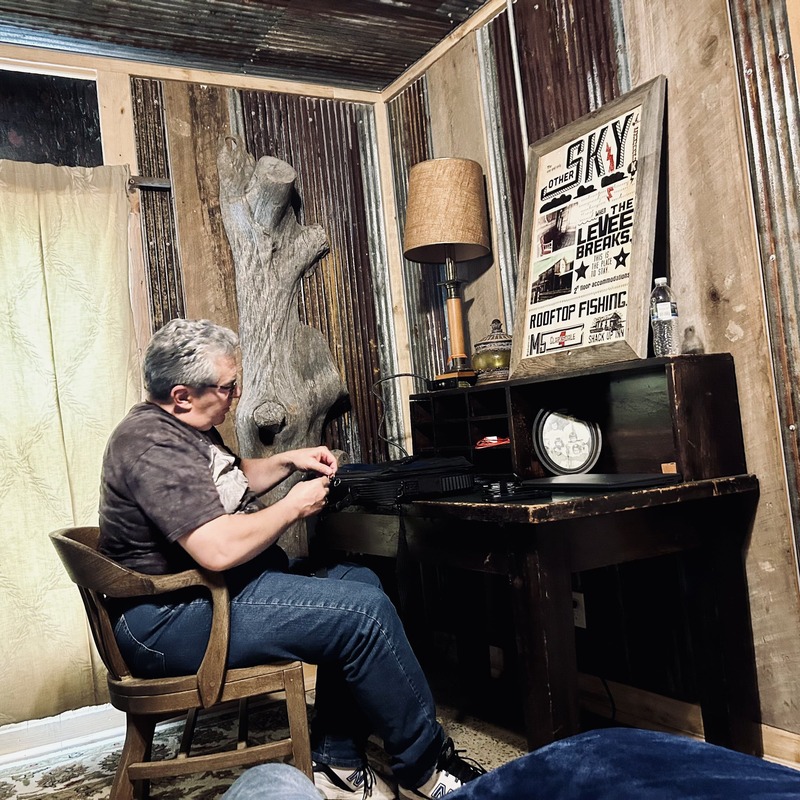
I don’t know what the floors are made of but they’re as solid as all get-out. I could dance a jig in the hallway and not disturb Matt, unless I began singing. One of my favorite parts about the bedroom I took is the heavy writing desk that sits in one corner. It’s got ample room for my laptop, phone, power strip, charging cords, beer, etc. I am writing this update from that desk. Since my room is at the far end of our shack, and this desk is tucked into the far corner of that room, it’s just a cool place to sit and work.

When Matt first suggested staying at The Shack Up Inn, I wasn’t too sure about it. But after he pointed out that these renovated structures had been good enough for the likes of Tom Waits, Elvis Costello, and other celebrities, I became cautiously optimistic. After having spent the first of our three nights here, I kind of wish we could hang around longer. People from other countries who come to Clarksdale in search of blues history stay here. They get it. The people of The Shack Up Inn have developed a very cool concept here.

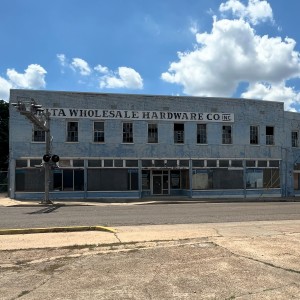
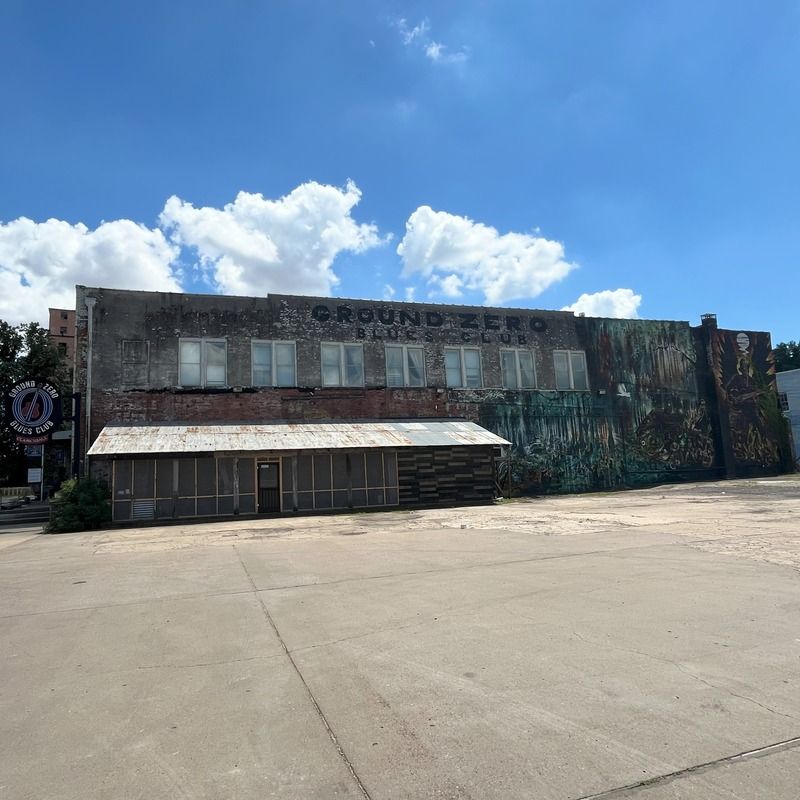
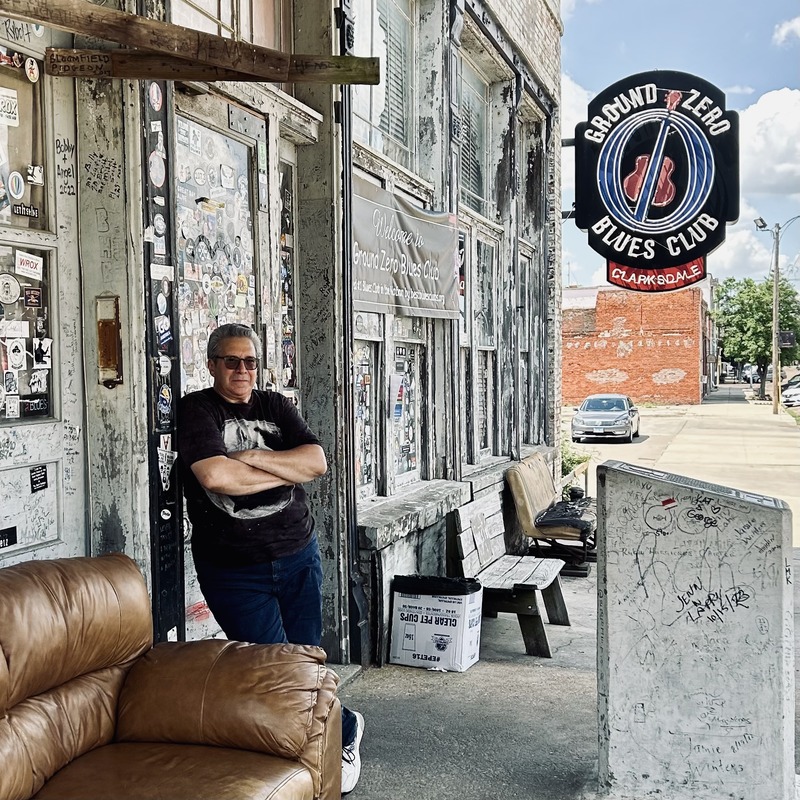
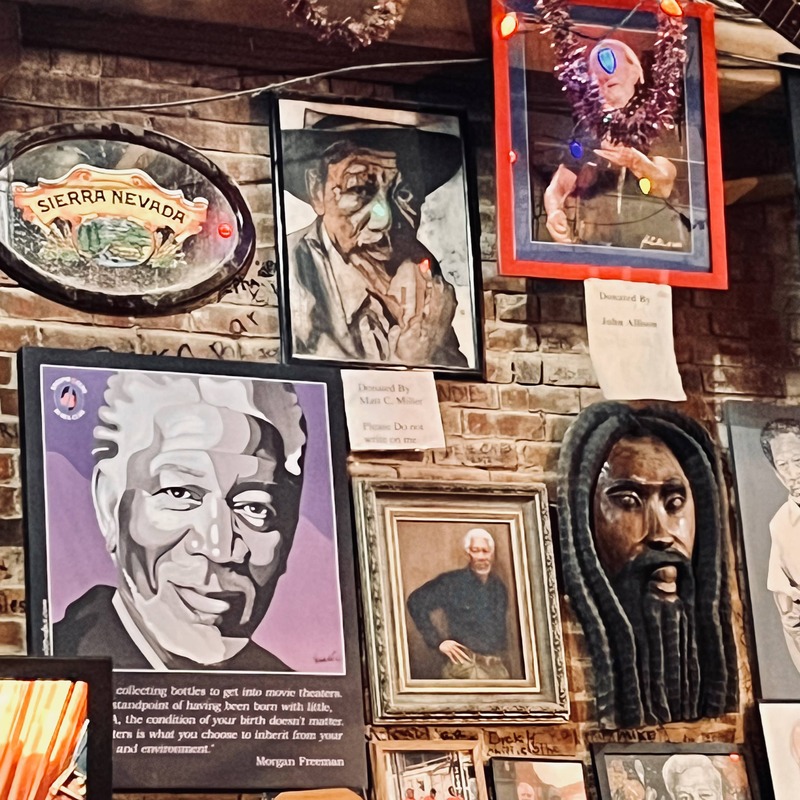
Once we got settled into our shack, we headed out in search of supper and the live music for which we had come all this way. After all, it was Saturday night. The premier music venue in Clarksdale seems to be the Ground Zero Blues Club, which is owned in part by the popular and talented actor, Morgan Freeman. The club occupies a long-dormant and un-remodeled building that had once belonged to a wholesaler called the Delta Grocery and Cotton Company. So anyone who comes to Clarksdale expecting to see some swanky nightclub is going to be sorely disappointed because opulence is not what the delta blues is about.

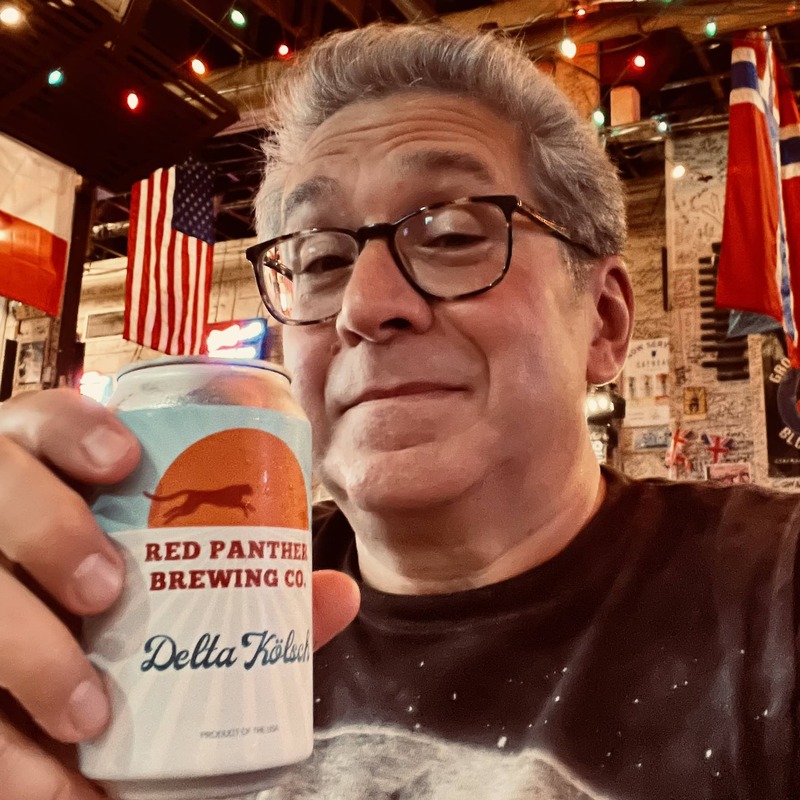
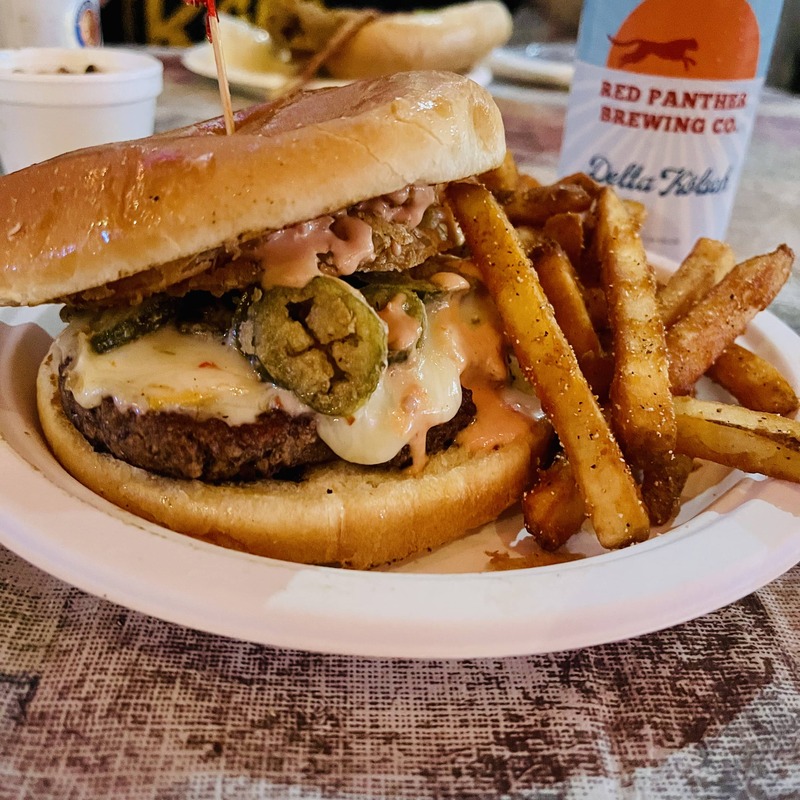
As soon as Matt and I got inside, the same young lady who had met us at the door brought us a couple of menus and took our drink orders. As they did not have any draft beers available that night, I asked her whether they had any local brews. She mentioned a few and I could not have gotten any more local than the one I chose: Red Panther Delta Kölsch. The Red Panther Brewing Company is based right in Clarksdale and the beer was delightful.

The band playing at Ground Zero was Chris Pitts & The Memphis Prime, a powerful blues band from Memphis, the northernmost point of the Mississippi Delta. They delivered big on their sound and the band played for hours. They had begun at 8:00 and were still going when Matt and I decided to call it well after 11:00.

We still had a lot left to explore in Clarksdale and I’ll tell you all about it in my next installment. Until then, as always, thanks for hanging with me.

Getting the Blues Part One: The Road Calls

Life happens to us, for us, and all around us. Sometimes things get a bit heavy, even overwhelming. It may ultimately be nothing we can’t handle, but that doesn’t change the sheer weight of it. Long ago I discovered that when faced with a tough assignment or tricky problem, if I just walk away for a while, I often return with a fresh perspective. But can one do that with life? Just walk away for a while? Sure, why not. So I decided to run away from home.

Sometime last year, I had begun toying with this idea to make a run to a city in the deep south with a rich history in Delta blues music. I tossed my idea to an old friend of mine who, like myself, is quite fond of the blues — indeed, of many genres of traditional American music — and he upped the ante by suggesting a road trip that would include three cities, each having its own part in the evolution of the blues. As time went on, we made our plans and, with a little help from our families, are now bringing those plans to fruition.

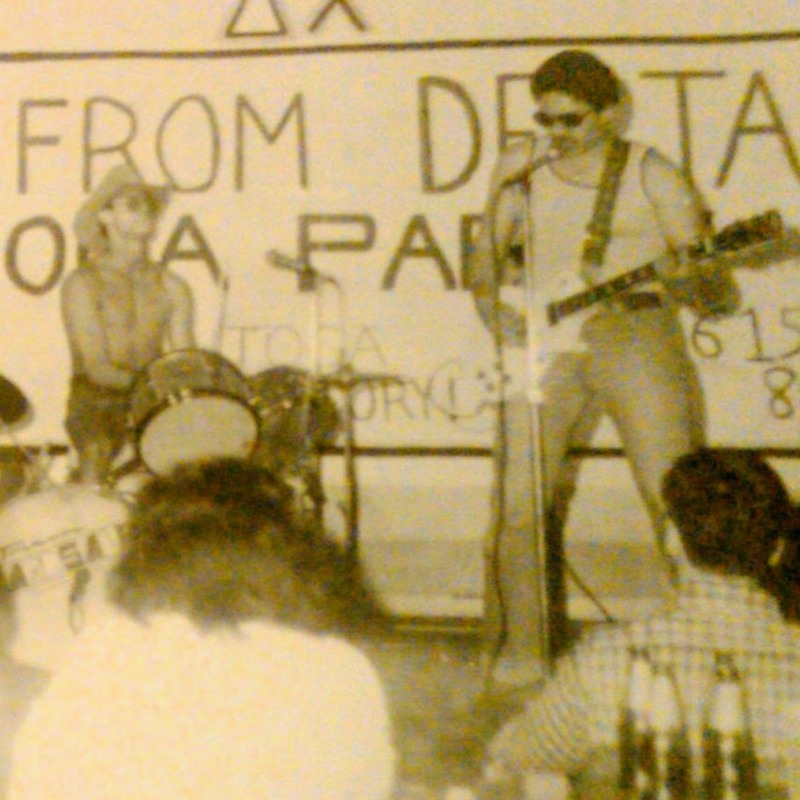
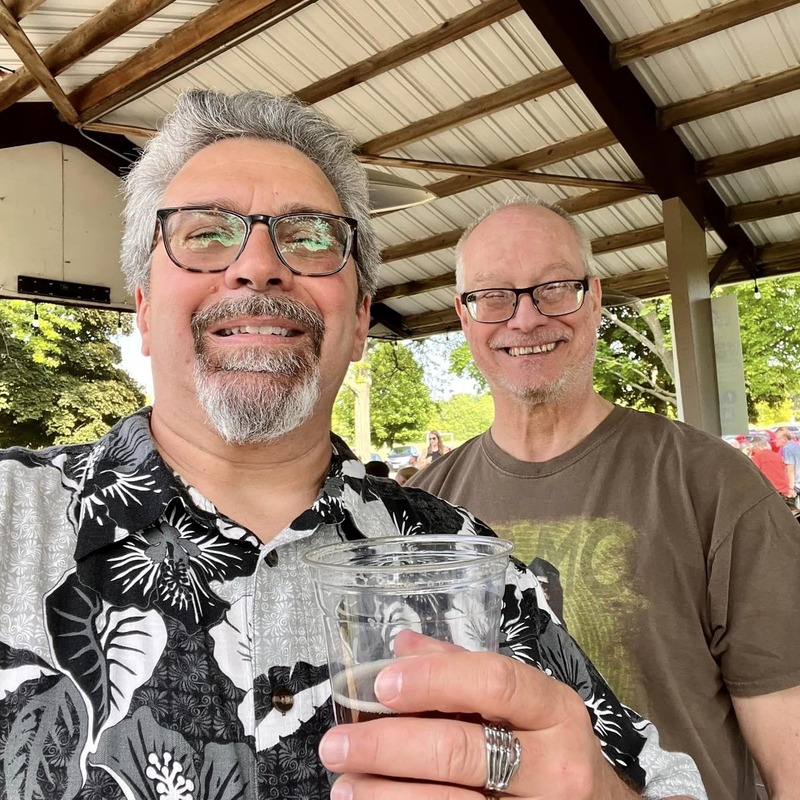
Matt and I have known each other for almost forty-five years now. We met in 1979 while at college, where we played in a band together, and our friendship grew from there. We attended each other’s weddings, rang in many new years together, started our respective families with in a year of each other, traveled together, etc. Our four children, two apiece, grew up to form lasting friendship bonds of their own. We’ve been though a lot over the decades, both highs and lows. This trip is gonna’ be an experience, no matter what happens.

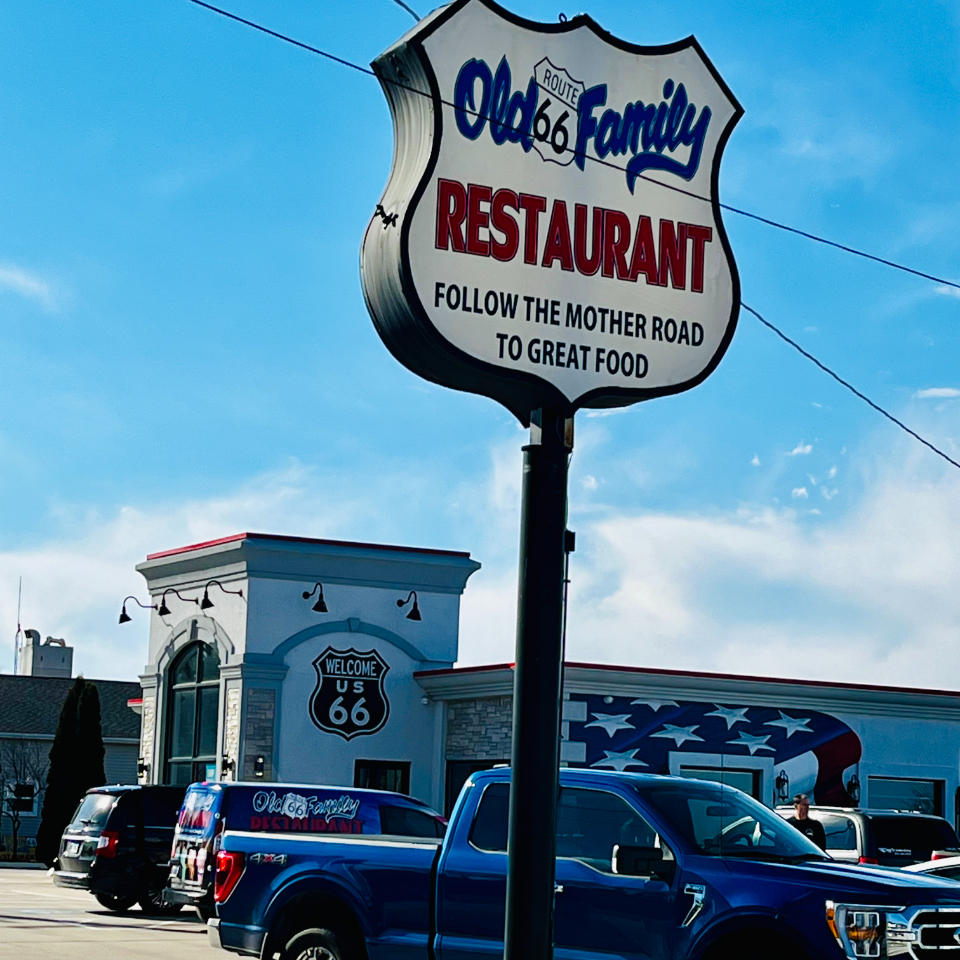
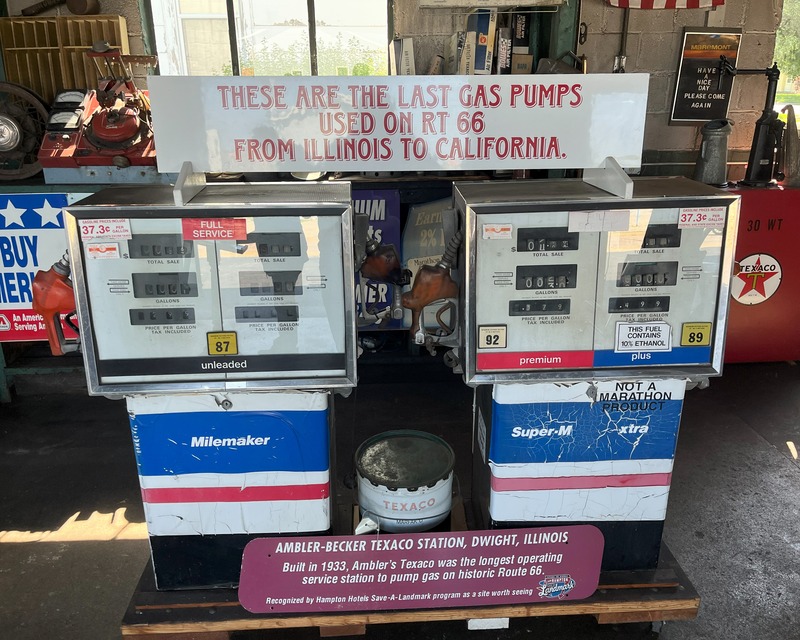
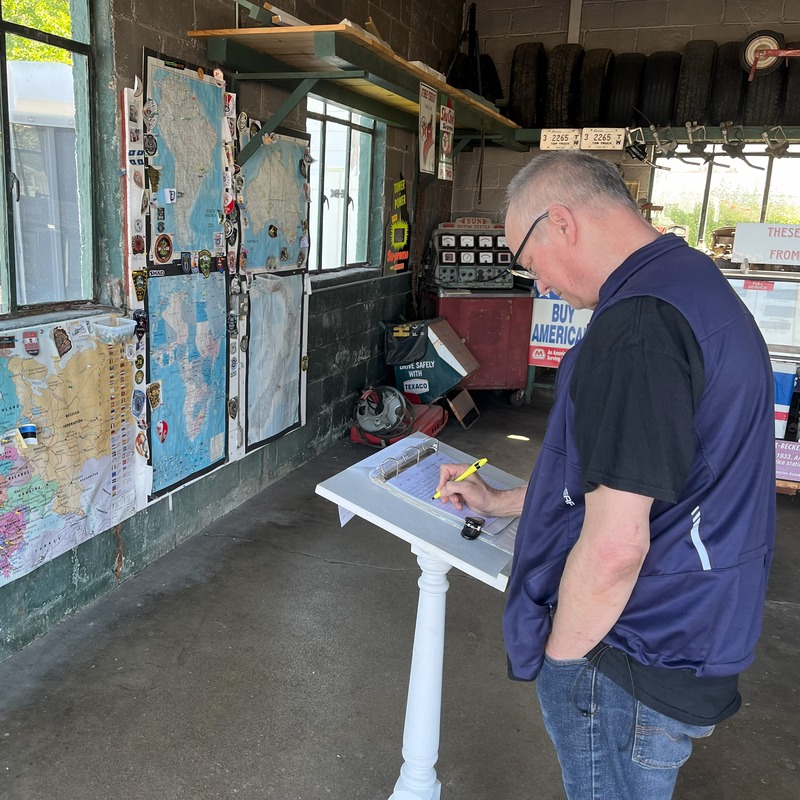
Day one began with a drive to Dwight, Illinois for hearty breakfast at the Old Route 66 Family Restaurant, located on the southwest corner of Illinois Highway 17 and historic Old Route 66. After breakfast we went kitty corner to the Ambler/Becker Station, which was the last Texaco station operating on the Mother Road. After that, we got on Interstate 55 and headed for St. Louis, MO.

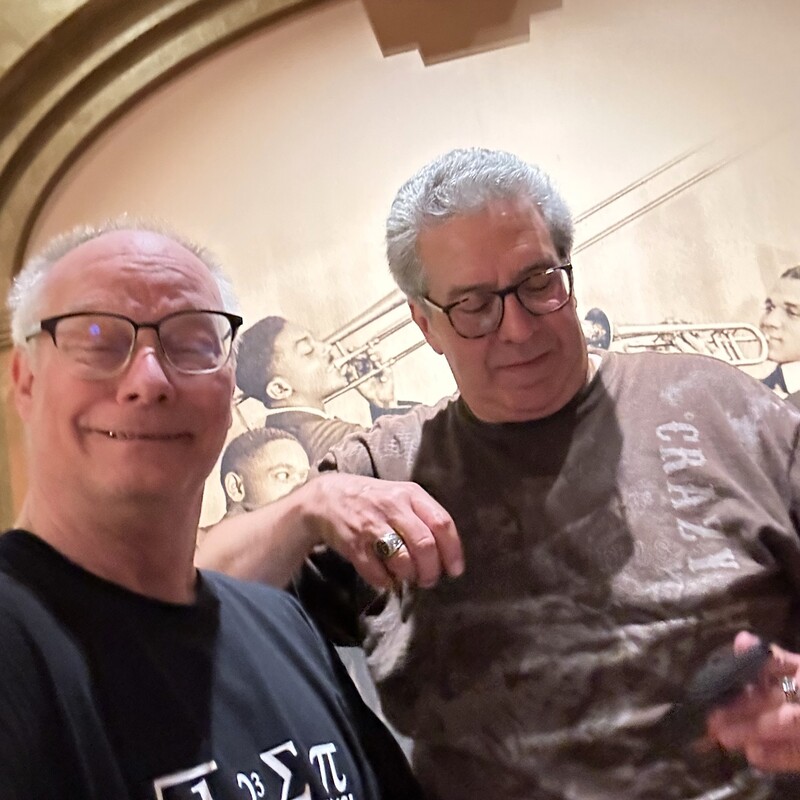
A little over three hours later, we had reached St. Louis and went directly to the National Blues Museum downtown. The museum’s three-dimensional sign is fashioned in the shape of a giant harmonica. Inside, a variety of informational and interactive exhibits convey the story of the blues, not just in this city but across America and abroad. These exhibits weave a story of the evolution of the blues, from its origins through the present day. Among the displays, I saw quite a few names with which I was familiar and quite a few that I did not know well, if at all.

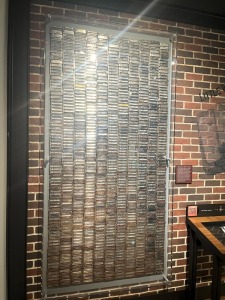
One exhibit that caught my attention was a collection of 900 harmonicas donated by their owner, Jim McClarnes, a St. Louis harmonica player. It’s hard to miss 900 harmonicas arranged on a brick wall and taking up most of that wall’s height.

In all, Matt and I spent a couple of hours at the museum, reading, watching, listening, and talking, as we shared our own experiences and knowledge with each other. I’m glad he had suggested this museum as a stop on our road trip.

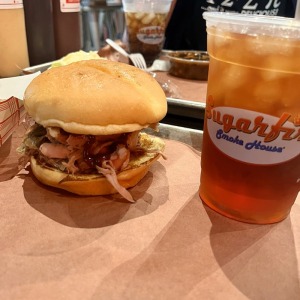
By mid-to-late afternoon, we were ready to eat again. As a late lunch/early supper, we selected Sugarfire Smokehouse, a local BBQ chain with a location right by the museum. I had a pulled pork sandwich, while Matt enjoyed some BBQ turkey. The meats and sides are well-prepared and quite tasty.

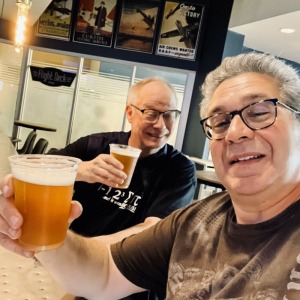
Once we had eaten our fill, it was time to go to our hotel. After we checked in, Matt and I walked down to the hotel bar for a bit of liquid refreshment before turning in to plan our next day (and so I could tell you about this one).

Next up… well, I’ll tell you about it in my next installment. As always, thanks for hanging with me.