Surf & Turf & Local History

Menu

It had been some time since I’d been to the Wilmot Stage Stop, an historic eating and drinking establishment—billed as Wisconsin’s oldest tap and dining room—located at the corner of highways C and W in Wilmot, Wisconsin. This establishment began as the Wilmot Hotel, an actual stagecoach stop, in 1848 and has been owned by the same family ever since.It was my wife’s family who introduced me to this place in 1984 or ’85, after Karen and I had become engaged. Known primarily for its charcoal-broiled steaks and lobster tails, the Wilmot Stage Stop had long been a favorite place for my in-laws to celebrate special occasions, entertain visitors, or simply enjoy a special meal.

There was a period during which I feared I would never enjoy eating at the Stage Stop, when the restaurant abruptly shut its doors last year—July 29, 2016 to be exact—but an article appearing in the Kenosha News last January, announcing that the popular steakhouse would be reopening that very month, put a big old smile on my face.

This slideshow requires JavaScript.

The Wilmot Stage Stop is not a highbrow establishment, but a family-owned steakhouse with a tremendous history and no small amount of atmosphere. Area families have been dining there for generations. It’s a three story affair. The dining room and bar are on the ground floor. A central staircase leads up to what was once the hotel ballroom. The ballroom now houses a collection of artifacts in a museum-like setting. A much narrower and steeper staircase leads up to the third floor, where the original hotel rooms now serve as viewing areas for even more artifacts. The short beds, low ceilings, even the rooms themselves, are a reminder to us that people were generally shorter back then than they are now. And from all appearances, cross country travelers were not accustomed to having anywhere near the creature comforts that we so take for granted today.

Still, the real reason people go there is for the food, mostly steaks and lobster tails, both charcoal-broiled. A baked potato spiked with a huge slab of butter accompanies your selection, as do a salad and rolls. The bar has a nice variety of drink offerings, the servers are warm and friendly, and the seating, if a bit dense, can be arranged to accommodate quite a range of party sizes.

Our party arrived at 4:00 PM,  while there were seemingly many open tables. By the time we departed, less than 90 minutes later, the dining area and bar were both brimming with humanity. The Wilmot Stage Stop is a popular dining destination and reservations are probably a wise choice.

Thanks for hanging with me.

Fun with Leftovers: Philly Meatloaf Skillet

Writer

Whether via broadcast media, print media, or social media, everybody likes to showcase their best dishes. And in that regard, I suppose I’m not much different from anybody else. I’ve made no secret about a book I’ve been working on, which includes a fair amount of cooking, but few if any actual recipes. One evening I was discussing some aspect of my book with my friend (and fellow foodie) Ann when she pointed out that I seem to have a lot of fun with leftovers—not just reheating my dishes but in many cases, repurposing the stuff. “You may have an interesting theme there,” she suggested. Well, I thought about it a little bit and realized that, as usual, she was probably right. I really do try to have fun with my leftovers and odds are you won’t find another cookbook showcasing some of the things I’ve done on day two—or day three, for that matter—after the original dish has been prepared, served, and eaten.

Onions

For me, reheating leftovers is fine, but why not have a little fun with it and enjoy something just a little bit different than what you ate the night before? This is my premise for the whole “fun with leftovers” premise. All this requires is a sense of what ingredients go together, a little creativity, and a willingness to accept that not every experiment will end well—but that sometimes you will win. May I demonstrate?

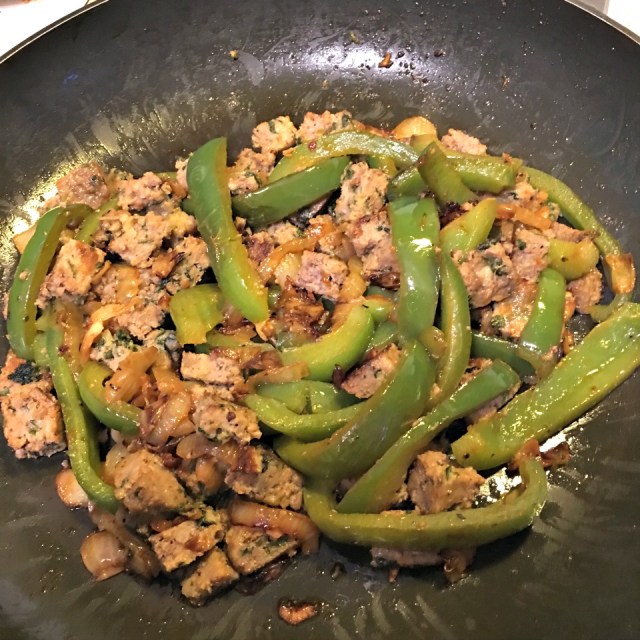
Assume a meatloaf. It was a good meatloaf, prepared recently (no horror stories, please), and everybody has already had a meatloaf sandwich for lunch the following day. Now all you have left is this butt of a meatloaf, maybe enough for two modest slices, but you don’t want another meatloaf sandwich and if you make another one for somebody else, there’s gonna’ be trouble. So you scour the fridge and pantry, and you gather the following items, in addition to the foil-wrapped butt of meatloaf.

  •  at least half an onion
  • a good bell pepper of any (edible) color
  • one or more cloves of fresh garlic
  • two slices of sandwich cheese (American, Provolone, Swiss, etc.)
  • a little oil or butter (I prefer olive oil for this particular example)
  • salt and spices

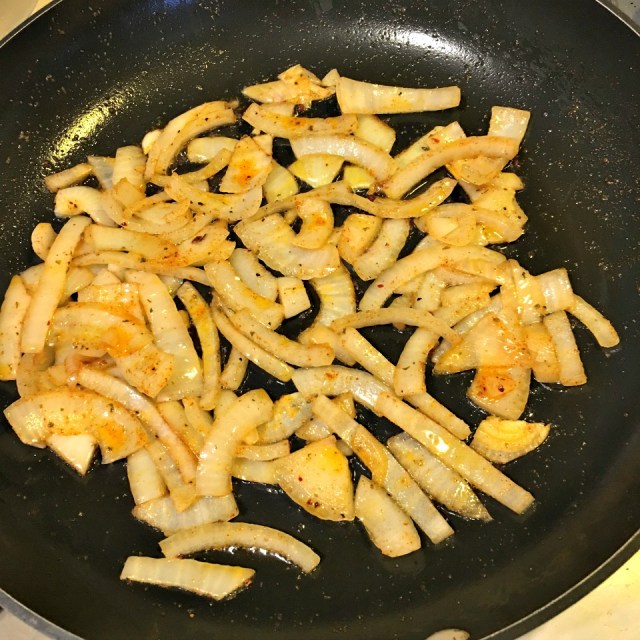
Armed with nothing more than a cutting board, a sharp knife, a skillet, and a flipper of some sort, we are ready to begin. Heat up your skillet while you slice at least half an onion to the thickness of your choosing. When the skillet is warmed, add some oil and swirl it around. The oil will become thinner as it heats up. If it begins to smoke, quickly reduce the heat, unless you are into pyrotechnics and have a self-contained breathing apparatus handy. Otherwise, once ready, toss in those onions, season them to your liking, and toss/stir/flip them about  Then lower the heat so that the onions can clarify and caramelize a bit while you cut up your pepper and garlic.

PeppersMeatloaf

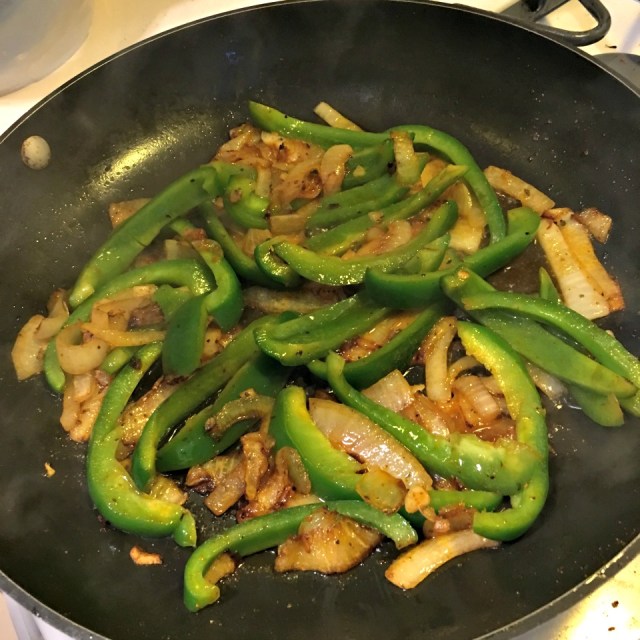
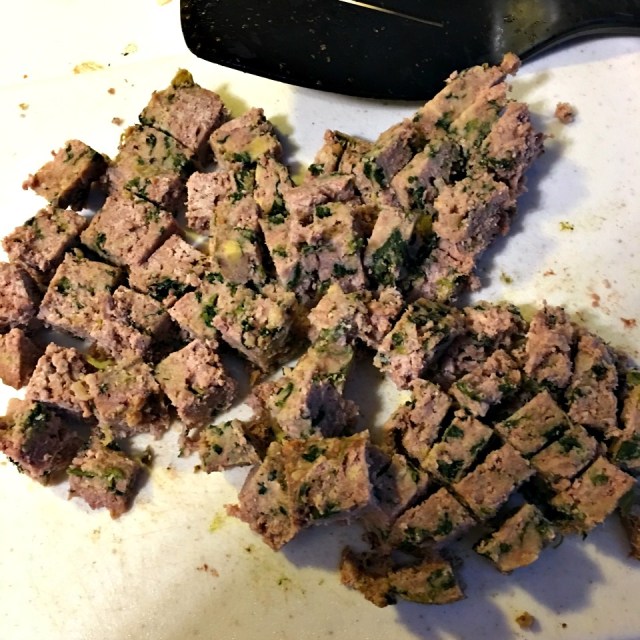
Toss in your sliced pepper and garlic, season a little more if necessary, and give it all a toss or stir. If the skillet loks a little dry, you can do one of two things—either add a little more oil/butter, or toss in a bit of water, wine or brandy, to loosen things up. Once loosened, toss and/or stir the contents of the skillet, then cover and set it aside. As the peppers cook a bit, you will need to toss and/or stir one more time. You will also need to cut up your meatloaf.

Ready for Cheese

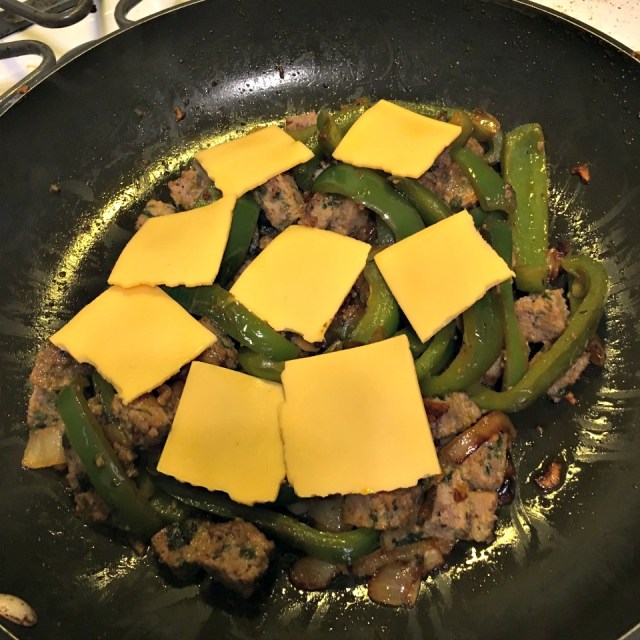
At this point, everything in the skillet has already been cooked, so it largely becomes a matter of heating or browning the meatloaf pieces. This is also the time to introduce your cheese.

Cheese

What you add depends on what you like and/or what you have handy. As a rule, I use only cheese and not “processed cheese food,” but I should point out that the original Philly cheese steak was made with cheese whiz and not some genuine cheese. To melt the cheese, simply cover the skillet. if you are concerned that the contents are too dry, dribble a bit of water (or wine or brandy) into the skillet before covering. Then wait a bit.

Finis

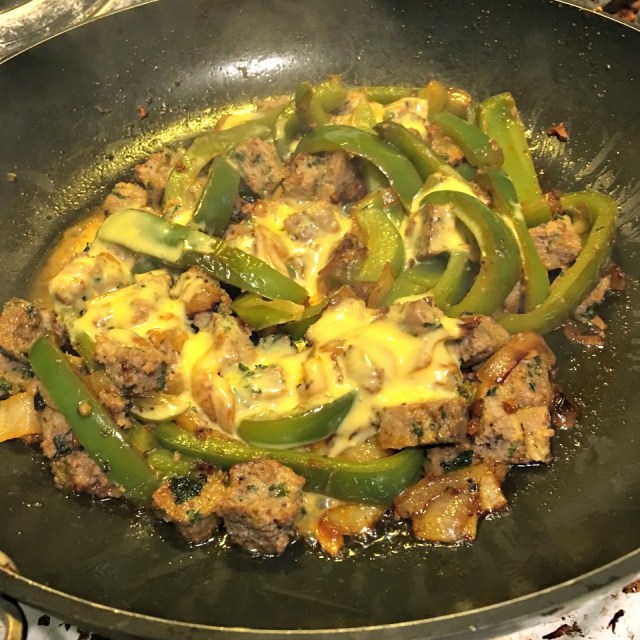
The steam melts the cheese and gets everything warm and cozy. As the melted cheese hits the skillet, it begins to bubble and brown a bit, which changes the flavor and texture of the cheese. Once that happens, this baby is done—and it looks nothing like the original dish you served a day or two ago.

At this point, you can serve this skillet dish on a roll or bun, or you can serve it up on a plate and enjoy it as is. The flavor is such that it stands on its own.

Needless to say, you could pull this off with chicken, with sandwich steaks, leftover beef, or (big surprise here) leftover meatloaf. Just imagine the possibilities and let your imagination be your guide.

Thank you for hanging with me.

The Pizza That Ann and Michael Built

ingredients

The culinary exercise I am about to describe will undoubtedly end up in my book, the working title of which is What Recipe.  It’s sort of a cookbook, but also a celebration of intuitive cooking, a collection of humorous anecdotes and more. I think you’ll like it, but right now I want to tell you about this pizza, if only because we received a lot of positive feedback when my friend Ann and I began sharing some of our photos on facebook last weekend. Neither Ann nor I had ever made pizza quite like this before, which made everything seem sort of tentative, but we laughed our way through this intuitive experiment, from start to finish and ended up with a couple of large, tasty pizzas.

risenmichael-w-doughdough

I have made many pizzas before, most of them in the tradition taught to me by my mother.This one, however, was a little bit unique. For openers, we made the crust from scratch, using a “Tipo 00” flour imported from Italy. I had never used this extra fine flour before but had read that it was excellent for making pizza crusts. This turned out to be quite true. Double zero is a grade of Italian-milled flour that is ground very fine and is also highly refined. I believe it is lower in protein, starch, and gluten than standard flour, although what’s left in there I have no idea. Angelo Caputo’s Fresh Markets, with eight locations in suburban Chicagoland, carries a few different brands of Tipo 00 flour. I selected their house brand, which is labeled as a pizza flour and it worked fabulously for us in that capacity.

We double-raised our dough before dividing and stretching it out into two pizza crusts. We didn’t use a thermometer, just a little warm water in which to proof the yeast, and a lot of room temperature water to make the dough. And salt. When I would ask how much salt I needed to use for making bread, my late mother used to tell me, “If you don’t put enough salt, your bread isn’t gonna’ taste of anything, but if you put too much, you’ll ruin it just the same.” It ultimately came down to trial and error, but a half palmful of kosher or sea salt mixed into a 2.2 lb bag of flour (roughly six cups) will put you in the ballpark.

fresh-slices

We used sliced fresh mozzarella, also from Caputo’s, instead of the low-moisture, part skim variety, which I usually buy pre-shredded. The cheese was so fresh, we had to dry the one-ounce slices with paper towels before using them. Otherwise, the bread crust would get wet and mushy from all the moisture. Fresh mozzarella has a creamier texture than does it’s dry counterpart, and also a very mild flavor. Ann and I had used fresh mozzarella on a Caprese-style garlic bread with stellar results, so we expected this to work okay on our pizza, too.

browning-sausage-ballsann-w-sausage

The bulk mild Italian sausage that we used came from, you guessed it, Caputo’s. As good as their standard recipe is, I augmented it with some extra fennel seeds and a dash or two of red pepper flakes—not enough to make it hot, but just enough to impart some additional flavor. We formed little bite-size chunks and browned them up to add even more flavor while removing some of the fat. The result was magnificent!

tomatoes

fresco-sauce

Rather than use a canned product—some of which are just fine— or even my family’s homemade jarred sauce, Ann and I opted to make a fresco pizza sauce. I went shopping for the best tomatoes I could find in late February and brought them with me. Then Ann and I proceeded to peel, seed, and dice those babies just for this occasion.

The detailed guidelines for this sauce have already been written for the book, but in a nutshell, you need hot oil, the proper seasoning, and just enough time to lose the excess moisture, which just like the water in our fresh mozzarella, would have wrecked the heavenly crust we created.

ready-to-bake

We had been at this for a few hours. After all, double-raised homemade bread dough takes time. Let me be the first to admit, this was not fast food. A frozen pizza could have been heated up and ready to eat within 20 minutes. Ordering from a pizzeria normally yields results in 20 to 50 minutes, depending on the establishment and on what you order. Ann and I both buy frozen, from time to time, and we each have our favorite pizzerias in our respective markets, which happen to be over 100 miles apart. 

Now believe what I tell you next: What we created that day cannot be found in your grocer’s frozen food section, nor will you likely find it on the menu at your local pizzeria. What Ann and I set out to create was heads above all that. This hand-crafted pizza involved four different kinds of cheese, a fresco sauce, a sausage blend that cannot be found in any store, and a homemade crust made from triple-raised Italian milled flour. You can’t buy this! But you can make it yourself, with the right ingredients, a little time, and a bit of guidance, say from a book that describes all the ingredients and the various steps involved in bringing them all together.

cooked

 Yeah, that’s right. We took our sweet time, debated our choices, and cooked the best pizza pies we could possibly create together—two really big rectangular ones, in fact, way more than three people could ever have eaten. So much food that I was able to take an entire pie home with me.My apologies to Ann and her son for the overage, but I produced no more food than any good Italian would have brought forth. This I learned from my mother.

And you know what? I have no regrets. None. Ann and I laughed all day while working on this, ate our fill afterward, and it was epic.The flavors and textures all came together in a way that mere words cannot fully capture. To learn more about this culinary adventure and others like it, please keep an eye out for my book, which with any luck will be out before the end of this year.

Thanks for hanging with me!

Burnt Offerings of the Culinary Kind

burned-stuff

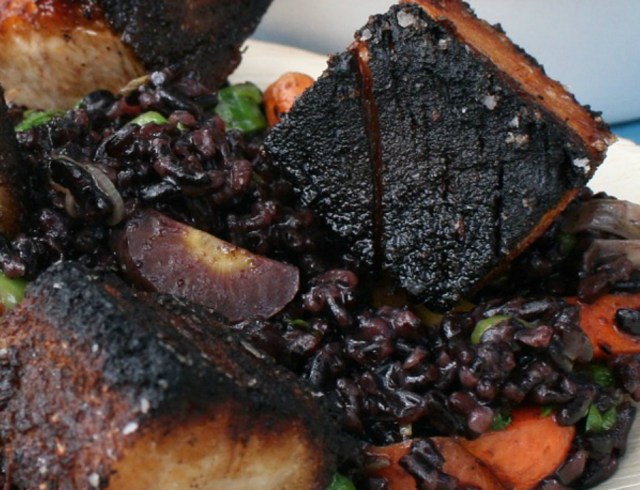
If you spend enough time cooking, sooner or later you’ll burn something. Trust me, I know. If you’re lucky, nobody will see you do it. But really, what are the odds of that happening?

Once when I was in college, sometime after the dinosaurs had died off, I was trying to cook a steak that had been given to me by a dear relative. And what a beautiful steak it was, nearly two inches thick and very well marbled. Problem is it was still frozen. Well, I reasoned, if I began cooking it, the steak would cook thoroughly on the outside and maintain some red in the center by the time it was finished. What can I say, I was young, foolish, and inexperienced. So I placed the steak in a pan, shoved it under the broiler and went to the living room to have a cocktail while my supper cooked.

Moments later, one of my housemates came through the front door and greeted me, “Hey, Mike.” He looked up the hallway, toward the kitchen, and then back at me. “Everything okay?”

“Hi, Rick,” I replied, “yeah, sure.” Rick shrugged and headed off in the other direction, to his room. Moments later, the smoke reached the living room, where I was still seated.  I leapt from my chair and ran to the hallway, peering through the light smoke only to see much heavier smoke billowing from the kitchen. My steak!

I ran to the kitchen, threw open the broiler door, and was greeted by blazing flames that appeared to be coming from a black, oily slab that had once been my steak. First I tossed some water on it… bad idea. The flaming and smoking only grew worse. Then I shut off the gas and slammed the broiler door shut, which seemed to do the trick. I opened the door again to find that the flames had gone out, but the billowing smoke had become ten times worse. I turned on every fan and opened every window in the house, before heading up the street to get a sub sandwich.

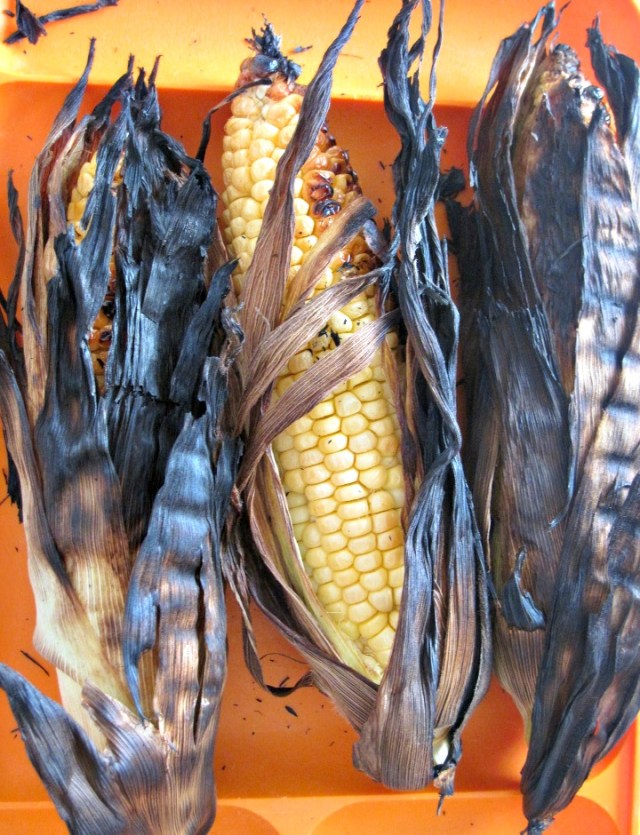
corn

Have you ever set corn on fire? I have.

Have you ever set pork ribs on fire? I have.

Have you ever almost set your wooden back porch on fire? I’m not telling!

Needless to say, I have more stories to tell regarding my culinary pyrotechnics. But you will have to wait until the book comes out before you can read about them. Ha! Thanks for hanging with me.

My Unfortunate Baking Misadventure

napoli-bread-fixed

As I continue compiling material for my first cookbook, I am reminded of the best and worst of my bread baking endeavors. I don’t bake bread often and what little I do, I learned from my mother, an Italian immigrant who make almost everything from scratch—and made it very well, I might add.

What I usually bake can best be described as a rustic Italian loaf. Long and somewhat oval in shape, it’s a somewhat hearty bread with a substantial crust, very well suited to dipping or eating with soups and salads. I tend to use unbleached and/or whole wheat flour, which makes for a more dense product than one would get by using bread-specific flour, which tends to contain more glutens. When it turns out right, my bread is a nice addition to the dinner table.

But alas, things do not always turn out as planned. Some years ago, when my parents were still alive, we were planning to have the family over to celebrate my young son’s birthday. In the tradition of my mother’s kitchen, where I learned so much about cooking, I had planned an abundant meal involving way more food than even this group of eleven people would ever be able to eat. I thought it might be nice to have a fresh-baked loaf of my homemade bread, but I would not have enough time to prepare and raise the dough. So I got this great idea to make up some dough, raise it once, then freeze it. On the day of our celebration, I would defrost the dough, let it rise one more time, and then bake it in time to serve fresh, warm bread for dinner.

To put it mildly, something went wrong. My guess would be that I hadn’t allowed nearly enough time for defrosting, so when I expected my loaf to be rising, some colder parts were still struggling just to reach room temperature. At some point, time had run out for rising because I needed to bake the loaf and let it cool a little prior to serving. My loaf looked okay on the outside, if a bit smaller than I’d hoped for. So into the oven it went.

I waited. I watched. The bread looked okay as far as the color and general appearance of the crust, but it was too small. That should have been my first clue. The second clue came when I picked up the loaf, wearing oven mitts, to place it on a cooling rack. Though slim, almost like a baguette, my bread loaf weighed as much as a loaf twice its size would weigh.

All the other foods we had prepared—grilled meats, pasta, veggies, salad, etc.—came off as planned. But when I set that loaf of bread down on the table, it looked and sounded like a wooden club landing. When my father first picked it up, he immediately looked over at me with his eyebrows raised, gently raising and lowering the loaf as if he were judging its weight. He cut off a hunk and set the loaf back down. Then it was my brother-in-law’s turn. He hoisted my loaf of bread, holding it at one end with both hands, and took a few practice swings, smiling at me as he did so, before slicing off another few pieces. I got the message.

Eventually, the bread came around to me. With only half a loaf remaining, the thing still felt heavy for its size. I turned the end cut toward me and examined the cross-section. Amidst the usual internals, I saw darker portions with none of the usual holes one expects to find in a slice of bread. Solids in my bread? Apparently so!

Some of the more dedicated eaters in my family took a few bites out of sheer courtesy. Others just passed. I was embarrassed, to say the least. But I learned a valuable lesson about cooking: No matter what your schedule says, every dish you prepare takes exactly as much time as it needs to be properly finished. If you need it sooner, begin sooner.

Nowadays I look back on these culinary setbacks and laugh, even though I assure you I wasn’t laughing at the time. You’ll learn more about these endeavors when this book becomes available. Until then, thanks for hanging with me.

Likes to Play with Food

italian

I like to cook, but sometimes I can’t leave well enough alone. I like foods a certain way and seldom follow a recipe to the letter. Most of what I learned about cooking, putting certain foods together, etc., I learned by watching my mother. She seldom followed a recipe, either. I don’t go crazy yet ordinary often isn’t quite good enough. My arena, therefore, falls somewhere between the two.

shrimp_diavolo

About a year ago, I began toying with the idea for an unconventional cookbook that, despite having no conventional recipes per se, explores my approach to a variety of dishes, including creative uses for the leftovers. All of this would be interspersed with anecdotes relating to the food and the people who caused them to happen, whether directly or indirectly. The working title of this book continues to be What Recipe?

During most of 2016, What Recipe? remained essentially an idea and nothing more. I developed a preliminary outline and penned a chapter or two, but that was it… until last December. Since then, thanks to the constant encouragement (okay, pestering) of a close friend, this book is actually taking shape.

food_x

I can’t say how soon What Recipe? will become available for order, but it’s a safe bet that my online followers will be among the first to hear about it. Wish me luck, and thanks for hanging with me.

I Look for Places like This

nicks

I grew up in Blue Island, Illinois. I went to college in Milwaukee, Wisconsin. When I came of drinking age, which would have been 1979 in Wisconsin and 1982 in Illinois, both of these cities were dotted with neighborhood bars, taverns, pubs, saloons, or whatever you would call them. Each had a personality of its own that would be difficult to explain to one not familiar with this sort of establishment. As drinking venues go, I have always preferred those to their larger, noisier counterparts. But more than that, some of these places were special to me.

I speak of neighborhood bars, because I am by and large a city mouse, but should point out that small town bars seem to have the same flavor as these—only there aren’t nearly as many to choose from. Back when I lived and drank in Blue Island, for example, that city had a population of just over 20,000 people. Not a terribly large community by some standards, but there were many bars there, not just on the main thoroughfares, but in the residential areas—the neighborhoods—themselves. Each was a place quite unique unto itself, quite different from all the others. Many of these establishments have gone away since that time, but you get the idea.

When you find a good one, you know so, because it resonates with you somewhere deep within. Case in point, my personal favorite in the Blue Island of my day was a place called the Backstage, on the corner of Vermont Street and Hoyne Avenue. Get this, my favorite neighborhood bar wasn’t even in my neighborhood. Ha! The place was awesome. It had atmosphere. The Backstage was the kind of place where people could meet and talk and have fun, without being bothered. The owner kept a nice place, something I learned to appreciate over time. But alas, it’s long gone now. That property isn’t even a bar anymore, And truth be told, there are fewer places like this in that town… maybe elsewhere, too.

Milwaukee, circa 1983, the last year I lived there as a student at Marquette University. Back then I could walk two blocks in any direction from my apartment and hit at least one bar,  usually way more than one. The whole city seemed to be full of them. My personal favorite, that year? I had two. Very near my apartment was the Harp & Shamrock on West Wells Street. Although the place still stands, I’m sure the original proprietor Bernie Conway is now long gone. What a character he was! Bernie kept a clean place, where one would always feel safe, as long as you were not a vagrant or otherwise undesirable sort, in the owner’s estimation (let me leave it at that). He had a large bartender named Tom, who also doubled as the bouncer, and a large German Shepherd named Duke, who slept behind the bar, helping the patrons feel safe, I guess. In 1983 the Harp & Shamrock was a throwback bar, in every sense of the word, yet I loved that place. It was there that I first kissed the girl who would become my wife, despite the fact that at the time, she was already engaged to marry another—that’s a long, sordid story for another time.

My second favorite exists only as a memory now, Wimpy’s Hunt Club, way over on the east side of the city, a stone’s throw from Milwaukee’s old Oriental Theater. Now this place had class. Owned by one Wilbert “Wimpy” Kotas (I knew him only as Wimpy), a silver-haired gentleman who usually wore a crisp, white dress shirt behind the bar. Up on the wall behind him hung a beautiful painting (maybe it was a print, I no longer recall) of a classic fox hunt scene. Opposite the bar was a row of old-fashioned horseshoe booths. The jukebox was loaded with Frank Sinatra, Perry Como and such. No beer on tap, only bottled. This was a clean, quiet, classy place. I only took certain friends there and was very sad the night I returned, just a few years later, and found it gone.

Some additional years after that, while having dinner in Chicago, I learned from a business acquaintance who had lived above that very bar when he was first married (small world indeed) that Wimpy had been murdered one morning after closing up the bar. While walking home, he encountered two men fighting. I’m sure Wimpy’s barkeeper instincts kicked in, he moved in to stop the fight, and was stabbed to death. This apparently happened in 1984, just one year after I had graduated and left Milwaukee. As happy as I had been to meet somebody who had known Wimpy’s Hunt Club, I was stunned by this news.

the-mirror

Now fast forward to 2016. Bars like I just described are somewhat hard to come by in the sprawl of exurbia, where I live. Sports bars are a dime a dozen out here—they open and disappear with predictable regularity out my way, because let’s face it, how many large, noisy sports bars can any community support. But I found a place this year. I found a place that rivals the kind of establishments I just described to you.

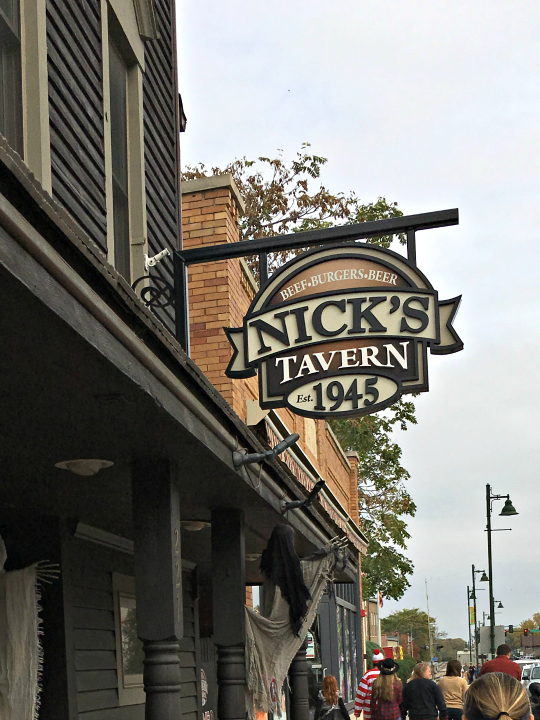
I don’t know if Lemont, Illinois is big enough to have neighborhoods, but I’ll tell you this: Lemont has a hell of a bar. Let me tell you about Nick’s Tavern. I’ve only been there twice, so far, but I can already tell you one thing: I like this place. It has everything I look for in a drinking establishment.
signs

Here you will not find dozens of tappers, nor a ten-page menu, nor giant TV screens glaring at you from every direction. And that’s okay by me. If I want any of that, I’ll go to a mega sports bar, the kind I can find in just about every city and village within the greater Chicagoland metropolitan area. They’re all alike and on most days, as far as I’m concerned, you can have them. Just give me a place like Nick’s.

register

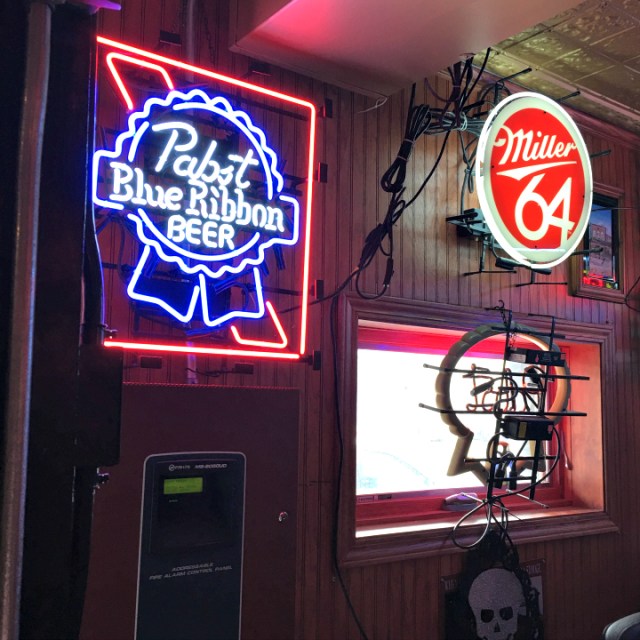
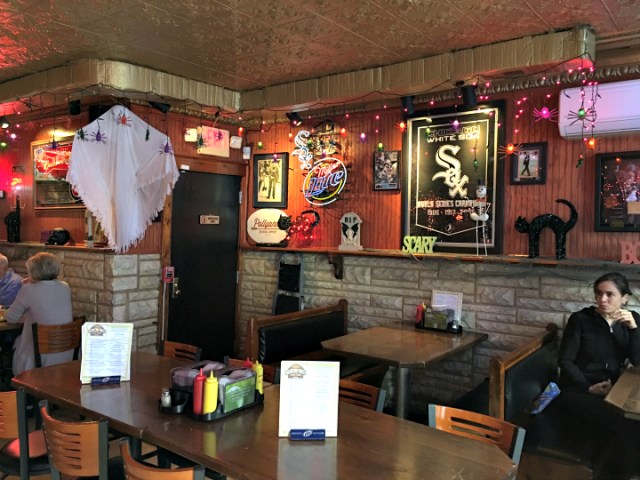
Give me a place with a bit of history, and maybe some good stories to go along with that history. A place where I am made to feel welcome the minute I step through that door. Nick’s Tavern is that kind of place. The wood paneling and somewhat weathered-looking wooden bar give the place a warm atmosphere. Certain touches, like the old cash register on display in one corner and the stamped metal tile ceiling, tell you that this place has been around for a while. The bartenders greet people as they arrive and seem genuinely glad to see everyone, even me. The regulars are greeted by name.

cathy-at-baratmospherethe-bar

People are eating, drinking, talking, laughing… and it just makes me smile to see and hear all this. The first time I went there, I brought my wife and we both liked it. The second time, I brought a friend who had grown up with me in Blue Island, and who had also drank quite heavily with me back in the day. The following day he texted me, “If Nick’s was in between our houses, I would make that our our usual meeting place. I like that place.”

To which I could only reply, “Me, too!” I invited my friend Ed to come out and see Nick’s because I had already known he was going to like it there. When you drink together for as long as Ed and I have been drinking together, you get to know each others preferences.

burger

I’d be remiss if I didn’t talk a little bit about the food. They make a very good burger at Nick’s, but come hungry. The full-on Nickburger is a one-pounder and the smaller Little Nickburger, which I get, is still half a pound of ground beef. Believe me, it’s fresh and tasty. They also do Italian beef, chicken sandwiches and more, but so far I haven’t gotten past the burger. No fries here, only chips.

I should also mention that Nick’s is a a cash-only proposition. What can I tell you, it’s a classic small bar.

But you know what? That’s just the way I like it. You’ll find Nick’s Tavern right on Main Street in downtown Lemont. Check it out. And as always, thanks for hanging with me.

Check out the Food Vendor Lineup at Dukane A.B.A.T.E. 30th Anniversary Toy & Food Run

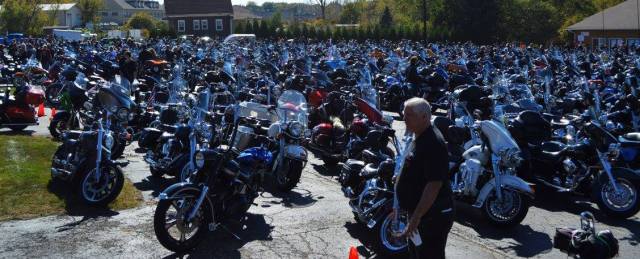
bikesDuKane ABATE is hosting its milestone 30th Anniversary Toy and Food Run on Sunday, October 9th at Batavia VFW, on Route 25 in Batavia, IL. Motorcyclists from miles around, some from out-of-state, will once again gather at multiple registration and collection points before heading on to a central staging area in Elburn. A fully escorted parade, led by Santa Claus as well as many area lawmakers, including Illinois Governor Bruce Rauner, himself an avid motorcyclist, will make its way to the event grounds in Batavia. Toy and food donations collected for this charity event will benefit 18 local charities. The DuKane Chapter also maintains a Facebook page, https://www.facebook.com/groups/DuKaneABATE/, with several sub pages, where the most current information and event updates are provided.
Once in Batavia, participants will be treated to a variety of live music from six different bands, merchandise vendors and more. Food and beverage vendors will be there, too, and this year’s food line-up alone is something to talk about. The following are scheduled to be on hand.
Batavia Diner 2 – A local favorite, they will be serving pulled pork barbecue as well as tacos. (See bataviadiner2.com)
Chico’s Tacos – People rave about Chico’s in Elburn. If you’re a fan, then you will be glad to know that they will be at the Toy and Food Run again this year. Enjoy!
Coach’s Catch – Out of Worth, Illinois, Joe will be serving up deep fried shrimp, coconut shrimp, cod, corn dogs, and onion rings.
doughballs
Doughballs – Located on New York Street in Aurora, Doughballs will be baking fresh pizza in their brick oven. They will also be offering burgers, hot dogs and brats. (see doughballspizza.com)
Elburn Lion’s Club – A local favorite, the Elburn Lions will be offering hot dogs and sausages from Elburn’s own Ream’s Meat Market at this year’s Toy and Food Run.
georgienos-rib-stickin-rockstar-livin-italian-bbq-kalamazoo-michigan-21639024
Georgieno’s Rib Stickin’ Rockstar Livin’ Italian BBQ – Do you like Italian food? Do you like good barbecue? How about both? Check out Georgieno’s, a mainstay traveling restaurant on the event circuit and sure to be a crowd-pleaser. Owner Georgieno Hennager has developed an offering of homemade sausagesand authentic Italian favorites in addition to signature BBQ dishes and homemade sides. (see festivals-and-shows.com/georgienos-rib-stickin-rockstar-livin-italian-bbq-goshen-indiana.html)
southern-smoke
Southern Smoke – Out of Paw Paw, Illinois, Southern Smoke BBQ will be featuring their signature pulled pork and chicken, along with mac n’ cheese and beans. They will be selling popcorn as well. (see facebook.com/SouthernSmokeBBQPawPaw)
team-fib
Team FIB – Short for “Flatlander’s Incredible BBQ,” this local catering outfit owned by Bryan Whipple and Sean Trowbridge, produces competition style barbecue. Check out the rubbed smoked brisket. (See facebook.com/Team-FIB-BBQ-Caterers-919668601446227)
The bottom line is this: If you come away hungry from the 30th Anniversary DuKane A.B.A.T.E. Toy & Food Run, it’s your own fault!
About DuKane A.B.A.T.E.
A.B.A.T.E. of Illinois is a motorcycle safety and rights organization that not only protects and fights for the rights of motorcyclists, but brings motorcycle safety and awareness to the community through speaking engagements, education at driver’s ed courses and visiting clubs and organizations. The DuKane Chapter represents the state organization in Northern DuPage and Kane Counties and maintains a Facebook page, www.facebook.com/groups/DuKaneABATE, with several sub pages, where the most current information and event updates are provided.

Now In Their 4th Year: DuKane Santa Girls Promote Annual Toy & Food Run

santa-girls-3

What began on a whim as a novel way to promote the DuKane Chapter of A.B.A.T.E. of Illinois’ annual Toy & Food Run has snowballed into an entity unto itself. The DuKane Santa Girls are now a staple of the motorcycling community in northern Illinois and points beyond. How did this come to be? We put this question to Sara Elliott, the group’s Coordinator and a founding member of the Santa Girls.
“It all started about four years ago,” reminisces Elliott. “Three of us had gone out together and were just kidding around, thinking of ways to promote the Toy & Food Run. Next thing you know, we went over to a local party supply store and picked up some female ‘Santa’s helper’ costumes.”
“We began showing up at events, handing out Toy & Food Run fliers. Before long people began asking if they could take pictures with us!” That’s when the Santa Girls began to take on a life of their own. “At first people weren’t sure whether the Santa Girls would be, you know, family-appropriate. But once people got to know us and what we’re about, we began to get requests for appearances.”
santa-girls-4santa-girls-2santa-girls-6
The DuKane Santa Girls make appearances year-round, at a variety of events, most of which are motorcycle-oriented, but they have never lost sight of their original mission—to actively promote the annual Toy & Food Run, which always takes place on the second Sunday in October. There are currently ten Santa Girls who rotate in groups of two-to-four, depending on the size and duration of the event. They range in age from teenagers to forty-somethings. “We have no age restrictions,” assures Sara. “All we  require is a friendly demeanor, a positive attitude and a genuine desire to promote the Toy & Food Run. This is what we are all about.”
santa-girls-1
The 30th Annual DuKane ABATE Toy & Food Run will take place Sunday, October 9 at the Batavia VFW in Batavia, Illinois. The DuKane Chapter also maintains a Facebook page, www.facebook.com/groups/DuKaneABATE, with several sub pages, where the most current information and event updates are provided.
Fans and followers of the DuKane Santa Girls  can stay up to date on their appearances and promotions via their Facebook page (see https://www.facebook.com/DuKane-Santa-Girls-701322956613714/).

History, Memories and a Gastronomic Adventure

My friend Ann and I love riding together and cooking together. When we try to combine the two, unless the ride or the meal is particularly small, it makes for a long day—albeit a fantastic day. Well, you’ll see what I mean.

Bridge FrontBridge MarkerAnn in BridgeMGD Inside BridgeBridge Profile DistanceAnn Over CreekMGD w Bridge

As has often been the case lately, we were blessed with nearly perfect summer weather for our planned outing. Neither too warm, nor too cold, low humidity, and zero chance of precipitation from my little corner of the world to Ann’s. I was up and out early enough to pick up my favorite passenger/photographer during the eight-o’clock hour. She in turn favored me with freshly brewed coffee and a plate of fresh fruit, meats and cheeses (not a bad spread by any standards—and Ann is not even 1% Italian, so go figure). We sat out on her balcony, chaperoned by her feline bodyguards, Mona and Atlas, and planned our day. I probably ate more than I should have, but the food was really good.

Minutes later we were rolling across the heartland. I have no photos to offer from the ride itself, which was quite pleasant. Some of the greatest features Wisconsin has to offer lie not in her tourist attractions, which are in and of themselves formidable, but in her natural features, even along “ordinary” roads. Ann and I rode along Wisconsin Highways 83 and 60, plus a few lettered (i.e. county) roads in-between, and the scenery was beautiful. If you draw a rectangle around an area roughly from Oconomowoc to Cedarburg, you are capturing a portion of the Kettle Moraine region of Wisconsin. You don’t even have to be on the official Scenic Drive to appreciate the rolling hills and scenic views to be had on a ribbon of two-lane blacktop coursing through the area farmlands.

Ann w BridgeLaughter by the Bridge

Before we rolled into “downtown” Cedarburg, we headed north along Covered Bridge Road until we arrived at our first stop, Covered Bridge Park, home of the last covered bridge in Wisconsin. What a beautiful little spot! Ann and i spent some time walking the park, examining the bridge itself, and marveling at the fact that there were so relatively few people there on this beautiful Sunday. What I had expected to be nothing more than a token stop had turned out to be a joyful discovery. When in Cedarburg, make a point of checking this place out. You may wish to bring a picnic lunch along, as a number of tables dot the park, which runs along both sides of the creek there.

Stilts1Stilts3Stilts2

From there we motored down Washington Avenue into downtown Cedarburg. I’ve been coming to this town since my college days (shortly after the earth cooled), when my then-girlfriend (now wife of 30+ years) introduced me to this historic town filled with shops and galleries. Because, as Ann likes to kid me, I always want our outings to be perfect, I had done a little research and found many good things said about The Stilt House, a gastro bar specializing in small plates, craft beers, and wine—it says so, right on their sign. It was a pleasant enough little place, with (are your ready?) stilted tables and stools. From our perch near one of the windows, Ann and I enjoyed a couple of craft beers and a relatively light lunch. The beers were good, the food was well-prepared, and the waitstaff went out of their way to make us feel at home. I would go back there.

MGD Nose in Wine

We walked a few more shops. Not counting the newly discovered Covered Bridge Park, my favorite place to visit in Cedarburg is still the old woolen mill, which houses the shops of the Cedar Creek Settlement. This includes the Cedar Creek Winery, now owned by Wollersheim (my favorite winery in all of Wisconsin). That was not the case when I first started visiting there. Of course Ann and I had to stop in and sample a few wines. We both liked the Marquette red (we both attended Marquette University), made with Wisconsin-grown grapes. If you enjoy a medium-bodied, dry red, check this one out. I appreciated the pleasant nose and good flavor.

Cooking1Cooking4Cooking2

Not long after that, we headed back to Ann’s home, where we had planned on making ourselves a little supper before I headed on to my own home. In preparation for this part of our day, I had brought up a sizeable bag of fresh tomatoes, some fresh basil that I had picked from my yard that morning, some fresh mozzarella cheese from Caputo’s, a loaf of ciabatta bread, and a box of angel hair pasta. Ann supplied everything else we needed.

Ann and I were cracking jokes, trading barbs and laughing ourselves silly as we prepared our meal. She and I cut up many tomatoes and chopped a fair amount of garlic as well, in preparation for the two dishes we had set out to make—a Caprese variation on traditional garlic bread and our own interpretation of Shrimp Fra Diavolo.

Cooking3Cooking5Cooking6

Without getting into the entire play-by-play (that’s what my upcoming book is for), suffice it to say that Ann’s entire home was smelling quite fabulous almost as soon as we got started. Caprese garlic bread starts out much like any other garlic bread—with bread, butter and garlic—but then add slices of fresh mozzarella and tuck that under a broiler until the cheese melts and the edges begin to brown. To that we added slices of fresh tomato, shredded fresh basil, and a reduction of balsamic vinegar. Neither of us had created such a reduction before, but we were very pleased with the results.

Our version of Shrimp Fra Diavolo involved a fresco sauce, made from all the tomatoes Ann and I had chopped into little pieces. From this we created an arrabiata sauce, which relies heavily on the use of garlic, onion and cayenne pepper to produce the desired result. Ours was not so spicy up front, but produced a pleasant flavor and a nice after-burn. The shrimp itself was sautéed in olive oil with garlic, pepper and salt added. Right before removing the shrimp, we deglazed the pan with some Pinot Grigio.

Cooking7Cooking8Cooking9

The appetizer could very well have been a meal in itself (thanks, Ma, you trained me well), and the main dish was to die for. We ate and drank our fill in earnest, congratulating each other on how well this meal had turned out.

When it was all over, I helped Ann clean things up and then prepared for my run home. She seemed concerned—no, she WAS concerned—because I had already begun showing signs of fatigue. She had been clearly worried when I took off, and remained worried until I had arrived home safe. Me, I was touched by the concern she had shown for me as I motored home that night. As soon as I had arrived home safely, I messaged Ann to that effect.

After that, I slept. And soon after I had slept, I began planning our next outing. Why? Because I live to do exactly that, and I believe Ann also looks forward to our next outiing. Until next time… Thanks for hanging with me.