
As I do most Saturdays, on the morning of January 28 of this year, I received an email from the National Motorcycle Museum in Anamosa, Iowa. This email was a little bit different, though. In fact, this one stopped me in my tracks. The subject line read, “National Motorcycle Museum closing its doors.” Just like that, with a period at the end for finality. The email told of the museum’s financial struggles and went on to explain that, “As is proper with closing non-profits, the Museum is using professional counsel during the process.” I’m not sure why that sentence was deemed necessary. Owners of loaned motorcycles had already been contacted, a tentative closing date of September 5 had been set, and after that, motorcycles owned by the museum would be auctioned off, along with much of the Parham Collection, to pay bills. I sat in silence.

For those of you not already familiar with the name, John and Jill Parham of Anamosa, Iowa went into business in 1979, selling motorcycle parts out of the back of a van. That business became J&P Cycles, a highly successful business that grew from swap meets to catalogs to digital, with six retail locations across the US, including Anamosa. In 1989, John and Jill founded the National Motorcycle Museum in — you guessed it — Anamosa. John donated his personal collection of 300 motorcycles to the museum. After a prolonged battle with pulmonary fibrosis, which included a lung transplant in 2010, John Parham died in 2017 at the all-too-young age of 62, the same age I am now. Although J&P Cycles is presumably still going strong, I came to think of the museum as John’s legacy.
The original museum was located in the middle of town and then relocated to what appears to have been a former big box retail location just off US Highway 151 on the outskirts. I had been to the original location once, around 2005, and to the latter facility numerous times. I enjoyed going there as well as sharing the experience with others. I rode there with clubs, friends, and family members. I even drove my wife there once and she doesn’t even ride. She liked it.
So on that cold morning in January, I vowed to visit the museum at least one more time before the doors closed for good. As it turns out, I came close to not making that trip. At the end of March, I was downsized out of my job, which had been intended to be my last. That and other setbacks caused my plans to be delayed time and again until finally, there was no more time. The final closing had been set for 5:00 PM Central on Labor Day, September 4, 2023. So on Sunday, August 27, with about a week to spare, I got on my bike and headed for Iowa.


I opted to take the fast route going out, for two reasons. First, because I had wanted to get out there and visit the museum in one day, using the following day to meander home at a more relaxed pace. But also because after numerous years of use, both at home and at work, my lucky coffee mug had all but lost its colorful graphics and needed to be replaced. By planning my one necessary fuel stop at the Iowa 80 – World’s Largest Truck Stop, I might be able to replace it with an identical copy. And that’s exactly what I did. The Iowa 80 is a massive, working truck stop but it’s also a bit of a tourist destination as well. For me, it was the perfect place to refuel, rehydrate, stretch my legs, answer Mother Nature’s call, and buy my new coffee mug, all in one stop.
I need to point out that while Anamosa is just over an hour north/northwest of the Iowa 80, one cannot get there by any interstate highway. Iowa Highway 64 goes there, as do several county roads, and U.S. 151 goes past it. That’s it. So you either know how to get there, carry a map, or use your GPS. Miss Scarlett, my 2012 Victory Vision Tour, doesn’t have on-board navigation, so I sort of memorized the route and occasionally just pulled over and checked my phone to ensure I was still on it. I never got lost and in all candor, I enjoyed plying the two-lane roads more than flying down I-80. Before long, I had arrived.
How can I put everything I felt into words? I was grateful to be there. I was sorry that for the first time, I was there alone, but that choice had been deliberate. I wanted to take as much time as I felt was necessary to make this final visit. And I was downright heartbroken knowing that was walking the premises and viewing the museum’s collections for the very last time. There wasn’t going to be any next time. In fact, some things I had gotten used to seeing were already gone.


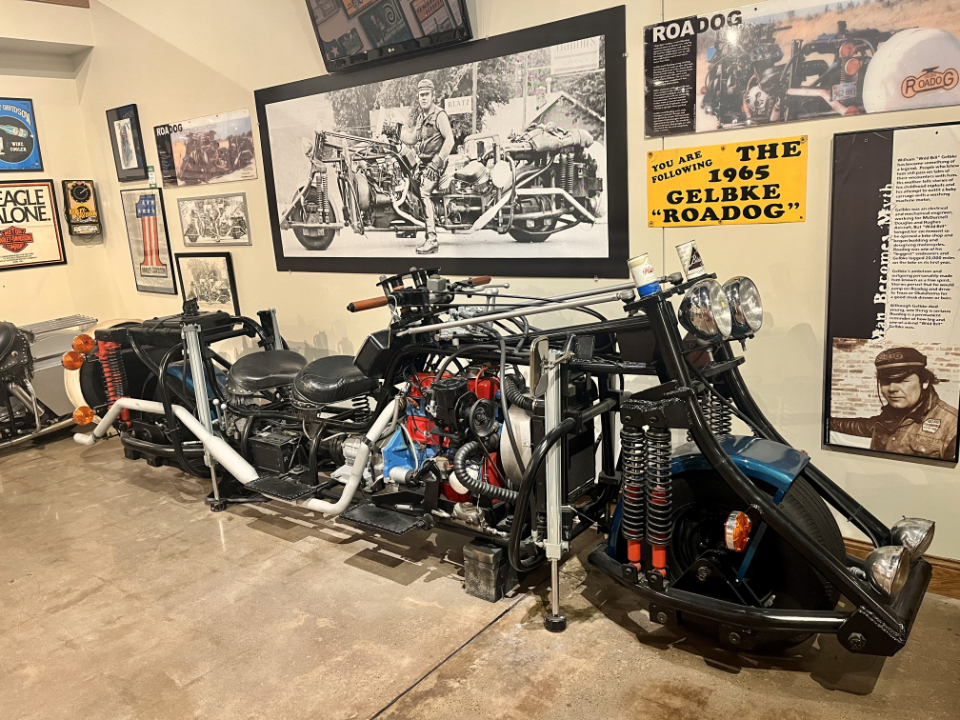
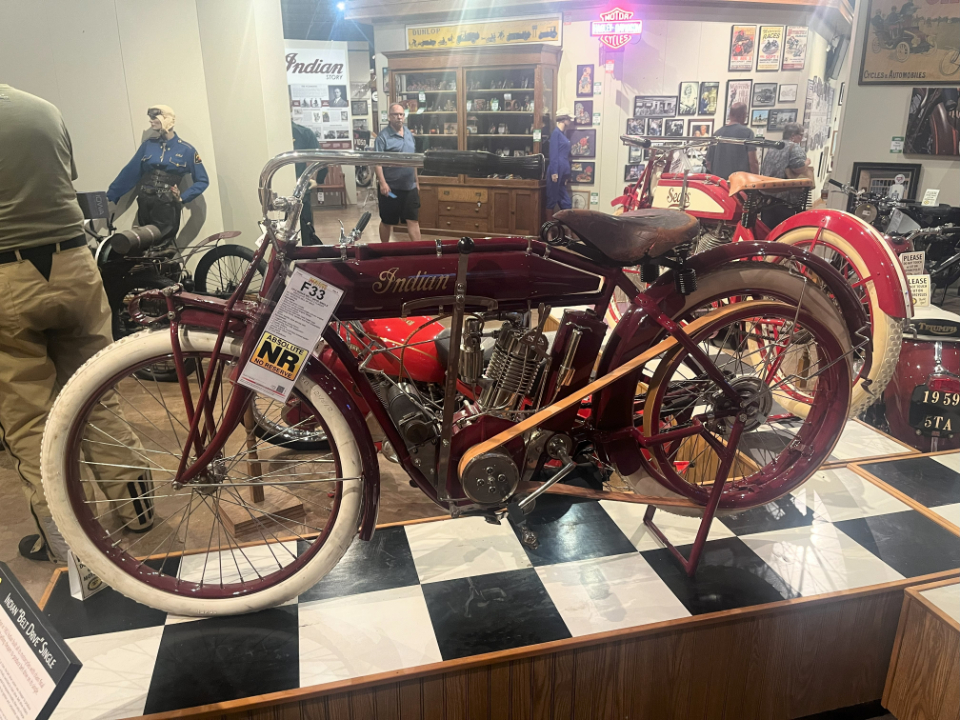


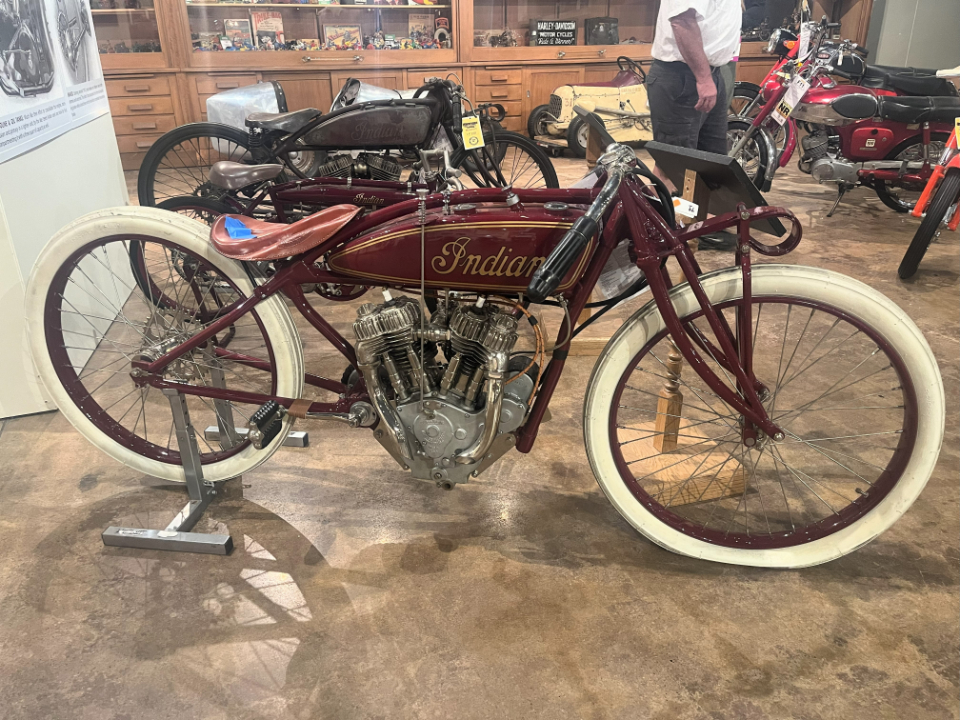


Upon arrival, I immediately noticed that the “motorcycles only” area that had been corralled off at the front of the parking lot had been removed. After riding up to where that area had once been, I parked my bike in an ordinary space, just like anywhere else. I commented on this to a couple who had ridden up behind me, but as this was their first (and last) trip to the museum, they had not been aware of the previous configuration. I turned to see two large banners had been tacked up on the building’s face, one promoting the upcoming auction where most of the museum’s contents would be piecemealed out to their respective highest bidders, the other announcing that the building was for sale. “CALL HEATHER,” the latter banner shouted. Visions of a temporary Spirit Halloween shop flooded my mind. But hey, Heather was only doing her job.
Once inside, my heart sank a little deeper as I saw what was left of the gift shop. Only a small fraction of the usual offerings remained, and people were standing in line to buy that. After purchasing my admission ticket to the museum, I turned around and joined the others, picking over the last of the souvenirs, grabbing up a couple of items for myself and stowing them on my bike before touring the museum one last time.
I walked most of the museum twice that day, sometimes examining the exhibits, sometimes interacting with or simply observing the other attendees. Some pieces had already been removed, presumably by their private owners who had already taken back their loans. Most items, however, remained. And most of those had auction tags on them proclaiming “No Reserve.” To me the tags defaced the collections, like so much graffiti.
Many of the attendees seemed to be like me, people returning for a last look at all the history, taking photographs and gazing at certain favorite pieces. I paused while an older gentleman (probably younger than me) captured a motorcycle from several angles. When he looked up and saw me standing there, he smiled and apologized. “No worries,” I replied, “I’m doing the same thing here.” We shared a moment of laughter and continued on our respective ways. A few others seemed to be assesssing pieces and making notes, not doubt for the auction that was to come.
In all I spent a couple of hours doing what I had come to do. On my way out, I glanced at a photo of the late John W. Parham. Only two words came to mind: “Thank you.”
I walked out of the building, took a couple of photos, and headed to a nondescript hotel in Cedar Rapids, where I would spend the night before heading home. So many thoughts swirled in my head as I rode on. Why did the museum have to close in this fashion? Why did it have to close at all? How bad did the finances have to get for things to end this way? Aside from an email I had received in 2020, penned by Jill Parham herself, asking us to mask up and visit the museum once they had been allowed to reopen following the imposed lockdown, I had seen no distress signals. Not once did I see a “save the museum” campaign or special fundraising effort to prevent the impending demise of this organization. Admission to the museum had been $15. I’d have gladly paid $25 or $30, had I known it would make a difference. And although I had never been a museum member, I’d have likely responded to membership drive expressly aimed at keeping the organization alive.
Why? Again and again I asked myself this. Would this even be happening if John were still alive? And at every turn, my conclusion was the same: I don’t know, but it’s over now. I don’t for a moment think that co-founder Jill Parham is in any way happy to see the National Motorcycle Museum go in this fashion, but the local media seems to have indicated that she was ready to let it go. Apparently it is time for us to do the same.
On the following morning, satisfied that I had done what I came to do, I rode home via U.S. Highway 30. The only observations I’ll share about my ride home are as follows. First, that as one gets closer to the Mississippi River following U.S. 30 eastbound, things seem to become increasingly industrial and utilitarian. That is, picturesque scenery gives way to a straight, flat thoroughfare that is heavily traveled by semi-trailer trucks and gravel haulers.
Second, that the city of Clinton, which I have ben visiting since 1967, derives much of its revenue from industries that may at times have quite an effect on the olfactory senses. While my eldest sister attended college in the northwestern portion of Illinois, we would sometimes stay overnight in Clinton when we came to visit. I had my first “not homemade” pizza in Clinton. It’s actually a pretty cool place to visit, when the wid is blowing from the right direction. Google it.


And finally, if you should happen to find yourself in the vicinity of Morrison, Illinois at either breakfast or lunch time, I recommend the Family Chef Restaurant, right on U.S. 30. It’s a simple place, the staff there is delightfully friendly and attentive, the menu has plenty to offer, and from what I experienced, the food is quite good.
The last 30 miles of my return trip reminded me why motorcyclists enjoy getting away from metro areas. Nonetheless, I arrived home safe, relatively sound, and anxious to share my experience with you, my readers. Thanks for hanging with me.


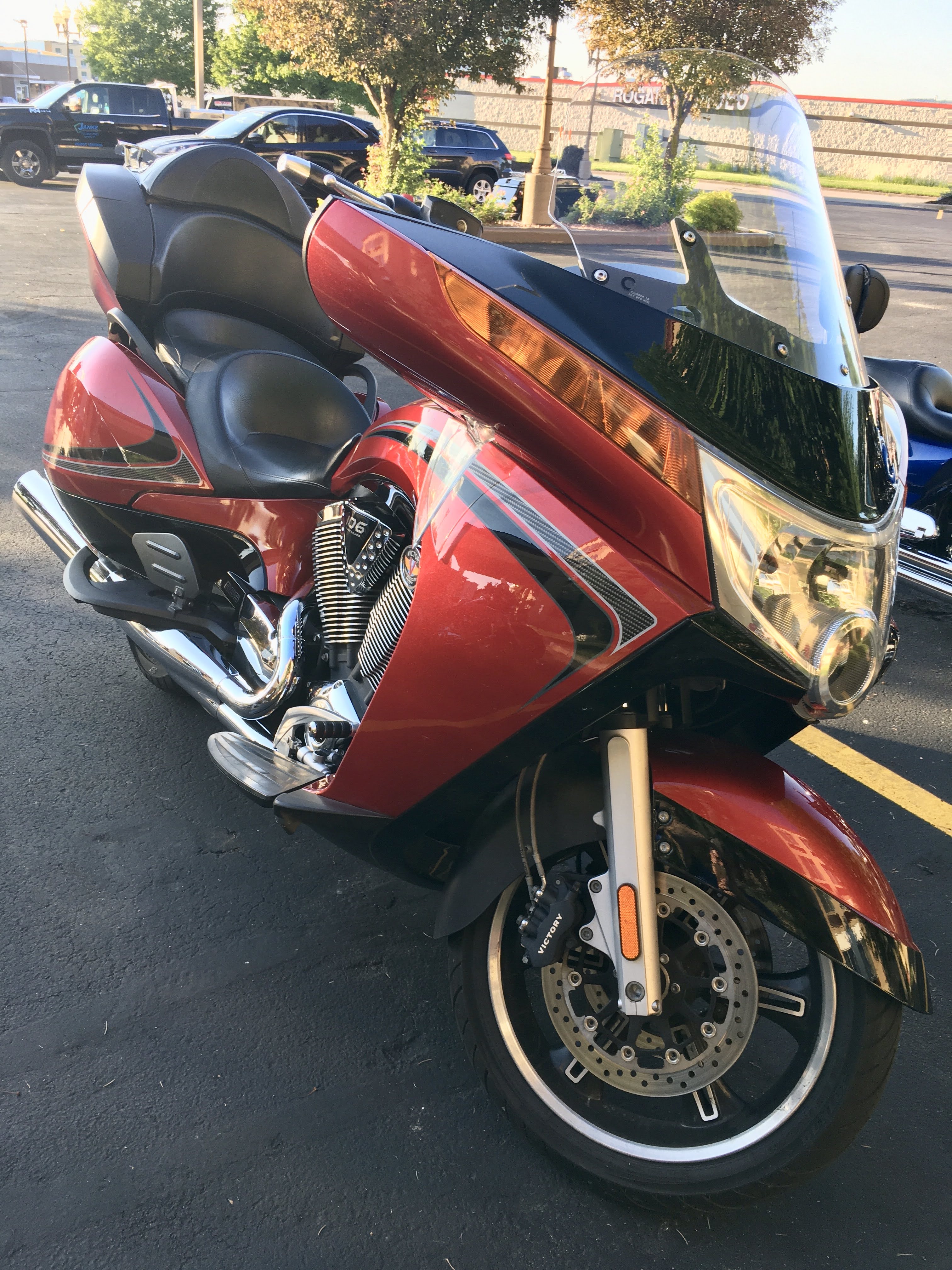






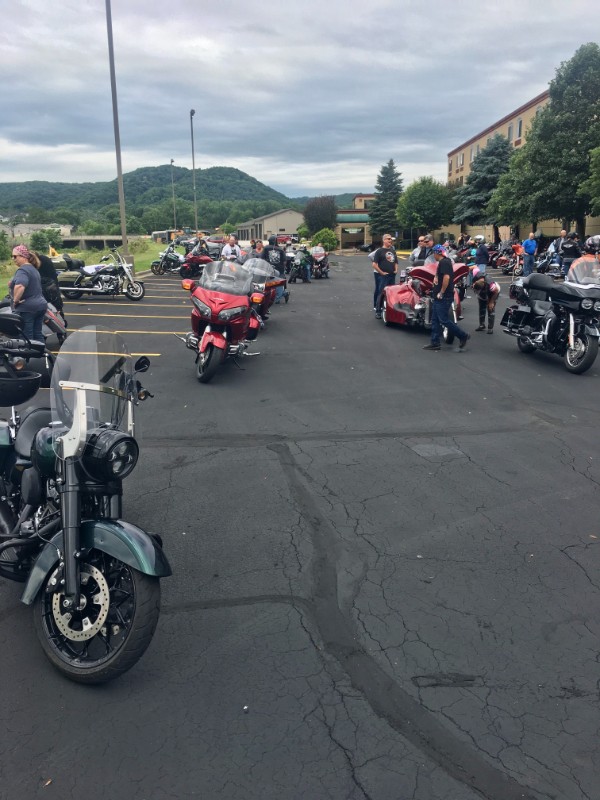
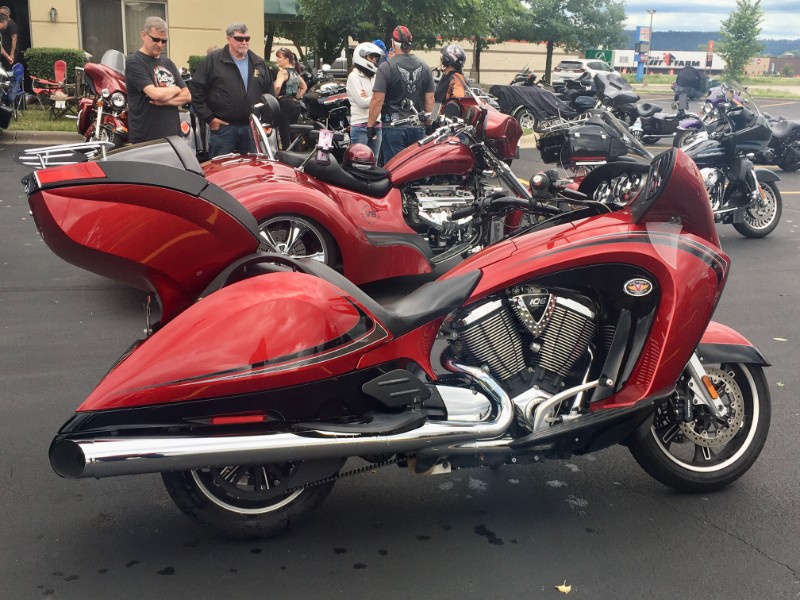


















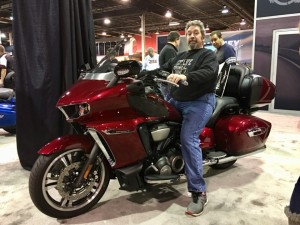
 Despite having been planned months in advance, my demo ride very nearly didn’t happen.
 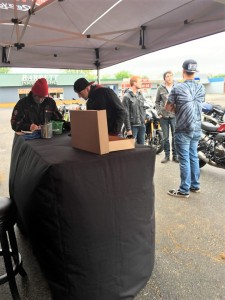 By comparison, Yamaha has a set schedule of demo rides for any given day and riders are assigned to specific bikes by appointment, created on little digital touchscreens, for a given time slot and model. By setting everything up electronically, Yamaha USA collects my contact information, current bike brand, etc. and in return, I get a demo rider card that can be scanned at any Yamaha demo event for the rest of this year. It’s just a different way of doing things, but one of which I was not aware. Until today.
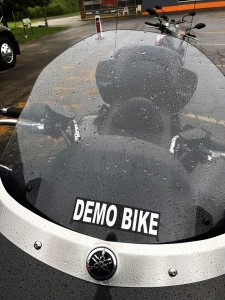 About mid-way through our demo run, the rain began to fall. While I could complain, I was actually glad for the opportunity to see how the Venture handles in wet surface conditions. She handles beautifully! Sure, I kept the bike in touring mode and went easier on the throttle during the downpour, but the fact is this bike felt downright planted to me from the time we left the parking lot until the time we returned.
 The bike I rode lists for over $27K in its Transcontinental trim. Asking whether it has to be that expensive is a lot like asking whether it has to weigh over 900 pounds. It is what it is. Right?
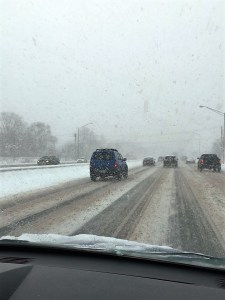 There are relatively few things I look forward to doing in the dead of winter. Going to the
 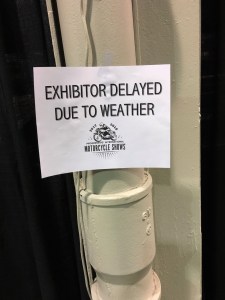 Such was certainly the case this year. Thanks to my unemployed/self-employed status (see


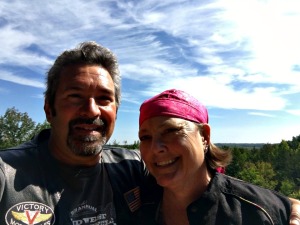 When a motorcyclist and his pillion passenger of choice live over 100 miles apart in two different states, they tend not to take their outings for granted. Such is the case for my friend Ann and me. While we absolutely have gotten together on the spur of the moment, we usually put some thought into scheduling our rides based on mutual availability, weather outlook, etc. We had both been hoping to go riding together sometime over the 2017 Labor Day holiday weekend; we just weren’t sure which day it would be. After all, we went riding for three days during the 2016 Labor Day weekend. Surely we’d be able to get a simple day ride in this year, right? Well, it almost didn’t happen.
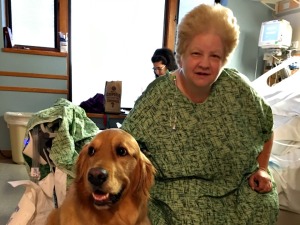 My current employment situation might have put any multi-day excursions on ice, had we planned any, but would not have stopped Ann and me from taking a day trip together. When my wife took an unplanned trip to the hospital the weekend prior, however, a visit that turned into an extended stay, everything else in my life became tentative—including my career search activities, scheduled meetings, and leisurely motorcycle excursions. Such has been my practice for decades, so no big surprise there. When I say family first, I mean family first.
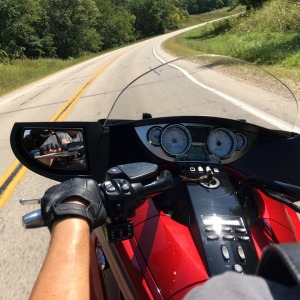 play. The very next day, I resumed job search activities, had an awesome meeting with a former colleague of mine, and with a favorable weather forecast in place, I reached out to Ann and made firm plans to take her out riding.
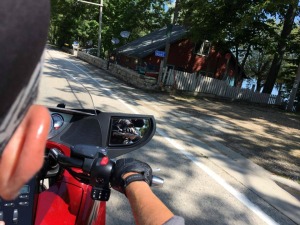 We ran north on Wisconsin 67 and then took a few county roads—A to T to G, which rejoins 67 and then departs again—to make a loop within the Northern Unit.
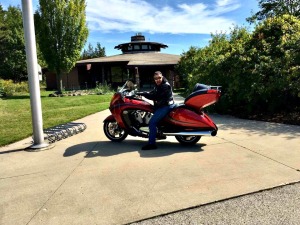 the parking area, Ann spotted a small bicycle rack positioned on the sidewalk leading to the Visitor Center. Leaning forward, she murmured into my left ear, “I dare you to pull Miss Scarlett up to that bike rack so I can get a picture of you there.” Naturally, I did what any other red-blooded Italian American man would have done after having received such a dare from a beautiful woman sitting on the back of his motorcycle. I sighed audibly, gunned the bike’s big V-twin engine for emphasis, and then rode in a sweeping circle around the parking lot and up to the bike rack, much to the delight of my conspiring passenger, who hopped off and took the photo as promised.
 Our next stop was a quick memory maker on our way back down a portion of WI 67
  to grab a quick photo that I could send to my son, who is currently living in Portland, Oregon, having recently completed his studies at the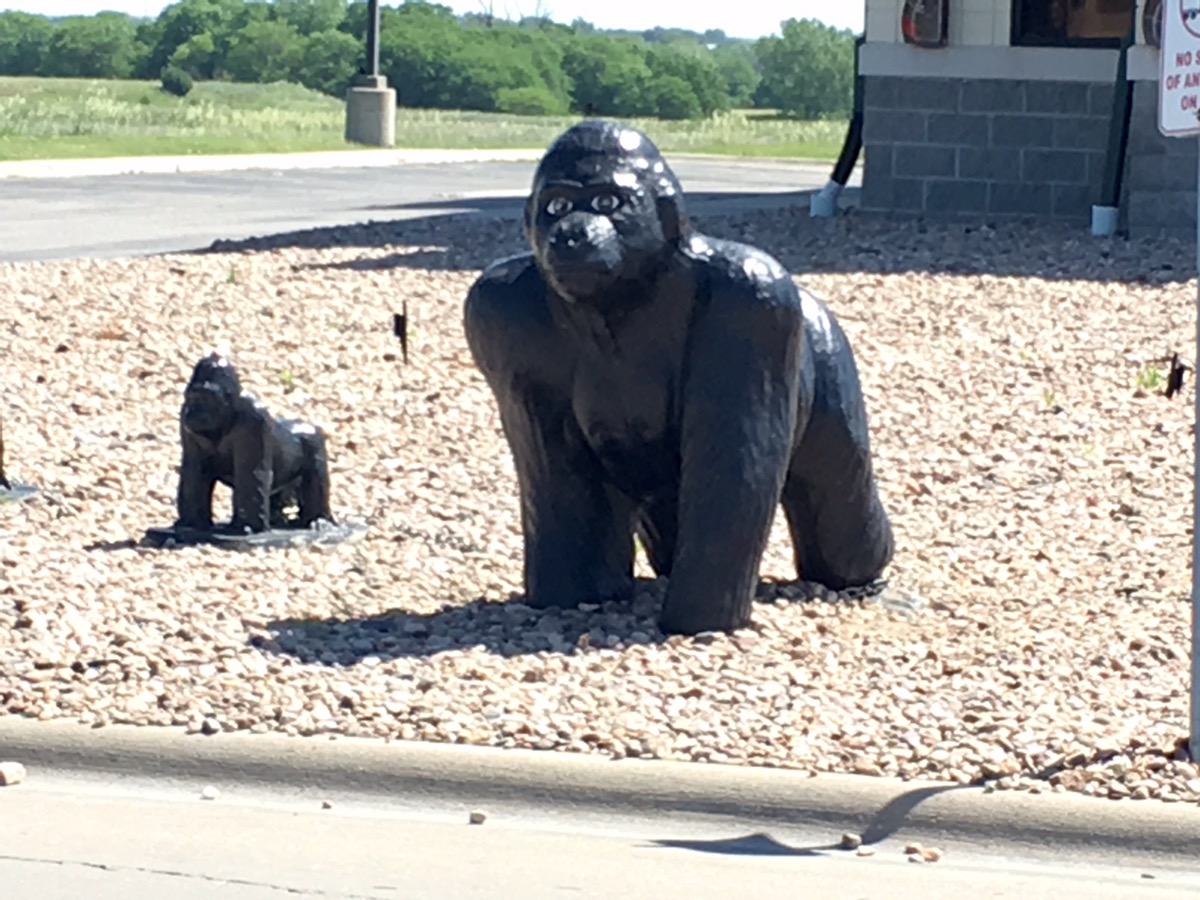


 This Is MGD Time